Indore (Madhya Pradesh) [India], September 19 (ANI): From paper leaks and delayed recruitments to shrinking access to public education, scholarships and hostel facilities, a host of student grievances took centre stage at Congress leader and Lok Sabha Leader of Opposition Rahul Gandhi’s ‘Chhatron Ki Goonj’ programme in Indore on Saturday, where he launched a sharp attack on what he described as a powerful “system” that, according to him, does not want students to question authority.
The programme, part of Gandhi’s student outreach initiative that has previously been held in Kota, Dehradun, Prayagraj and Pune, revolved around the theme “System vs Students”, with students and aspirants taking the stage to narrate their experiences of delayed examinations, alleged recruitment irregularities, lack of infrastructure, rising education costs and difficulties faced by students from marginalised communities.
Gandhi told the gathering that the objective of the programme was to restore the “hope” students had lost in the education system.
“We want the hope that was shattered in your hearts to return with renewed vigour. We want you to start believing in education and the system once again,” Gandhi said.
He described curiosity, love and affection, humility, honesty and fearlessness as qualities that define a student, arguing that students who ask questions are essential to building a strong nation.
“Students do not hate. They treat one another with affection, kindness and mutual respect,” Gandhi said, adding that a genuine seeker of knowledge “cannot be arrogant” and should be tolerant of differing viewpoints.
The central political message of the programme came when Gandhi sought to define the “system” that, according to him, students were fighting against.
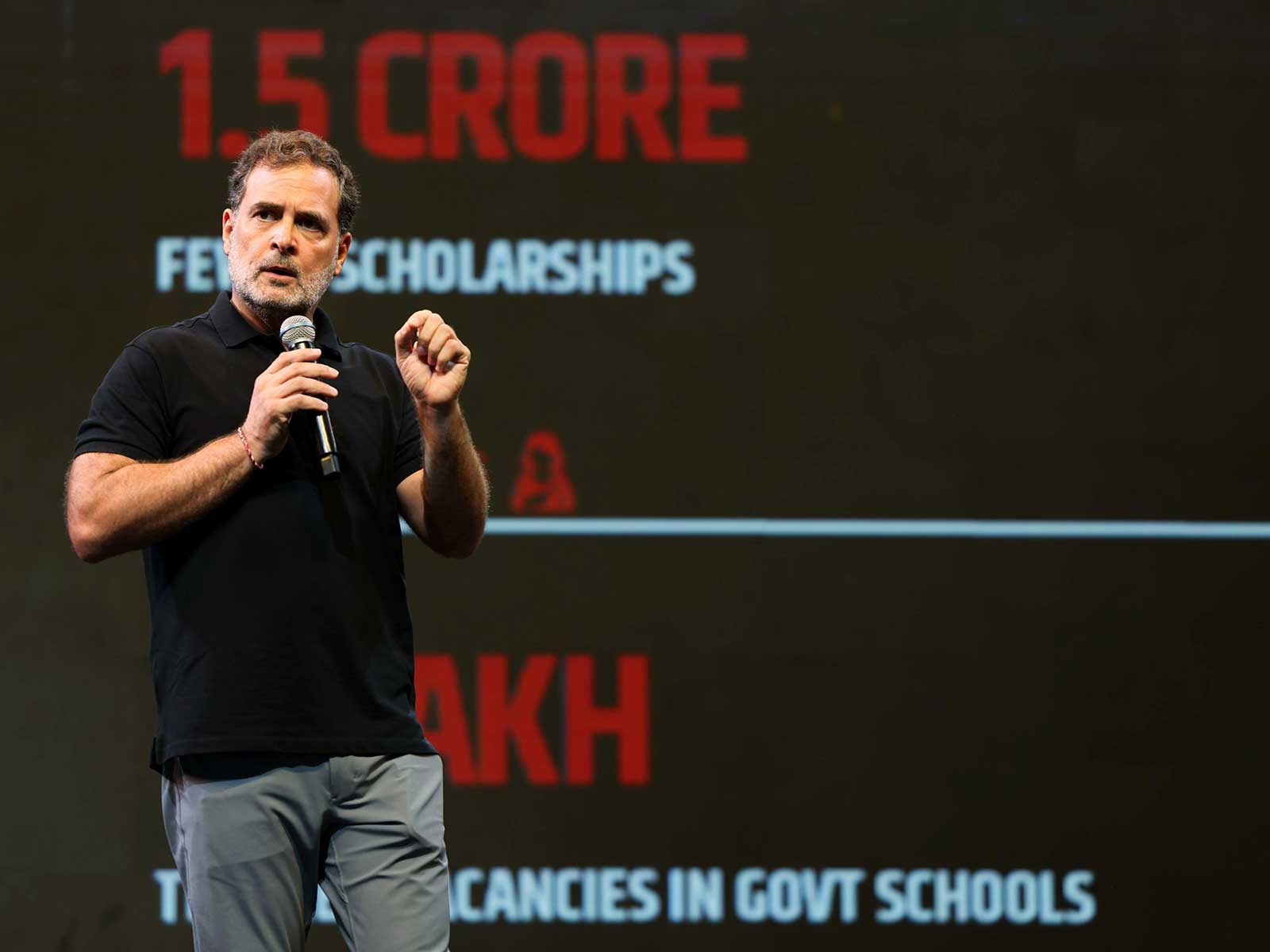
With a presentation titled “Desh par system ka kabza”, Gandhi alleged that India’s major institutions had been captured by a network of political, administrative, ideological and corporate interests.
“The struggle is against the system. What is this system? The system has various layers. At the top level sit six individuals who run it. Narendra Modi ji—he handles the intimidation, the acts of beating students, the use of nail-studded batons, and the firing of pellet guns; Amit Shah ji runs it; he is the enforcer. This is Ajit Doval ji, the National Security Advisor. In informal conversations, he says that to control India, one only needs to control 500 people. He has taken control of India’s telephones, WhatsApp, and Facebook communications; he orchestrates phone tapping and passes the information to Amit Shah ji and Narendra Modi ji. In the middle is Mohan Bhagwat ji, who deals with ideology; his organisation receives thousands of crores of rupees to run schools, colleges, and institutions. Then, on one side, there is Adani ji, and on the other, Ambani ji…The system has placed its own people in every single institution,” he said.
“The system feels threatened by students. Why? Because students ask questions,” Gandhi added.
He cited questions over examination paper leaks, institutional functioning, the role of private players in the economy and the appointment of Amit Shah’s son Jay Shah in cricket administration as examples of issues students could raise.
“A student asks how Amit Shah’s son became the Chairman of the Cricket Association. A student asks how two individuals managed to capture the entire business landscape of India. A student asks why the judiciary and other institutions fail to do their jobs, or why the Election Commission isn’t performing its duties. That is why the system does not want students; it wants ‘Andhbhakts’,” he said.
Gandhi also targeted those he described as “andhbhakts”, contrasting them with students who question authority.
“An andhbhakt never asks questions. A student is the one who raises this voice,” Gandhi said.
“An andhbhakt is the antithesis of a student. While a student asks questions and remains curious, an andhbhakt lives in a delusional world of their own. While a student is fearless, an andhbhakt is a coward,” he added.
In another pointed remark, he referred to claims that Prime Minister Modi is an incarnation of Lord Vishnu.
“The ‘andhbhakt’ says development is not needed. Modi ji is an incarnation of Vishnu. But the andhbhakt never asks why the condition of our schools and colleges has become like this, why our infrastructure has broken down and why our papers are leaking,” Gandhi said.
Nursing student Yashika Dani said she enrolled in a nursing degree in 2020 expecting to complete it in 2024, but remained stuck in her third year in 2026 because results had not been declared and subsequent examinations had not been scheduled.
She said students from Madhya Pradesh had held a month-long protest in Bhopal but alleged that their concerns were ignored.
Dani, who said she had worked at a call centre to finance her education after her family struggled with the fees, claimed that students without degrees were being treated as Class 12 pass-outs by hospitals and were being offered salaries of only Rs 5,000-Rs 6,000 a month.
A civil services aspirant, Akhil Bharati Kranti, highlighted the difficulties faced by students from rural, SC, ST and OBC backgrounds, saying many have to migrate to cities such as Indore and Bhopal for coaching and other educational resources.
“Education should not be a luxury; it must be a fundamental right accessible in every corner of the state,” the student said.
Gandhi echoed the sentiment, saying, “Education is not a luxury; it is a fundamental right of every citizen.”
MPPSC aspirant Sapna Gurjar raised the issue of recruitment delays and reservation.
She alleged that despite an increase in OBC reservation in Madhya Pradesh from 14 per cent to 27 per cent in 2019, 13 per cent of recruitment seats in MPPSC and other state examinations were being kept on hold because of pending legal matters.
Gurjar claimed that nearly 10,000 posts had remained frozen for six to eight years, affecting around 1.87 lakh candidates, including those who had cleared multiple stages of recruitment.
She alleged that candidates who had cleared Prelims, Mains and interviews were still waiting for appointment letters.
The programme also brought back the long-running issue of examination integrity in Madhya Pradesh.
A video montage shown at the programme featured aspirants questioning the transparency of competitive examinations and alleging that paper leaks had destroyed their faith in the system.
One aspirant said, “How can anyone trust any competitive exam nowadays? Where is the transparency? How do we know selections are fair?”
Another said that along with students who died in incidents connected to examination-related distress, “our faith in the system has died”.
Gandhi also used the programme to attack what he described as the unchecked privatisation of education.
“Regarding privatisation, one lakh government schools have shut down. You would be shocked to learn that while one lakh schools have closed across the country, fifty-five percent of them shut down in Madhya Pradesh and Uttar Pradesh alone. Then there is the issue of hostels; only fourteen out of every hundred students can secure a spot. They cited examples here too, but the core issue is privatisation and cost-cutting—contrary to the slogan “Sabka Saath, Mera Vikas”. When the government invests less in education, the student is put at risk,” he said.
He also cited figures which he presented as showing a decline in the share of government spending devoted to education, claiming it had fallen from 4.6 per cent in 2014 to 2.6 per cent currently. He further claimed that around Rs 7.7 lakh crore that could have gone towards public education had instead been diverted towards corporate concessions.
Gandhi also claimed that students had received 1.5 crore fewer scholarships and that more than 10 lakh teaching posts remained vacant in government schools.
The figures were presented by Gandhi as part of his argument against what he called the “starvation” of public education.
The concerns raised at the event extended beyond examinations and jobs.
Teacher eligibility candidate Deepti Singh Thakur said she had qualified the 2023 Teacher Eligibility Test and subsequent selection examinations but was still waiting for joining orders.
Visually impaired tribal student Priyanka Sengar narrated her experience of studying in government tribal residential hostels and said her family had to mortgage farmland and jewellery to meet accommodation expenses after she was unable to secure a government hostel seat.
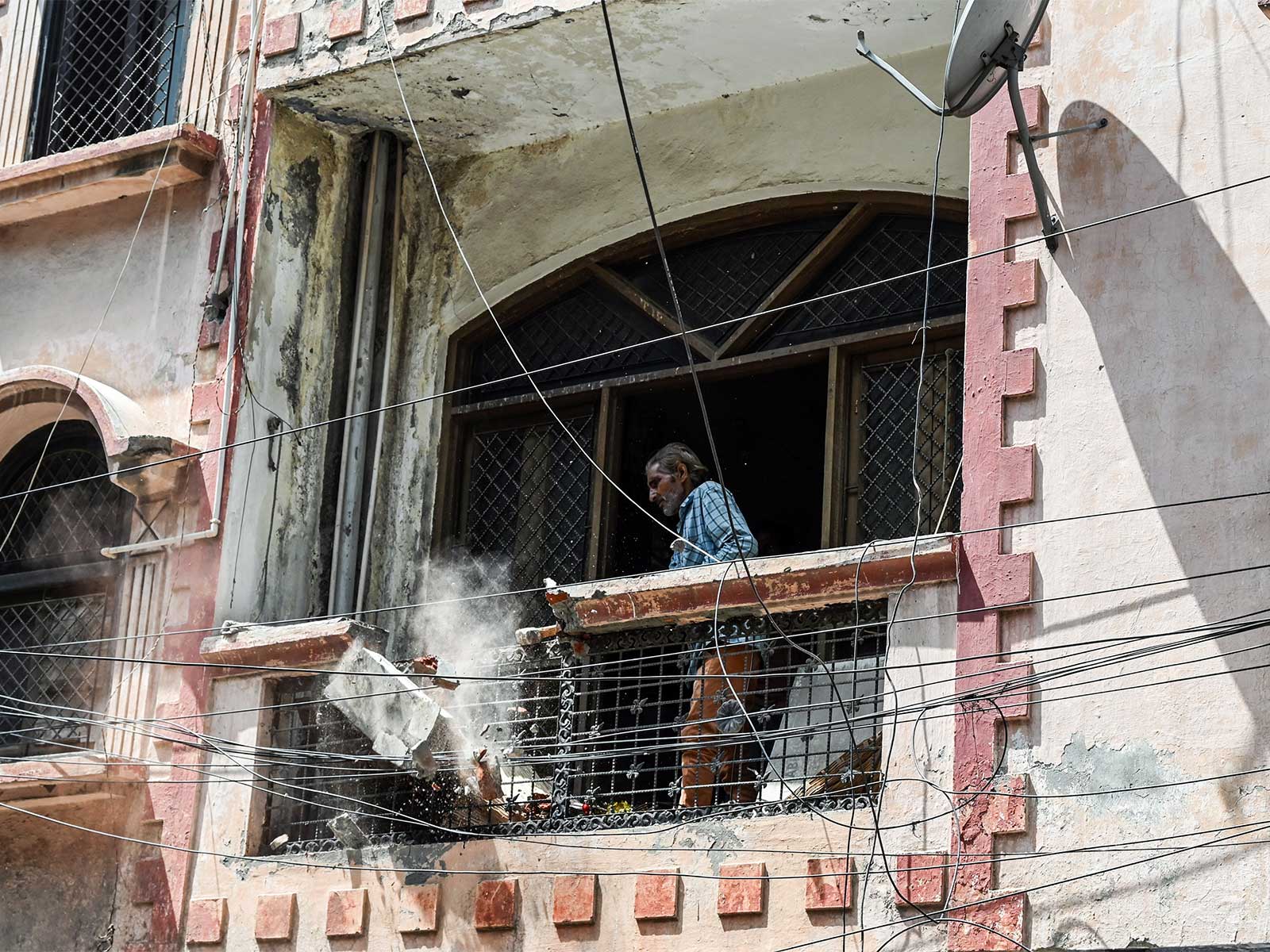
One of the most emotional moments of the programme came when Gandhi interacted with the family of Arpit Jaj, a 21-year-old Delhi University student from Dewas who died after a five-storey building collapsed in Delhi’s Satya Niketan area on September 6.
The family told Gandhi that Arpit had gone to Delhi with aspirations of pursuing BSc and CMA and alleged that the building had been permitted for two storeys but had five storeys.
His father, who works as a driver, said he had spent his earnings on his son’s education and recalled running from hospital to hospital after the collapse because the family was not informed about him for several hours.
Arpit’s sister Priyanshi alleged that seven young students lost their lives because of alleged illegal construction and failures in safety oversight, and demanded accountability.
Gandhi embraced the grieving family and linked the incident to his broader argument that inadequate public investment and institutional failures can have devastating consequences for students.
Returning to education infrastructure, Gandhi said that the closure of government schools and inadequate hostel capacity were directly affecting students from economically weaker backgrounds.
He also claimed that only 14 students out of every 100 applicants could secure hostel accommodation.
The remarks formed part of Gandhi’s larger argument that privatisation, rising costs and declining public investment were pushing education beyond the reach of poorer families.
Students attending the programme gave mixed political and personal reactions.
Speaking to ANI, NEET aspirant Nehliza Khan, meanwhile, said she attended the event because of concerns surrounding alleged NEET paper leaks and their impact on students’ futures.
“We want these problems resolved as soon as possible. We have to think about our own futures and our parents,” Khan said.
She said some of her friends had abandoned their NEET preparations after the controversies and added, “We just want this to stop immediately.”
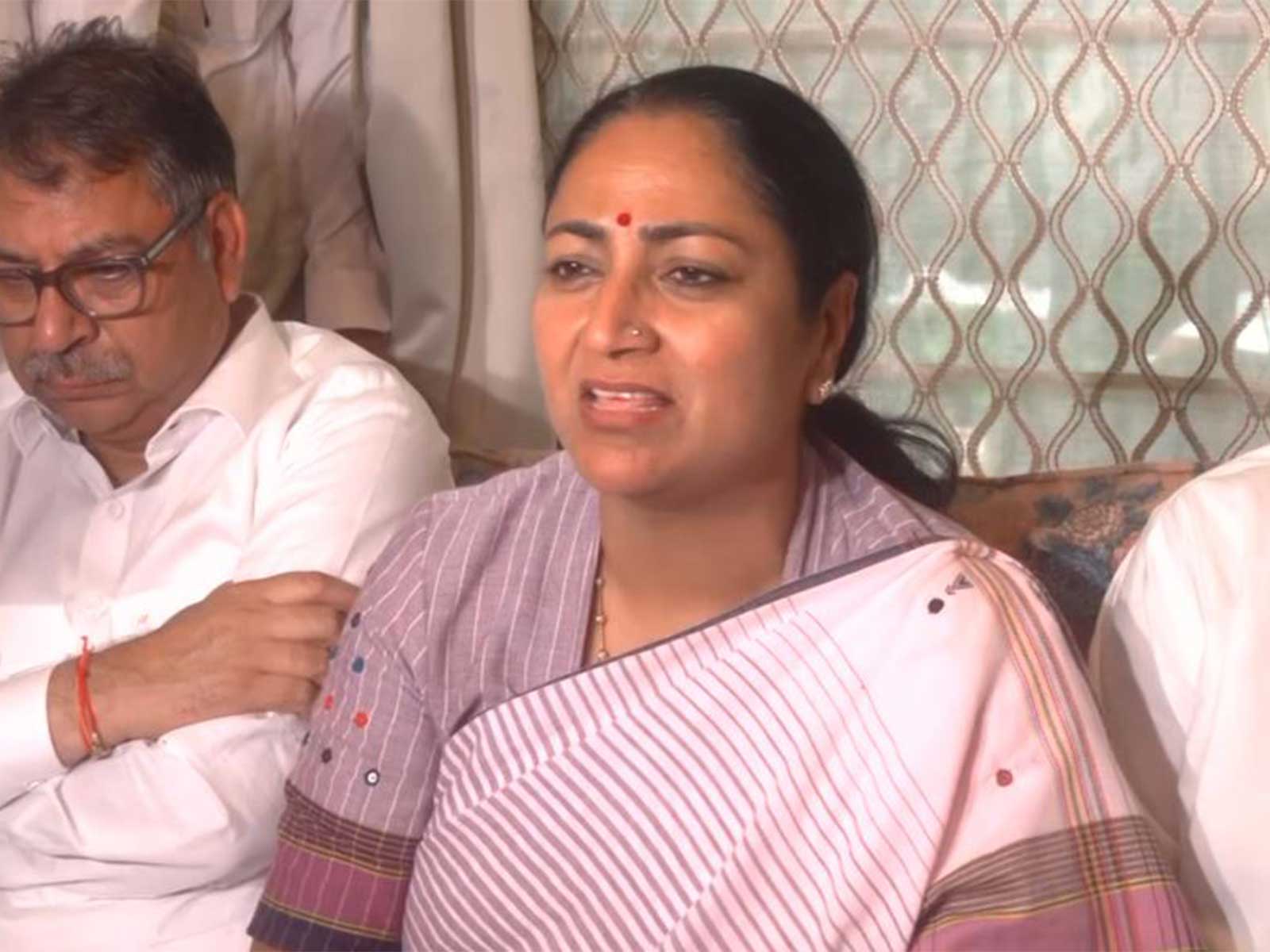
Congress leader Sanjana Jatav said the programme reflected what she described as growing concern among youth over education-related issues and alleged police action against protesting students.
“A powerful sentiment has emerged among the youth—a resounding voice of students—reflecting their faith in our leader, Rahul Gandhi. You have witnessed how the youth were subjected to lathi-charges while simply demanding their rights in the education sector. Looking at the current situation, the entire system is in disarray, yet there is widespread trust in Rahul Gandhi. This faith exists because the youth believe that if anyone can deliver results, it is Rahul Gandhi—no one else can,” she told ANI.
AICC Madhya Pradesh co-in-charge Ranvijay Lochav said the response to the programme showed youth engagement with Gandhi’s message and alleged that students had faced “brutal” action during protests at Jantar Mantar.
The Congress’ claims and Gandhi’s attack drew a sharp response from Madhya Pradesh Chief Minister Mohan Yadav, who accused the Leader of Opposition of using the event to spread what he called “falsehoods”.
Yadav said Gandhi arrived “unprepared” and alleged that the programme was being used to further the Congress’ political agenda rather than facilitate a genuine question-and-answer session with students.
“Today in Indore, the Leader of the Opposition, Rahul Gandhi, held an event that was essentially an exercise in spreading falsehoods; true to form, he displayed his characteristic lack of seriousness regarding the subject matter. He arrived unprepared and engaged with children and young people, with whom a genuine question-and-answer session should have taken place, only to further the Congress party’s agenda of misleading the public. It is deeply disheartening. The role of the Leader of the Opposition is a significant one,” he said.
The Chief Minister also defended the state’s education record, saying Madhya Pradesh had achieved a zero-dropout rate in school education.
He contrasted the current education budget with figures from the Congress era, saying the school education budget had risen from around Rs 2,000 crore in 2002-03 to Rs 38,658 crore currently.
“Regarding school education, the fact that the state has achieved a zero-dropout rate is a matter of record that Congress and its allies ought to acknowledge. When they speak on this issue, the dropout figures tell the real story: during the Congress regime, the dropout rate stood at 16% as of 2002–03. Congress was in power for the majority of the time between 1956 and 2002–03, yet the dropout statistics reflect that legacy. The school education budget hovered around ₹2,000 crore until 2002–03, whereas today, it stands at ₹38,658 crore. This demonstrates our deep commitment to children and the management of their education,” Yadav said.
Yadav also pointed to schemes providing uniforms, bicycles, scooters and laptops to students and asked Congress to explain whether such initiatives had been implemented during its tenure.
“Let Congress answer: did they ever provide uniforms to students during their tenure? Did they ever provide bicycles for commuting? Did they ever award scooters or laptops to top-performing students? Congress never implemented any such schemes to encourage or support students and youth,” he said.
The programme ended with student panellists joining Gandhi on stage for a collective photograph, followed by a wide-angle selfie with the gathering as participants held up illuminated mobile phones. The event concluded with the ‘Chhatron Ki Goonj’ anthem.
The Indore edition thus brought together two sharply contrasting narratives: Gandhi’s claim that students are being failed by a captured and increasingly privatised system, and the BJP government’s contention that education infrastructure and student welfare have expanded substantially under its tenure. (ANI)
Related reading