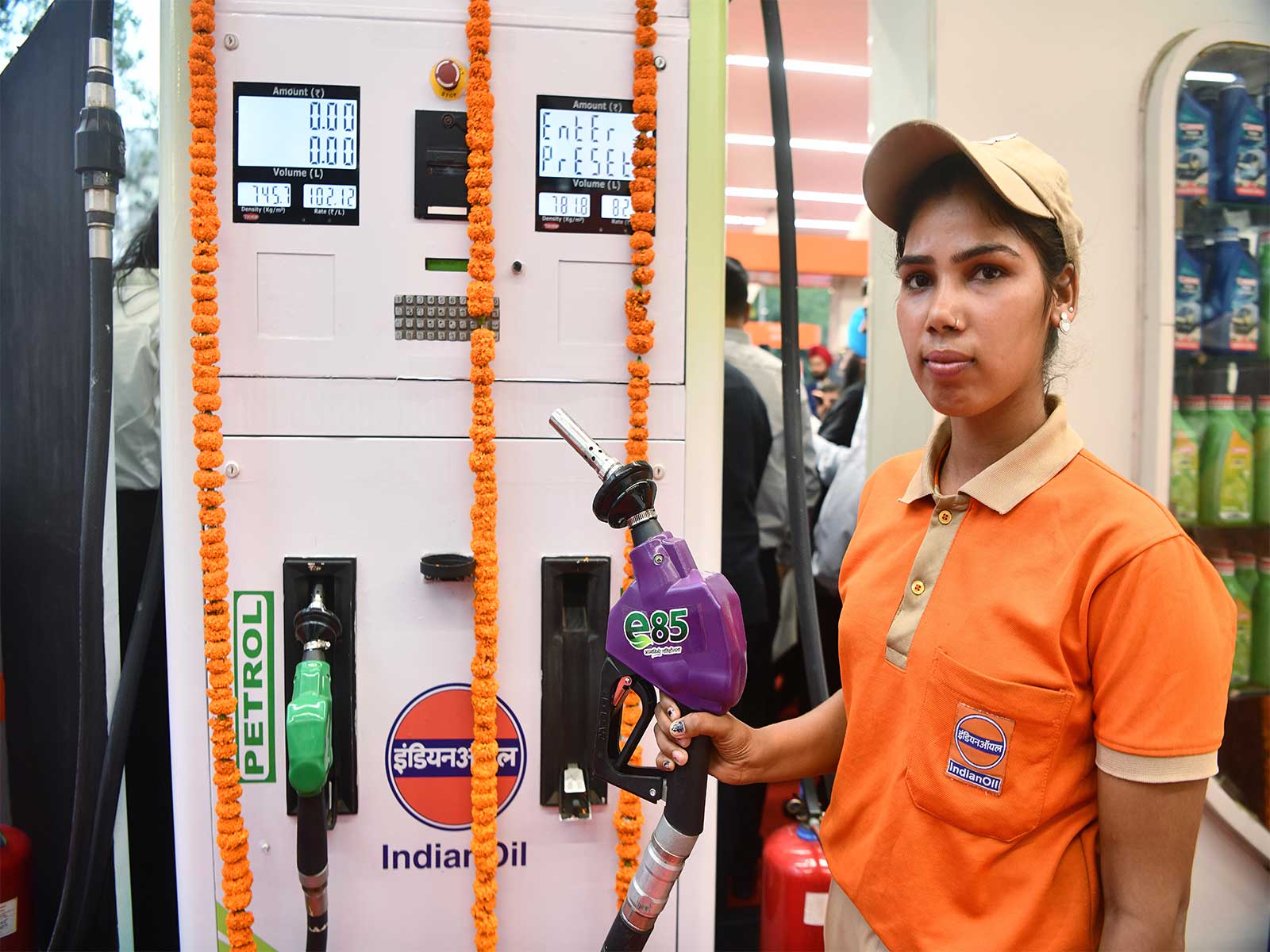
New Delhi [India], July 11 (ANI): The Ministry of Petroleum and Natural Gas has defended India’s ethanol blending programme, rejecting claims that the country moved too quickly compared to nations like Brazil. The Ministry said India’s transition towards ethanol-blended petrol has been a gradual, carefully planned process spanning more than two decades, backed by policy reforms, investment and expansion of production capacity.
In an official response on why India appeared to accelerate its ethanol blending targets while Brazil took decades to build its ecosystem, the Ministry said ethanol as a fuel is not a recent innovation and has been used globally for over a century.
The Ministry highlighted that ethanol blending initiatives in India predate the present government, with a pilot programme launched in 2001, formally announced in 2004, and E5 (5 per cent ethanol blending) introduced across several states by 2006. It added that the policy framework was notified in the Gazette of India in January 2013 during the previous UPA government.
According to the Ministry, India had initially targeted 5 per cent ethanol blending across 10 states and Union Territories, but the programme struggled to progress, with blending levels remaining around 1.5 per cent until 2014.
The Ministry said the primary challenge was not acceptance of ethanol as a fuel but the country’s limited ability to produce sufficient quantities. “At the time, ethanol production depended largely on sugarcane, a seasonal crop, with annual production capacity of around 400 crore litres, which was insufficient to meet higher blending targets,” it said.
The government said the approach changed significantly after the launch of the National Policy on Biofuels in May 2018, which focused on creating an ecosystem for large-scale ethanol production.
The Ministry said multiple departments and ministries, including the Ministry of Petroleum and Natural Gas, Department of Food and Public Distribution, Ministry of Road Transport and Highways, Ministry of Heavy Industries and Indian Railways, worked together to expand feedstock availability, infrastructure, logistics and investment.
“A key development came in August 2021, when public sector oil marketing companies Indian Oil Corporation Limited (IOCL), Bharat Petroleum Corporation Limited (BPCL) and Hindustan Petroleum Corporation Limited (HPCL) issued Expressions of Interest for setting up Dedicated Ethanol Plants in ethanol-deficit regions,” it said.
The Ministry said these projects provided investors with assured long-term purchase agreements, tripartite financing arrangements with public sector banks through escrow mechanisms, and guaranteed ethanol procurement exclusively for the Ethanol Blended Petrol Programme.
However, it noted that such plants required nearly two years to become operational and that additional capacity could not be created overnight.
The Ministry also cited the June 2021 roadmap released by NITI Aayog on ethanol blending, which was prepared after consultations with automobile manufacturers, oil companies, agricultural experts and other stakeholders. The roadmap highlighted ethanol’s role in reducing environmental impact, improving energy security and supporting rural incomes.
According to the Ministry, India’s requirement for achieving 10 per cent ethanol blending was estimated at around 500-600 crore litres annually. With fresh investments and increased production capacity, the country was expected to reach nearly 1,200 crore litres of ethanol production, making the target of 20 per cent blending achievable.
Rejecting comparisons that India rushed the programme, the Ministry said Brazil took decades because it was building the world’s first large-scale ethanol ecosystem, while India benefited from global experience, established technologies and improved coordination among stakeholders.
The Ministry said the country’s ethanol journey has been “carefully planned, staggered and stepwise,” involving consultations with automobile manufacturers, testing agencies, oil marketing companies and other stakeholders before implementation. (ANI)
Related reading