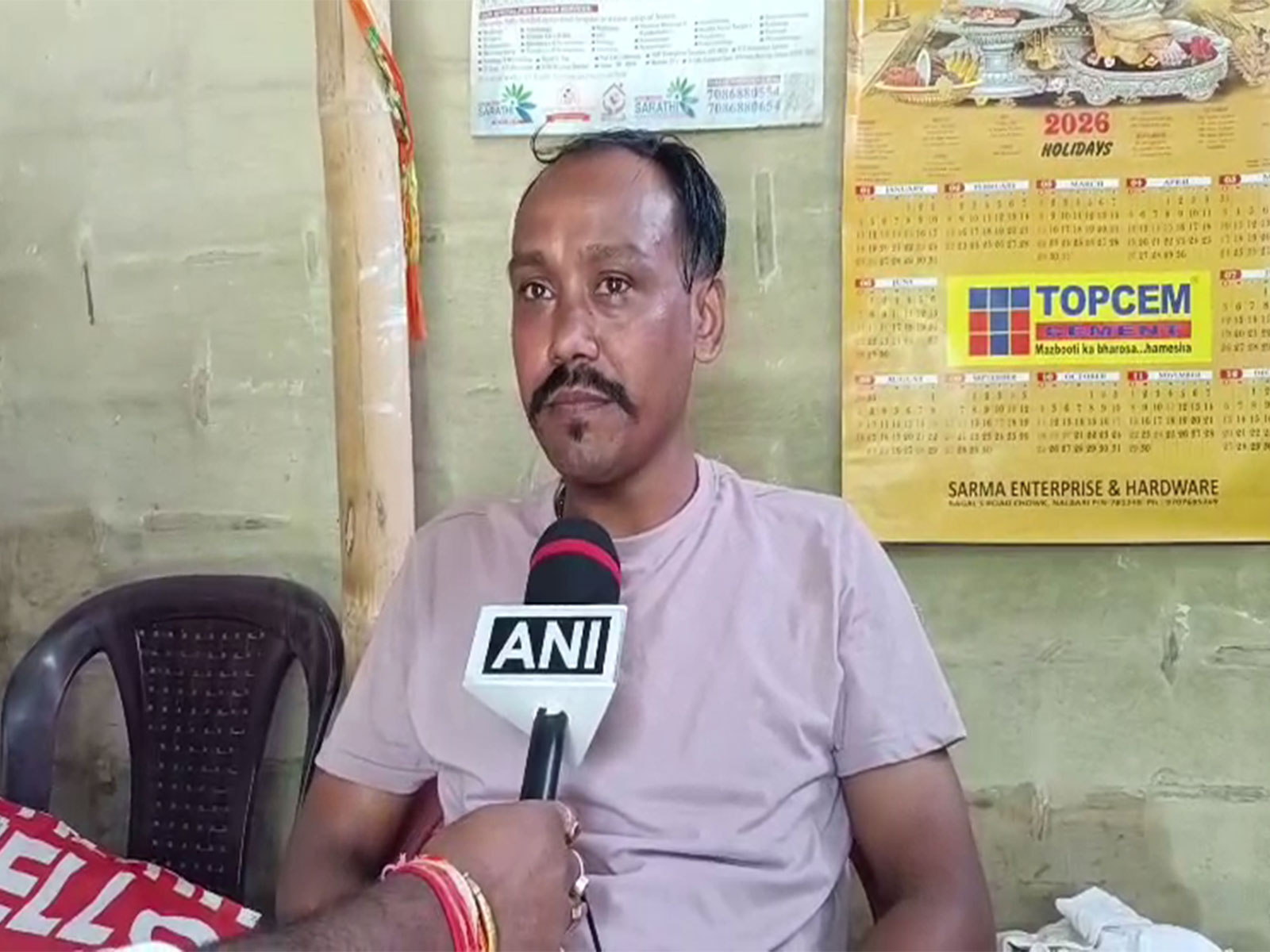
Nalbari (Assam) [India], September 3 (ANI): Assamese worker Pankaj Barman recalled the terrifying moments when a massive surge of floodwater swept through the area of Nepal’s Upper Trishuli Hydroelectric Project, forcing him and several other workers to flee to higher ground, where they remained stranded for three days with little more than biscuits and water.
Barman, from Nalbari district, was working inside the powerhouse and tunnel when he heard a deafening sound that initially appeared like a huge explosion.
“I was working at the Upper Trishuli Hydroelectric Project. While working… I had gone on duty, and inside the powerhouse and tunnel, I was carrying out my work. While working, a loud sound came. We wondered what kind of sound it was—it sounded like a massive blast,” Barman told ANI.
He said that after hearing people screaming outside, he came out of the generator area and saw water rapidly flooding the turbine floor.
“As soon as I came outside, a massive surge of water came rushing straight towards me. Mud and water splashed all over my body, and I ran for my life to get outside,” he recalled.
Once outside, Barman witnessed a devastating scene as floodwaters carrying enormous boulders swept through the area.
“Water and heavy boulders were sweeping through with immense force. The floodwaters had risen 50 to 60 feet high. Huge rocks, houses, and vehicles were being washed away. People were crying out, ‘Save us! Save us!'” he said.
With the raging waters making any attempt at rescue impossible, Barman and other workers ran towards the hills.
“We realized we couldn’t stay there any longer and had to run. We ran uphill until we reached the top of the mountain,” he said.
Around 100-150 workers were present in the area, but the disaster scattered them in different directions. Around 15-20 workers remained together on the mountain, taking shelter near large rocks.
Barman said his colleague Samar stayed with him during the escape.
“Samar was with me; I took him along with me. We fled together. I told him, ‘Don’t go the other way, stay with me. If anything happens, at least if one of us survives, we can return home and tell our families what happened,'” he said.
The workers remained stranded on the mountain for three days, surviving on biscuits and water. Rescue teams eventually located them and brought them down before transporting them to Kathmandu.
However, Barman said several workers remain missing, including his close friend Arun Mahanta, who had travelled with him for work.
“None of the other missing workers from our staff have been found yet,” he said.
The flood also swept away their belongings and identity documents. Barman said photographs of identification documents stored on his mobile phone proved useful when authorities sought details of the missing workers.
He also credited Assam Chief Minister Himanta Biswa Sarma for coordinating with Nepalese authorities to facilitate their return.
“The Assam Chief Minister had also contacted the authorities in Nepal… The Chief Minister had instructed them to ensure we received proper food and care,” Barman said.
After reaching the Nepal-India border, Assam Police officials received the workers and helped escort them home.
Looking back at the destruction, Barman said the scale of devastation remains difficult to comprehend.
“Near our quarters, there used to be a village—nothing remains of it now; it has been completely wiped out. There is no trace left. Looking at it brought tears to my eyes; the entire village and all our friends were swept away. Seeing that sight was truly heartbreaking,” he said.
Meanwhile, the flash floods in Nepal have caused widespread destruction, with the National Disaster Risk Reduction and Management Authority (NDRRMA) reporting 1,114 bodies recovered and around 3,900 people still out of contact. Authorities said 11,993 people have been rescued as round-the-clock search and rescue operations continue. (ANI)
Related reading