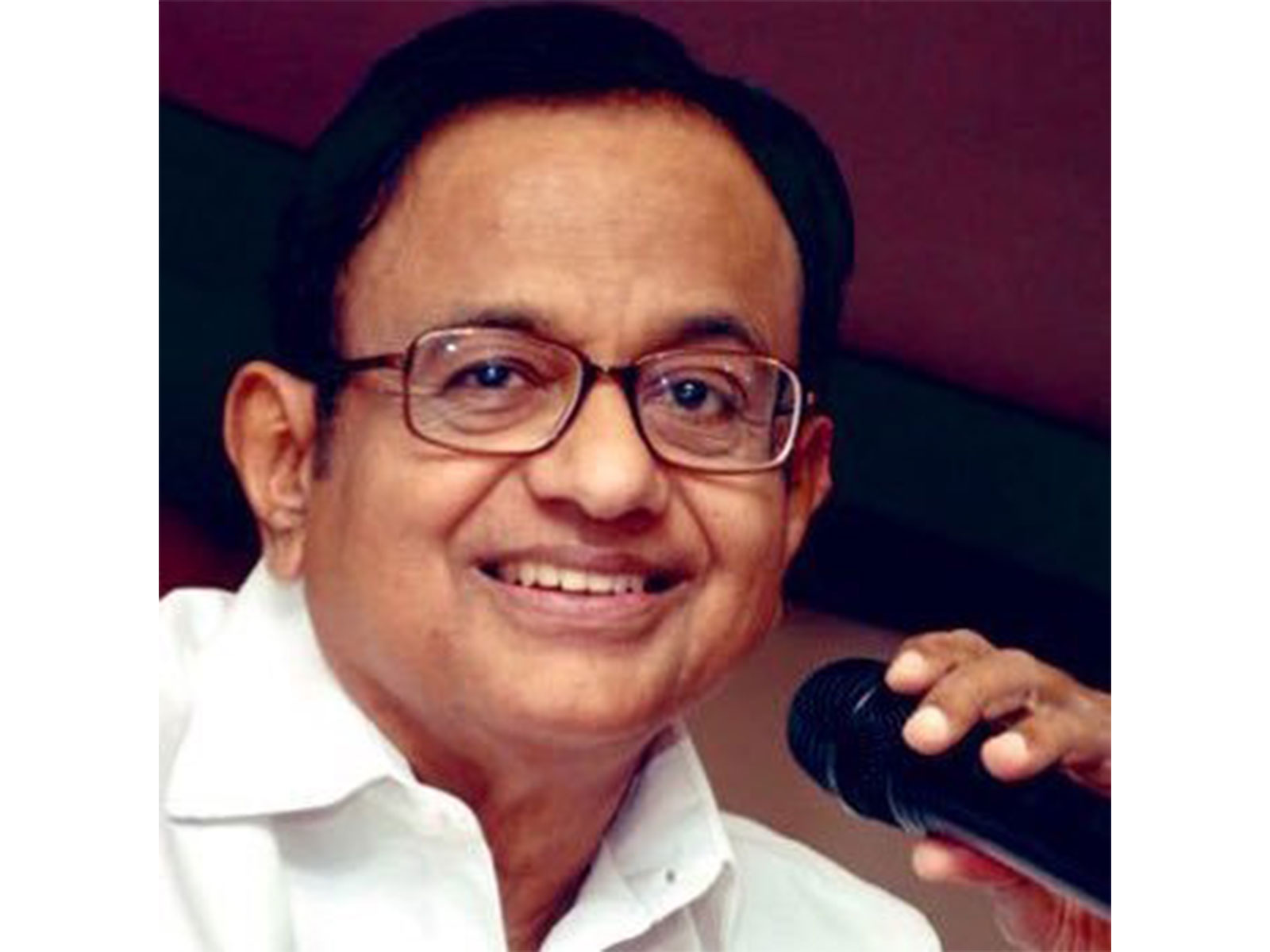
New Delhi [India], August 5 (ANI): Marking the seventh anniversary of the J-K bifurcation, senior Congress leader and former Union Minister P Chidambaram on Wednesday brought focus back to the unsettled legal architecture underpinning the transition.
Echoing concerns shared by various constitutional jurists and political actors, Chidambaram, in a post on X, framed the events of 2019 not merely through a political lens, but as a critical institutional stress test.
“Seven years ago this day, a Constitutional outrage was perpetrated splitting the State of Jammu and Kashmir into two Union Territories. The story did not end there. The question whether a State can be divided and reduced to UTs was raised before the Hon’ble Supreme Court, but the Court declined to decide that question on the ground that the Government had assured the Court that Statehood will be soon restored,” he said.
The crux of Chidambaram’s critique targets a foundational ambiguity left open by the highest judiciary. When the Supreme Court upheld the validity of the abrogation of Article 370, it bypassed a direct ruling on whether Parliament holds the unbridled authority to dissolve an existing full-fledged State and reduce it to the status of Union Territories. The Court relied instead on the executive assurance that the region’s statehood would be reinstated in due course.
Raising concerns over the open-ended nature of that promise, Chidambaram pointedly asked: “How soon is ‘soon’? That sword–power of the Government to break up a State into UTs–still hangs over the States of India. And the important Constitutional question has not been decided by the SC.”
The abrogation of Article 370 on August 5, 2019, marked a watershed moment in modern Indian history. For the Central Government and its supporters, the move dismantled a decades-old wall of separatism, ushering in a transformative era defined by national integration, administrative transparency, and legislative uniformity.
Proponents point to substantial positive outcomes over the past seven years: the full extension of the Indian Constitution to the region, the dismantling of institutional roadblocks that fostered alienation, and accelerated infrastructural expansion.
Economic investments, the empowerment of marginalised communities through the elimination of discriminatory laws (such as Article 35A), and a decisive push toward digital governance and socio-economic inclusion are frequently cited as proof that the region has turned a corner toward lasting peace and development.
As Jammu and Kashmir navigates its post-2019 reality, the debate remains polarised between two competing realities.
The Centre and its allies emphasise that the administrative reset has driven grassroots democracy via successful local body elections, minimised disruptions, spurred tourism, and mainstreamed economic growth. From this viewpoint, security and structural parity with the rest of India take precedence, with statehood treated as a procedural milestone to be achieved when ground conditions render it optimal.
Critics like Chidambaram argue that regardless of administrative milestones, the unilateral power to demote a sovereign State into centrally administered Union Territories is an unprecedented blow to Indian federalism. By leaving the core constitutional question unadjudicated under the cushion of executive promises, a precedent has been set–one that leaves every other State in the Union vulnerable to the same legislative manoeuvre.
Meanwhile, Prime Minister Narendra Modi today marked seven years since the historic abrogation of Articles 370 and 35(A), describing 5th August 2019 as a defining milestone in India’s journey towards inclusive development.
PM Modi noted that over the past seven years, the people of Jammu and Kashmir and Ladakh have witnessed wide-ranging transformation across sectors. Infrastructure has expanded significantly, while new opportunities have emerged in education, healthcare, entrepreneurship and sports.
“The women and members of marginalised communities, who had been deprived of several constitutional rights for decades, have now been empowered through the full application of the Constitution of India”, PM Modi added.
The Prime Minister observed that this year’s anniversary assumes even greater significance as the nation commemorates the 125th birth anniversary of Dr Syama Prasad Mookerjee. He said that Dr Mookerjee’s lifelong commitment to national unity continues to inspire generations, and that the vision he championed found historic fulfilment on 5th August 2019.
Reaffirming the Government’s unwavering commitment to the development of Jammu and Kashmir and Ladakh, the Prime Minister said that every citizen must have the opportunity to dream big, realise their aspirations and contribute to the vision of a Viksit Bharat.
The Prime Minister posted on X: “Seven years ago, on this day, Articles 370 and 35(A) became history, marking a decisive new chapter in the journey of Jammu and Kashmir as well as Ladakh. Since then, the lives of the people of J&K and Ladakh have witnessed wide-ranging transformation. Infrastructure has expanded, opportunities in areas such as education, healthcare, entrepreneurship and sports have grown. Be it the women or the marginalised communities, those who were denied their basic constitutional rights for decades have been empowered thanks to the full application of the Constitution of India. 5th August this year assumes even greater significance as this is the year our nation commemorates the 125th birth anniversary of Dr. Syama Prasad Mookerjee. His lifelong commitment to national unity continues to inspire generations. What he envisioned decades ago found historic fulfilment on 5th August 2019. We reaffirm our commitment to the progress of Jammu and Kashmir as well as Ladakh and to ensure that every citizen has the opportunity to dream big, achieve and contribute to the making of a Viksit Bharat.” (ANI)
Related reading