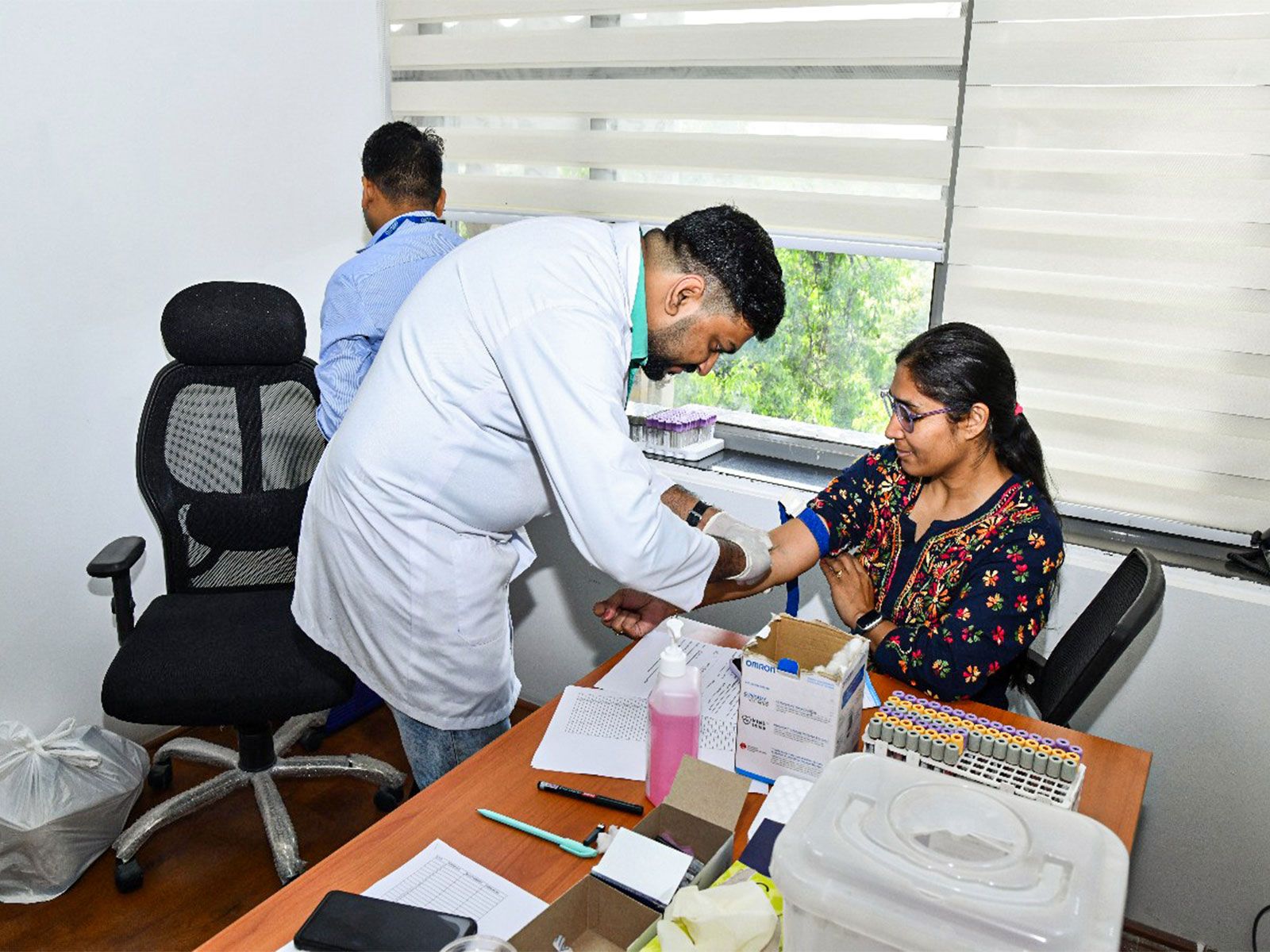
Shimla (Himachal Pradesh) [India], August 3 (ANI): Two fresh cases of scrub typhus have been confirmed at the Indira Gandhi Medical College and Hospital (IGMC) in Himachal Pradesh capital city, Shimla, taking the total number of positive cases detected this season to three, hospital authorities said on Monday.
According to Dr Rahul Rao, Medical Superintendent at IGMC, nine blood samples were tested on Monday, of which two were found positive for scrub typhus while the remaining seven tested negative.
The two patients who tested positive have been identified as Dhananjay (24), a resident of Shakra village in Karsog tehsil of Mandi district, and Kundan Lal (54), a resident of Durgapur in Shimla district.
Dr Rao said that, so far, 38 samples have been tested at IGMC, with three patients confirmed positive for scrub typhus.
He urged people not to ignore symptoms such as persistent fever, headache and body aches, particularly after visiting fields, bushes or forested areas, and advised them to seek medical attention immediately.
“Prevention remains the best protection against scrub typhus. Early diagnosis and timely treatment can successfully cure the disease,” Dr Rao said.
Health authorities have advised people, especially farmers, labourers and those working in fields or forest areas, to wear full-sleeved clothing, avoid sitting or lying directly on grass or shrubs, and maintain personal hygiene to reduce the risk of infection.
Scrub typhus is a bacterial infection caused by Orientia tsutsugamushi, which is transmitted to humans through the bite of infected larval mites (chiggers) commonly found in shrubs, grasslands and forested areas.
The disease typically causes high fever, severe headache, body aches and, in some cases, a characteristic black scab (eschar) at the site of the mite bite. If left untreated, it can lead to serious complications affecting multiple organs.
Historically, scrub typhus claimed the lives of many Allied troops stationed in Burma and Ceylon during World War II and has long been recognised as an important infectious disease across the Asia-Pacific region.
The disease is prevalent across a vast geographical area known as the “Tsutsugamushi Triangle,” extending from northern Japan and eastern Russia in the north to northern Australia in the south, and from Pakistan and Afghanistan in the west to countries across East and Southeast Asia.
Early diagnosis and prompt treatment with appropriate antibiotics significantly reduce the risk of severe illness and death. (ANI)
Related reading