Gandhinagar (Gujarat) [India], November 2 (ANI): Under the leadership of Chief Minister Bhupendra Patel, Gujarat is increasing renewable energy generation to meet the growing consumption of electricity and future demand.
According to the release, Prime Minister Narendra Modi has set the target of achieving net-zero emissions in the country by 2070. Several important initiatives have been implemented to reduce dependence on conventional fuels and meet 50% of the country’s electricity requirements through renewable energy sources by 2030.
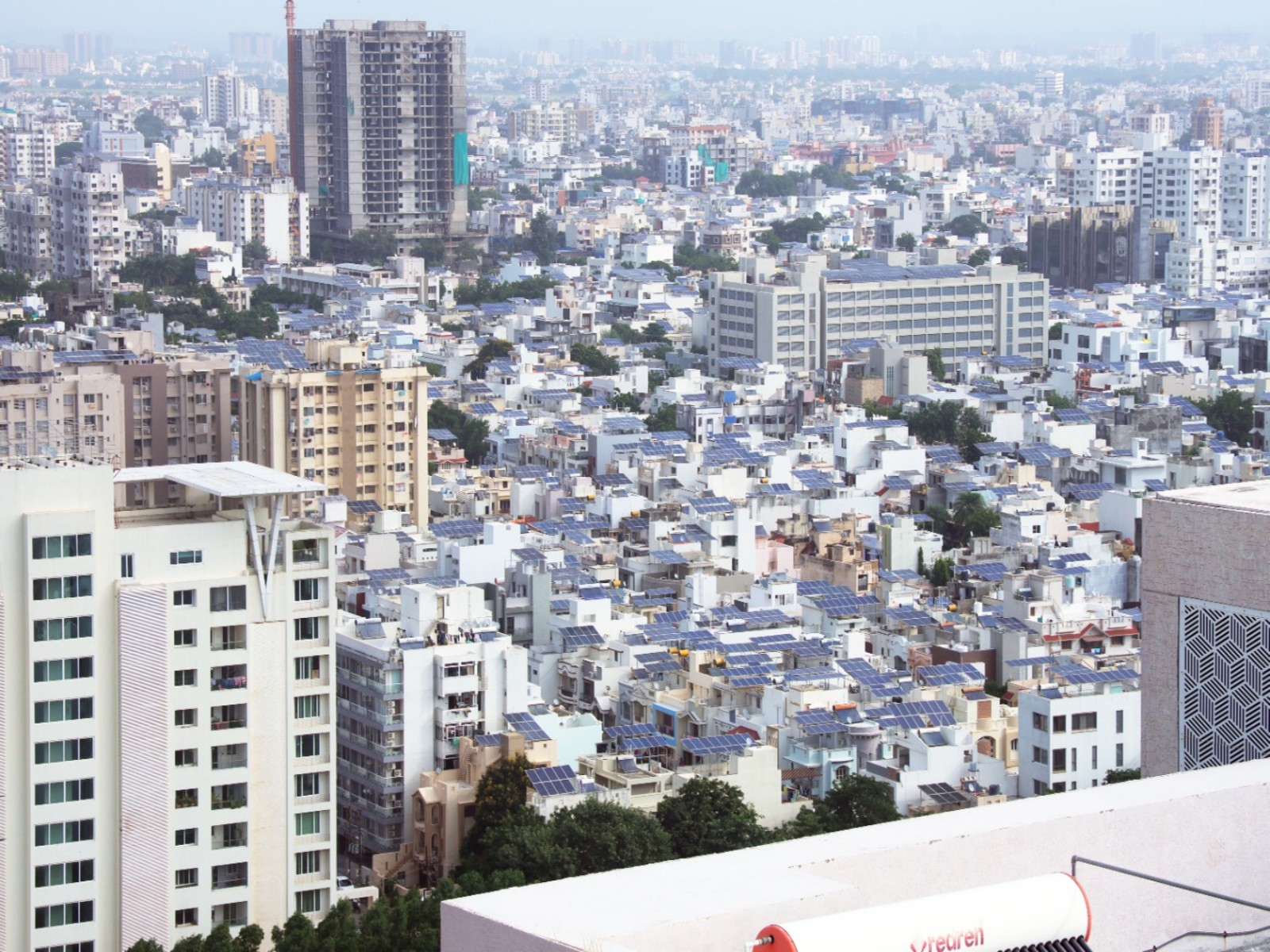
Gujarat has emerged as a leading state in the adoption of rooftop solar systems under the PM Surya Ghar: Muft Bijli Yojana. Gujarat accounts for 18.21% of the total rooftop solar systems installed across the country. So far, 9.08 lakh residential rooftop solar systems have been installed in the state, with a total installed capacity of 3,408 MW. With this, Gujarat has achieved 90% of its target of installing 10 lakh residential rooftop solar systems by March 2027.
The Gujarat Government provides financial assistance and regulatory incentives to expand the adoption of rooftop solar systems. An assistance of ₹2,950 is provided towards regulatory charges for rooftop solar systems of up to 6 kW in residential houses. In addition, exemption from network strengthening charges and the requirement of a net metering agreement have also been provided.
Along with the assistance provided by the Central Government, the State Government has also made provisions for additional financial assistance for small residential electricity consumers.
Accordingly, consumers belonging to the Scheduled Castes (SC) and Scheduled Tribes (ST) are required to pay only 5% of the prescribed cost when installing a new rooftop solar system with a capacity of up to 2.18 kilowatt-peak (kWp). Other consumers can also install rooftop solar systems by contributing 10% of the cost. After deducting the Central Government’s financial assistance (CFA) and the contribution made by the consumer, the remaining amount of the prescribed benchmark cost is borne by the State Government.
The Gujarat Government has made it easier for households to adopt solar energy. Under the state’s solar policy, the facility of ‘net metering’ is available for households. This means that the electricity meter records both the amount of electricity consumed by the household and the amount of electricity supplied back to the grid.
There is no limit on the ‘connected load’ for rooftop solar systems installed at residential premises, and surplus electricity generated at home can also be sold. Furthermore, domestic consumers are not required to pay any banking charges. These facilities have encouraged more and more people to install solar systems on their rooftops and avail the benefits of the scheme without any difficulty, the release stated.
As of September 30 2026, Gujarat’s total renewable energy capacity stands at 55,511.46 MW, accounting for 18.55% of the country’s total renewable energy capacity. Of this, solar energy capacity stands at 36,234.55 MW, contributing 21.2% to the national solar energy capacity. Meanwhile, the state’s wind energy capacity stands at 17,043.76 MW, accounting for 28.8% of the country’s total wind energy capacity. (ANI)
Related reading