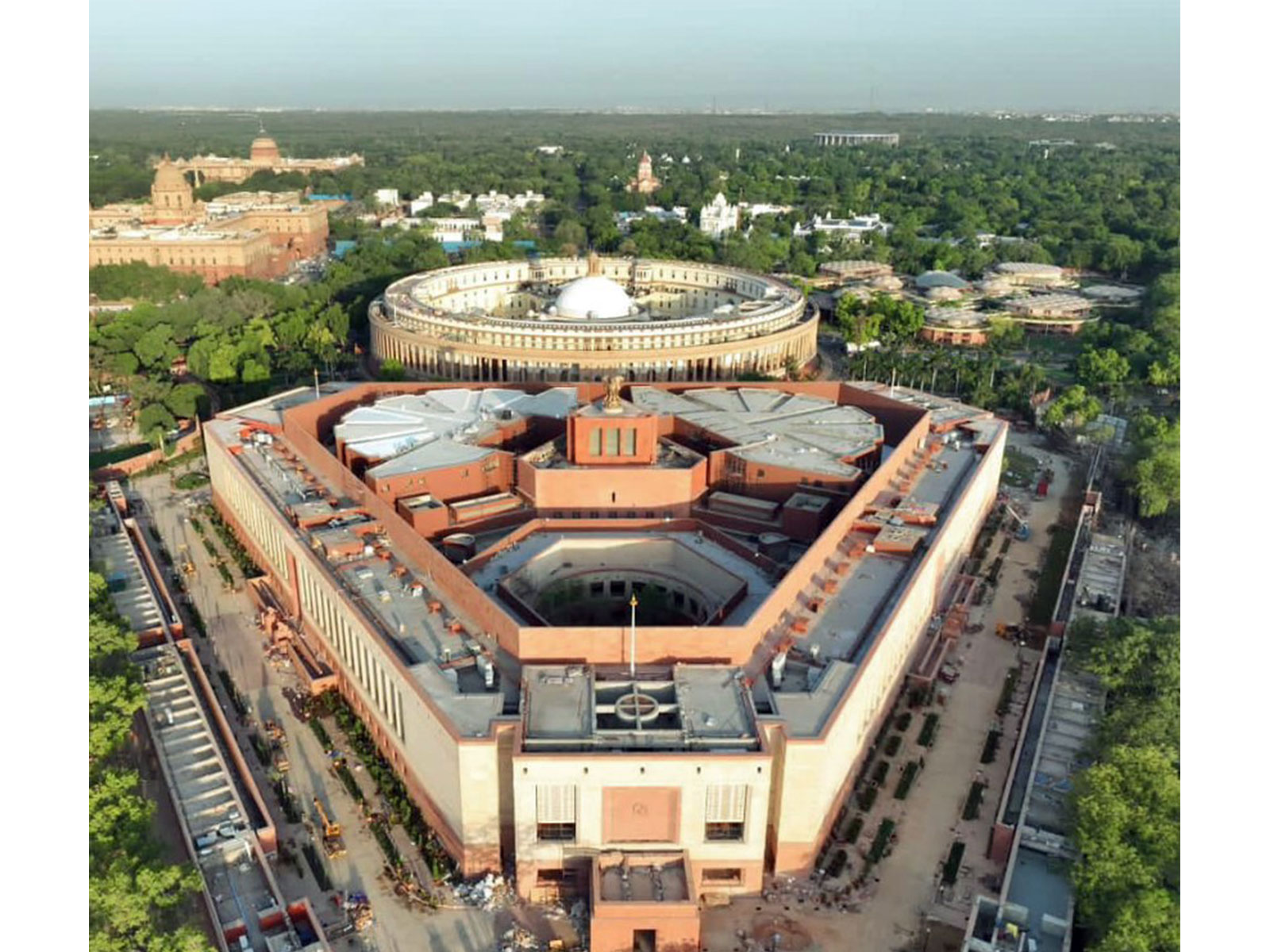
New Delhi [India], July 29 (ANI): The Lok Sabha on Wednesday passed the Public Examinations (Prevention of Unfair Means) Amendment Bill, 2026, after a heated debate that saw sharp exchanges between the ruling party and the Opposition, with Congress leader Rahul Gandhi criticising the legislation as grossly inadequate and the government defending it as a huge step towards curbing paper leaks.
The Bill was passed after Union Minister Jitendra Singh’s reply to the debate, during which he accused Rahul Gandhi of using “unparliamentary language” and questioned whether the Leader of the Opposition was aware of basic parliamentary norms.
“When such an important bill is being discussed, instead of offering suggestions, politics is being played over it. The unparliamentary language used by the Leader of the Opposition is shocking; it makes me wonder if he is even aware of basic parliamentary norms… What could be more unfortunate than calling the youth of this country–who are its future–“idiots”? he said.
The remarks referred to an expression used by Gandhi during his speech while narrating a conversation with a student. The comment drew objections from Treasury benches and was later expunged by Lok Sabha Speaker Om Birla.
The debate on the Bill began at 2 pm on Tuesday, with the House sitting until 11 pm, and resumed on Wednesday before its passage.
BJP members had earlier sought an apology from Rahul Gandhi, who is the Leader of the Opposition in Lok Sabha, over his remarks against Home Minister Amit Shah.
Participating in the debate, Rahul Gandhi spoke about a conversation with a student on the meaning of being a student, highlighting values such as humility and openness to learning. His remarks later triggered objections from ruling party members.
“You said to me that you are a student. What does it mean? She gave me the most beautiful answer. She said, ‘A student is someone who has an open mind and an open heart. A student is someone who, right from the beginning, accepts that they do not know everything. A student accepts that whatever they know will be superseded later by new knowledge. A student understands that the universe is constantly changing, dynamic, in movement, and so knowledge is also constantly changing. The most important value of a student is humility’,” Gandhi said.
He further quoted the student as saying, “‘The student knows that they do not know the truth, that the student respects the truth of all other living beings, all other human beings.’ Like Gandhiji said in his autobiography, The Story of My Experiments with Truth, ‘the search for my truth,’ meaning ‘this is my truth, your truth might be different.'”
As Gandhi continued narrating the conversation, his remarks prompted objections from Treasury bench members.
Parliamentary Affairs Minister Kiren Rijiju intervened, saying Gandhi could not use unparliamentary expressions in the name of a student and that such remarks should be expunged.
“Had Rahul Gandhi not used an unparliamentary word, nobody would have objected. I believe that he is using a word in the name of a student, but it is he who is using it… He cannot use an unparliamentary word. It should be expunged,” he said.
However, Opposition members criticised the Bill, alleging that it focuses mainly on punishment after offences occur rather than addressing the root causes behind examination leaks and strengthening the examination system, with ruling party MPs supporting the legislation as a step towards curbing examination paper leaks, ensuring transparency and restoring confidence among the youth.
Union Minister Piyush Goyal criticised Congress leader Rahul Gandhi, saying attempts to “malign” others would not help his political future and accusing him of lacking a vision for the country.
He alleged that Gandhi remained stuck in an outdated mindset despite a new sense of confidence emerging in India.
“There is no point in commenting on this disgraceful behaviour by Rahul Gandhi and his party, as they possess neither a vision nor a connection to society, nor the public’s trust, nor any plan for the future. I believe that attempts to malign others will neither secure him a political future nor indicate a future marked by wisdom,” Goyal said.
“A new sense of self-confidence has emerged in India, yet Rahul Gandhi remains stuck in an outdated mindset… The people and youth of India are discerning. Deciding that they would not make such a mistake, he chose to stage a sit-in outside–perhaps to gain experience and see what the Prime Minister’s residence and office look like,” he further added.
BJP MP Sanjay Jaiswal said the Public Examinations (Prevention of Unfair Means) Amendment Bill is an important step towards making the law stricter, adding that the government is working on reforms to ensure transparency in examinations and build confidence among the youth.
Speaking to ANI, Jaiswal said, “This is a very important step. The law will have to be made stricter… The charge sheet will be filed within 2 months, and the judgment will come within 3 months… We are also working on reforms. Everything will remain transparent… It is our responsibility that the youth should not have any doubt about the transparency of any examination…”
Union Minister Jayant Chaudhary said the Bill aims to empower the youth by ensuring justice through fast-track courts and building confidence in a robust and transparent examination system.
“A comprehensive legislative draft has been formulated to empower the youth… The aim is to ensure that youth receive justice through fast-track courts and gain confidence in a robust and transparent examination system… It has been passed by the Lok Sabha and is set to move to the Rajya Sabha tomorrow,” Chaudhary said.
Shiv Sena MP Naresh Mhaske said, “Today marks a major blow to those responsible for leaking exam papers–such as the NEET exam–and serves as a stern deterrent. This bill has been enacted to ensure severe punishment for those who engage in such activities.”
Additonally, BJP MP Anurag Thakur criticised Congress leader Rahul Gandhi over the use of the word “idiot”, saying that if the remark was directed at a student, the BJP strongly objects to it. However, he said there would be no objection if Gandhi used the word for himself.
“… If Rahul Gandhi has used the word idiot for a student, we have strong objections. If he has used the word idiot for himself, we have no objection. Rather, we welcome it. It’s better late than never that he has realised, acknowledged, and uses the word for himself,” Thakur said.
Congress MP Karti Chidambaram, however, criticised the Bill, saying it would not resolve the underlying issues behind examination paper leaks and that broader reforms were required in the examination process and the functioning of the National Testing Agency (NTA).
He also demanded an inquiry into the handling of student protests, saying any breach of protocol by law enforcement agencies should invite departmental action.
“The Bill has been passed, but it is not going to solve the problem at hand, which is about the exam paper leak. This does not strengthen the process of setting exam papers and issuing them on the day of the exam. All this Bill does is impose a stricter punishment after a leak has happened, and after an investigation… Setting up fast-track courts has never reduced the incidents of crime, and they even require infrastructure, while the Bill does not talk about how they will set up infrastructure. The real reformation should be on the NTA, which is mandated to run these exams… In reality, a private company called Innovative View is actually outsourcing most of the activities that run the exam, which is also the root of all the confusion. The Parliament must ask for an investigation into this company… The youth of the country have been let down,” Chidambaram said.
He also raised concerns over the handling of student protests and demanded an inquiry.
“No civilised and mature country uses brutal force against its own people… If there is any breach in the protocol in the way in which the protest was handled by law enforcement, a full-fledged investigation must take place and departmental action must happen.”
Rashtriya Loktantrik Party MP Hanuman Beniwal also criticised the Bill, saying it would not provide any significant relief and called for stricter measures to tackle examination paper leaks.
He also questioned the action taken against protesters and demanded clarity on the orders behind the lathi-charge and firing.
“The Leader of the Opposition wasn’t asking for anything unreasonable; we simply wanted to know on whose orders the lathi-charge and firing took place… Members of the ruling party used abusive language and prevented the Leader of the Opposition from speaking… The bill already contains provisions for punishment and fines; if someone leaks a paper, what difference does it make to that individual whether the penalty is a Rs 10 crore fine or 5 to 10 years in prison? We demanded that the burden of proof be placed on the accused–requiring them to prove their innocence. We also suggested that narco-analysis and polygraph tests be included as direct measures for any suspect taken into custody… I do not believe this bill will yield any significant benefit,” Beniwal said.
Later, in a press conference, Congress leader Rahul Gandhi launched an attack on the Centre over the Public Examinations (Prevention of Unfair Means) Amendment Bill, calling it “not even a band-aid” when the education system needs “surgery”.
Rahul Gandhi, who is Leader of the Opposition in Lok Sabha, alleged that the government was not addressing the root cause of paper leaks.
The Public Examinations (Prevention of Unfair Means) Amendment Bill, 2026 was passed in the Lok Sabha after a long debate and sharp exchanges. BJP members objected to Rahul Gandhi’s remarks during his speech.
Answering an ANI query on the bill passed during his press conference, Rahul Gandhi said the Bill is not worth discussing.
“What are the students saying? The students are saying that the education system does not work, our papers are leaked, and we go through extreme pain and difficulties. It is too expensive. And what is the government’s response? We will increase the punishment from one year to ten years. What difference does it make?” he asked.
“You do not punish anyone anyway. Nobody has been convicted; there has been no conviction till date. And you are saying that we will increase the punishment from one year to ten years. You are also saying that we will increase the punishment because we expect that there will be paper leaks. That is what the Bill is saying. The bill is saying that we accept paper leaks. And we will punish those people who do paper leaks. We are saying no, we don’t accept paper leaks,” he added.
The Bill proposes to enhance the punishment for persons resorting to unfair means by increasing the term of imprisonment to not less than five years, extendable up to ten years, as against the existing provision of imprisonment for a term of not less than three years, extendable up to five years.
The maximum fine is also proposed to be enhanced from Rs 10 lakh to Rs 50 lakh.
For service providers found involved in offences, the Bill proposes to increase the maximum fine to Rs 5 crore and extend the period of debarment from conducting any public examination from four years to eight years.
For organised examination-related crimes, the Amendment Bill proposes to increase the minimum term of imprisonment from five years to seven years, extendable up to ten years, while enhancing the maximum fine from Rs 1 crore to Rs 10 crore.
The Bill also empowers the Centre to constitute a Special Task Force for probing the paper leak and examination-related offences and also proposes a new Section 12A providing for completion of investigation within two months, designation of Courts of Session as Special Fast Track Courts for day-to-day trial of offences under the Act, completion of trial within three months from the date of filing of the charge sheet, and appointment of Special Public Prosecutors for every Special Fast Track Court. (ANI)
Related reading