New Delhi [India], June 5 (ANI): To bolster environmental oversight and combat the persistent issue of illegal mining, the central government has introduced mandatory third-party environmental audits for industries.
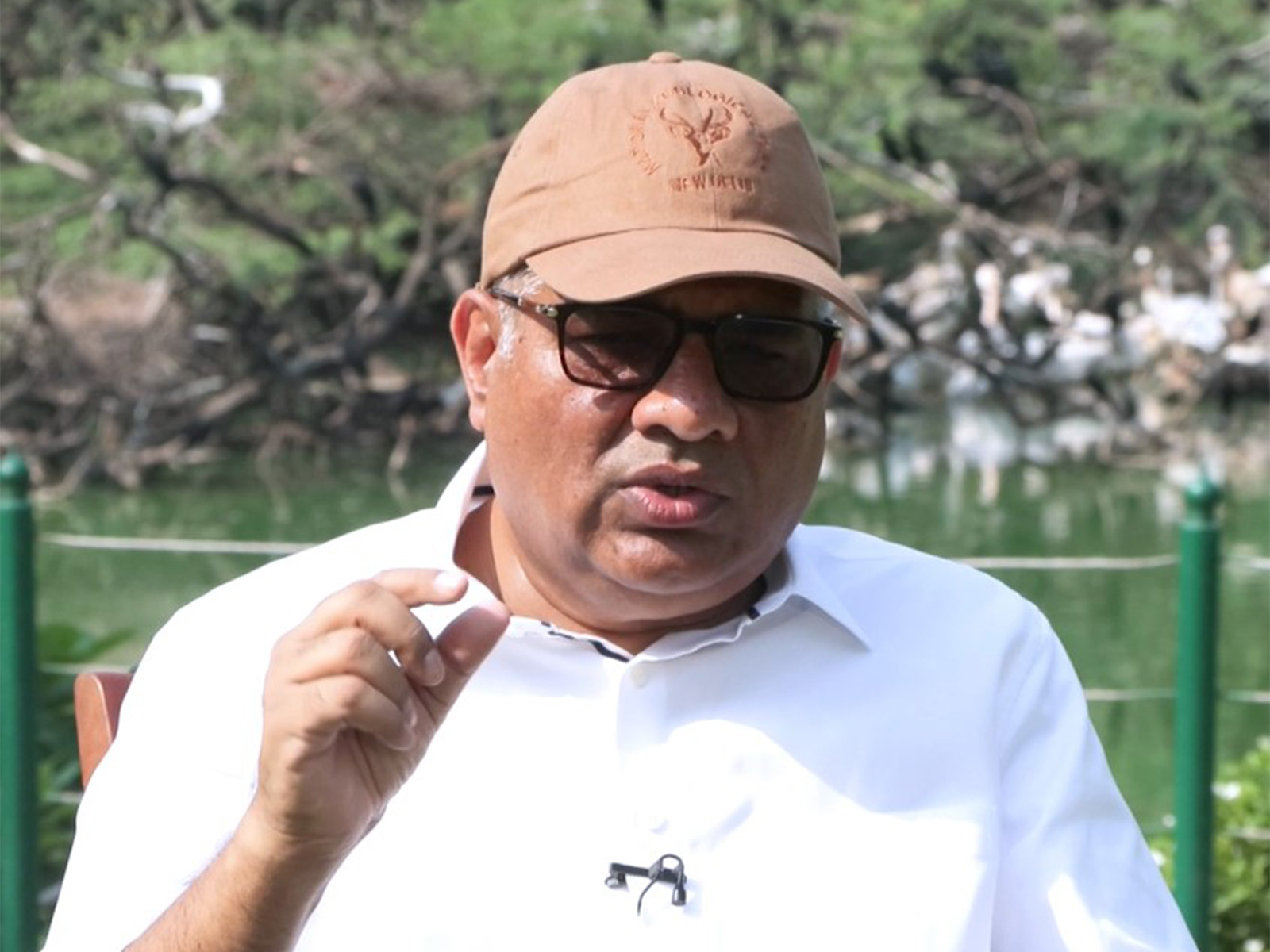
Speaking with ANI, Union Environment Minister Bhupender Yadav emphasised that this new process is designed to ensure that industries strictly adhere to environmental standards while fostering greater rule adherence.
“Environmental standards are strictly followed, and these people also used to say many times that your monitoring system should be made stronger. The new change that has been made is that the subject of environmental audit and third-party audit has been included…we have made it mandatory for environmental companies, whom we have given permission based on environmental norms, to submit an environmental audit,” said Yadav.
Responding to concerns that persist over large tracts of land being handed to big business houses and builders for development, alongside the continuing challenge of illegal mining, Yadav said that a comprehensive framework is now in place.
Emphasising that the new process would lead to better rule adherence, he said, “We have developed a complete process and rules for a third-party environmental auditor. And I think this process of environmental audit will help our existing industries to follow environmental rules better, and we have made it a rule now.”
Under new rules, third-party auditors will monitor existing industries to ensure stricter adherence to environmental norms, a move aimed at reining in violations and checking illegal mining.
To address the growing threat of urban waste, the government has introduced new rules requiring entities that produce over 100 kg of waste, or societies in designated areas, to manage their own waste disposal solutions.
“The biggest danger seen in cities is solid waste. We are the ones creating solid waste; no one else is, and such huge piles of garbage are accumulating. Now we have also brought new Solid Waste Management Rules, in which those who produce more than 100 kg of waste in a particular area that we have given to societies will have to make their own solutions for waste disposal. These Solid Waste Management Rules and Environmental Auditor Rules, which are part of the Prime Minister’s reform process, will be more helpful in making ‘Ease of Living’,” he said.
Regarding the Supreme Court’s decision to form a five-member High-Powered Committee to define and demarcate the ecologically sensitive Aravalli Range, the government has pledged full cooperation, knowledge sharing, and data support.
Yadav reiterated the government’s readiness to work with the judiciary, stating, “We welcomed the decision given by the Supreme Court. The Supreme Court formed a committee again yesterday; we will provide full cooperation in that…We welcome it and will certainly provide all the cooperation, knowledge sharing, and data that we have. And we want everyone to come together in the conservation of the Aravallis; we welcome everyone,” he said.
The Supreme Court has directed a committee, headed by Kanchan Devi (Director General of the Indian Council of Forestry Research and Education), to submit a conservation report by August 31. The bench, consisting of Chief Justice of India Surya Kant, Justice Joymalya Bagchi, and Justice Vipul M Pancholi, stressed that ecological conservation requires informed expert evaluation and that future actions must be based on scientific assessment, as per a May 25 order, which was made online on Tuesday.
The Aravalli Range serves as a critical natural barrier between the arid northwestern desert and the fertile northern plains, acting as an ecological lifeline for the region. The court has previously stayed all mining activities across the entire Aravalli region, and the matter is scheduled for further hearing on September 7. (ANI)
Related reading