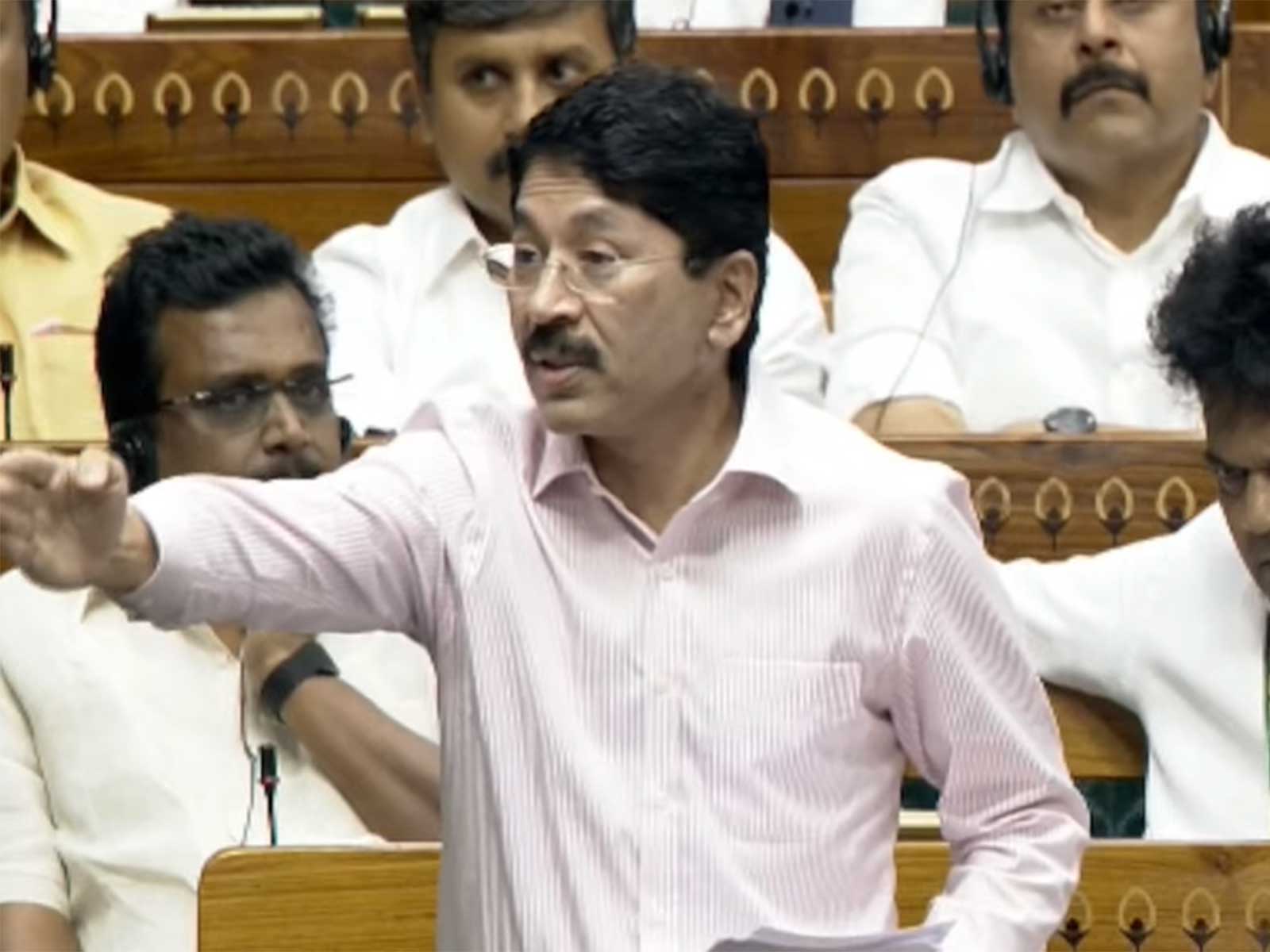
New Delhi [India], July 28 (ANI): Dravida Munnetra Kazhagam (DMK) MP Dayanidhi Maran on Tuesday called for the abolition of the National Eligibility cum Entrance Test (NEET) for medical admissions, reiterating his party’s long-standing resolve against the examination.
Discussing the Public Examinations (Prevention of Unfair Means) Amendment Bill, 2026, in the Lok Sabha, the DMK leader argued that several NEET aspirants have died by suicide across the country. He argued against a uniform examination when education across states remains varied.
Beginning his address with a strong proposition, Dayanidhi Maran said, “Enough is enough, ban NEET. Till now in India, 107 students have died by suicide due to competitive exams. Of these 107, 93 students (suicides) were linked to the NEET exams. This year, about 14 students died by suicide because of the NEET. In Tamil Nadu, 26 people till now have died by suicide because they could not handle the pressure. They belonged to various segments (of society), and not only villages but also in cities. The constituency which the Speaker represents, Kota, there 40 students died by suicide till date.”
Criticising the Bill, he added that the proposed legislation does not address the core issue with the NEET examination, which he argued created an uneven playing field for students.
He said, “The BJP government (in Rajasthan) came up with a fantastic idea of preventing suicides. Because students were hanging with the fans, they removed the rods and added springs so if the students try to hang themselves, the fan will come down. The same is with this law. The Bill is not addressing the core issue. The core issue is NEET. NEET is against students, especially the first-generation students wanting to become doctors. We don’t have a uniform education system in India.”
He said that the DMK has been opposing the NEET examination since it was introduced in 2016. Maran said that the party has held protests, passed resolutions in the Tamil Nadu Assembly and also approached leaders across India to rally for abolishing the NEET exam.
“DMK and Tamil Nadu were the first voice against NEET. Not because of the administration but the design itself, where a single examination decides access to medical education. This debate is for the poor students who dream to be doctors. In Tamil Nadu, we opposed it when it was proposed, when students lost their seats and when students lost their lives. NEET has become a coaching centre examination rather than an aptitude test. Unfortunately, our warnings were never heard. In 2016, Mudhalvar Kalaignar (former Tamil Nadu CM M Karunanidhi) opposed any entrance test for technical education. He reasoned an unfair playing field, where some sections of students are predisposed to success and the majority to fail,” he said.
Recalling the 2017 Anitha suicide case, he added, “In September, 17-year-old Anitha took her own life. She was a Dalit girl and first-generation student, who was a topper in her class. Finance Minister Nirmala Sitharaman said NEET will not be for Tamil Nadu, but NEET came. She (Anitha) could not go to a coaching centre or train herself because she was from a small village. She was a topper, but failed. We salute her sacrifice as she has given us the urge to fight against NEET.”
“MK Stalin had written to all the CMs to resist NEET. We passed a unanimous resolution to ban NEET in Tamil Nadu, but your Governor refused to give passage to the Bill,” the DMK leader added.
Lok Sabha took up the Public Examinations (Prevention of Unfair Means) Amendment Bill for discussion at 2 pm today.
The Bill proposes to enhance the punishment for persons resorting to unfair means by increasing the term of imprisonment to not less than five years, extendable up to ten years, as against the existing provision of imprisonment for a term of not less than three years, extendable up to five years.
The maximum fine is also proposed to be enhanced from Rs 10 lakh to Rs 50 lakh.
For organised examination-related crimes, the Amendment Bill proposes to increase the minimum term of imprisonment from five years to seven years, extendable up to ten years, while enhancing the maximum fine from Rs 1 crore to Rs 10 crore.
The Bill also empowers the Centre to constitute a Special Task Force for probing the paper leak and examination-related offences and also proposes a new Section 12A providing for completion of investigation within two months, designation of Courts of Session as Special Fast Track Courts for day-to-day trial of offences under the Act, completion of trial within three months from the date of filing of the charge sheet, and appointment of Special Public Prosecutors for every Special Fast Track Court. (ANI)
Related reading