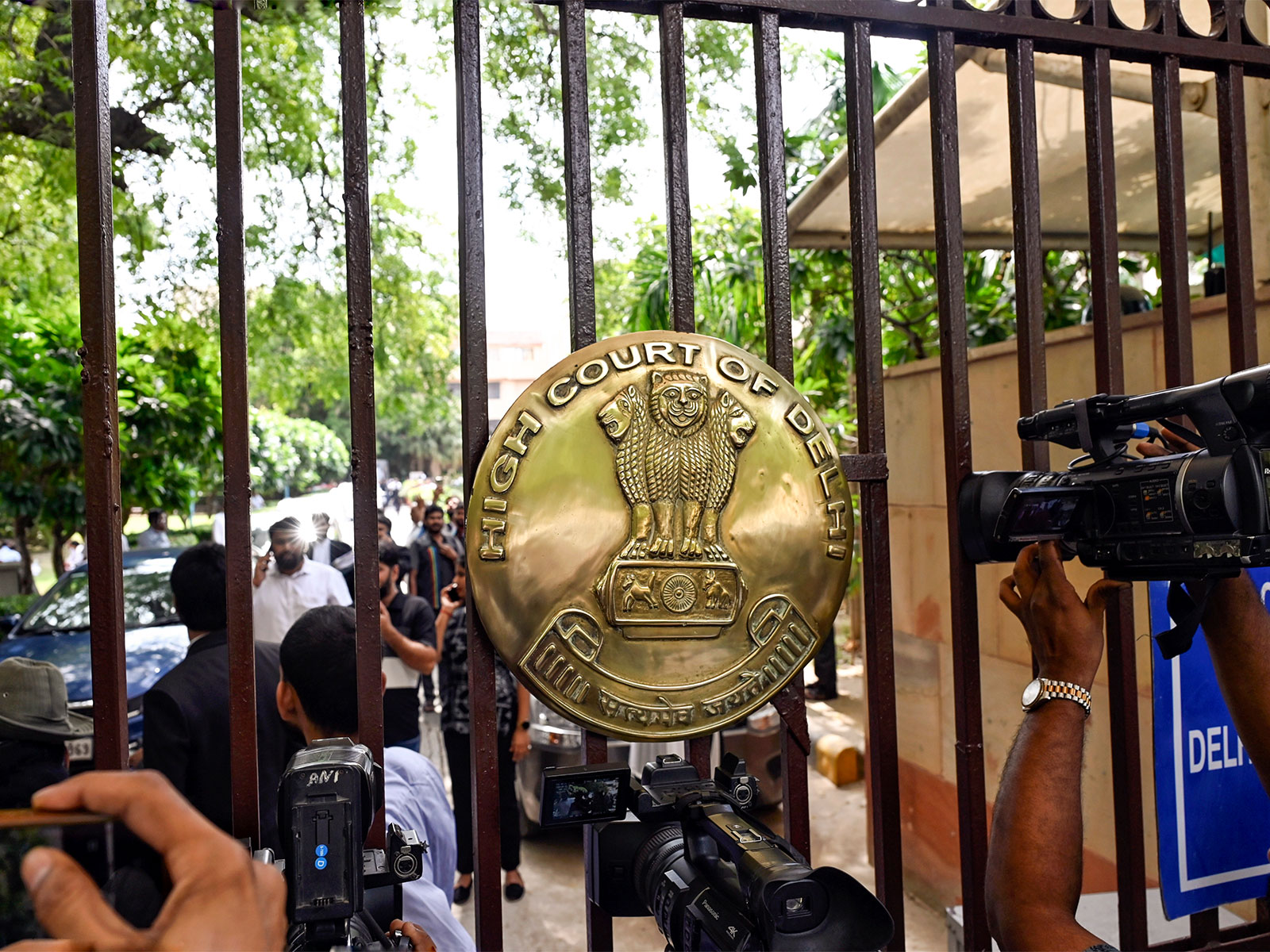
New Delhi [India], July 2 (ANI): The Delhi High Court has set aside the conviction and sentence of retired Major General Anand Kumar Kapur in a disproportionate assets case prosecuted by the Central Bureau of Investigation (CBI), holding that the prosecution failed to establish beyond reasonable doubt that he possessed assets disproportionate to his known sources of income.
The Court also held that Kapur was denied a fair opportunity to lead defence evidence during the trial.
Allowing the criminal appeals, Justice Jasmeet Singh directed that the judgment of conviction dated September 27, 2016 and the order on sentence dated September 29, 2016, passed by the Special Judge, Patiala House Courts, be set aside.
The Court held that the sanction granted for prosecution was invalid in law, the appellant was denied a fair and adequate opportunity to present his defence, and the prosecution failed to discharge its burden of proving disproportionate assets during the check period. Consequently, the conviction was held to be unsustainable, and the appeals were allowed.
Senior Advocate Vivek Kohli, along with advocates Shashank Dewan, Nikita Dewan, Ayush Kumar and Manan Kesar, appeared for the appellant. The CBI was represented by Rajesh Kumar, Special Public Prosecutor, assisted by Changez Khan.
The case arose from a CBI FIR alleging that Kapur had accumulated disproportionate assets during the period from November 14, 1971, to October 10, 2007. In 2016, the trial court convicted him under Sections 13(1)(e) and 13(2) of the Prevention of Corruption Act, sentencing him to one year’s rigorous imprisonment, imposing a fine of ₹50,000 and directing confiscation of assets worth over ₹2.22 crore. Kapur challenged both the conviction and the confiscation order before the High Court.
A key issue before the High Court was the closure of the defence evidence by the trial court. The High Court noted that while the prosecution was granted nearly six months to examine around 80 witnesses, the defence was effectively confined to only three dates to examine nine witnesses. On the final date, September 16, 2016, defence evidence was closed because lawyers were on strike, despite the appellant being present before the court.
Justice Singh held that although courts are not expected to adjourn proceedings merely because advocates are on strike, the trial court was required to balance the Supreme Court’s direction for expeditious disposal with the accused’s constitutional right to a fair trial under Article 21.
The Court observed that procedural timelines cannot override the guarantee of a fair opportunity to defend oneself and concluded that the trial court adopted an unduly technical and hurried approach in closing the defence evidence, causing serious prejudice to the appellant.
The High Court also scrutinised the computation of disproportionate assets and found several deficiencies in the prosecution case. It held that suspicion cannot substitute proof and that criminal findings cannot rest on assumptions, conjectures or unproved documents. The Court disagreed with the trial court’s valuation of several assets, including the Defence Colony property, and found that the prosecution had failed to establish that amounts higher than those reflected in registered documents had actually been paid.
The Court further accepted several financial explanations advanced by the defence, including friendly loans routed through banking channels, transfers from the appellant’s mother, gifts received from family members and other documented financial transactions.
It observed that these transactions were supported by oral and documentary evidence and that the prosecution had failed to establish that they were sham or fictitious. The Court held that these legitimate sources of income had been wrongly excluded by the trial court while computing the appellant’s assets and income.
Justice Singh also found fault with the sanction granted for prosecution, observing that relevant material, including explanations furnished by the appellant, had not been properly placed before the sanctioning authority. The Court held that the omission deprived the sanctioning authority of the opportunity to consider material directly relevant to the appellant’s explanation regarding the source of funds.
Concluding the judgment, the High Court held that the sanction for prosecution was invalid, the appellant had been denied a fair opportunity to lead defence evidence and the prosecution had failed to prove beyond reasonable doubt that he amassed assets disproportionate to his known sources of income.
Accordingly, the conviction and sentence were set aside and both criminal appeals were allowed. (ANI)
Related reading