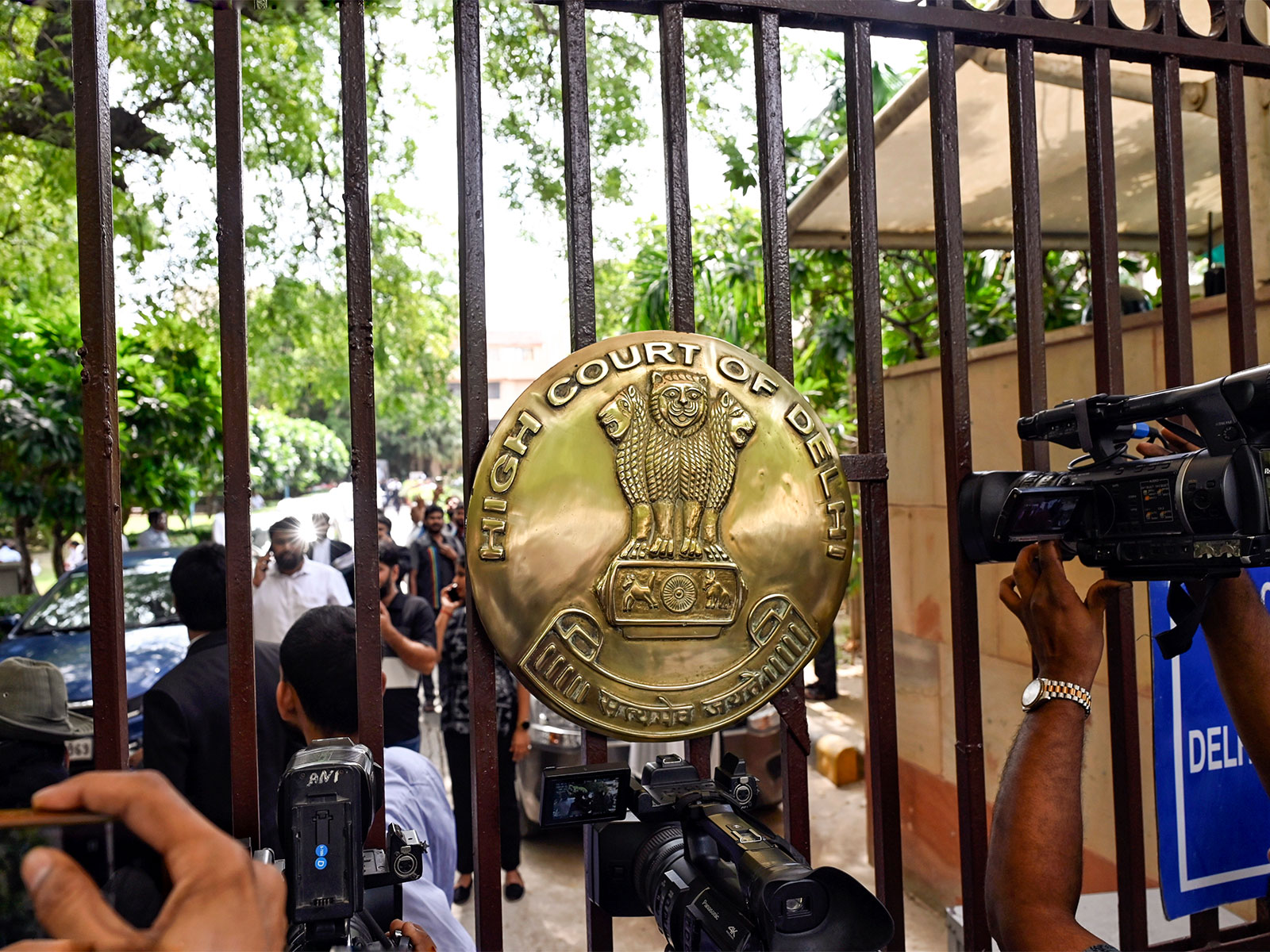
New Delhi [India], July 22 (ANI): The Delhi High Court on Wednesday permitted the withdrawal of a Public Interest Litigation (PIL) seeking directions for the implementation of a wide range of fundamental rights under Article 21 of the Constitution, observing that the reliefs sought were too broad in nature.
The Court granted liberty to the petitioner to file a fresh petition confined to limited prayers and specific grievances.
A Division Bench comprising Chief Justice DK Upadhyaya and Justice Tejas Karia observed during the hearing that although the petitioner had approached the Court in public spirit, the prayers made in the PIL were sweeping in nature.
“The petitioner has filed this petition in public spirit, but the question is whether the Court can deal with such wide prayers,” the Bench remarked before permitting the petitioner to withdraw the plea with liberty to institute a fresh petition raising limited grievances.
The PIL was filed by Advocate Sunil Kumar Sharma, who appeared as the petitioner in person. Invoking Article 226 of the Constitution, the petition sought a writ of mandamus directing the implementation of various rights claimed to flow from Article 21 for every citizen of India.
According to the petition, the right to life under Article 21 encompasses several rights, including the right to medical treatment, livelihood, peaceful living, speedy trial, protection of reputation, pollution-free water, education, health, and safeguards against wrongful detention.
It also sought directions regarding citizenship by birth, recognition of passports as concrete proof of citizenship, and measures to make school education more employment-oriented.
The petitioner further proposed introducing compulsory vocational training in schools in trades such as carpentry, plumbing, electrical work, computer skills, food processing, tailoring, handicrafts, garment manufacturing, soap and candle making, yoga, incense-stick production and other skill-based courses, contending that such reforms would help tackle unemployment among the youth.
The plea stated that it had been filed solely in public interest and that the petitioner had no personal or private interest in the litigation. It also asserted that the petition was intended for the benefit of the general public and was not motivated by any personal gain.
However, the High Court declined to entertain the PIL in its present form, holding that the reliefs sought were too wide for adjudication in a single proceeding. The Bench accordingly allowed the petitioner to withdraw the petition while granting liberty to file a fresh plea restricted to specific issues and limited prayers. (ANI)
Related reading