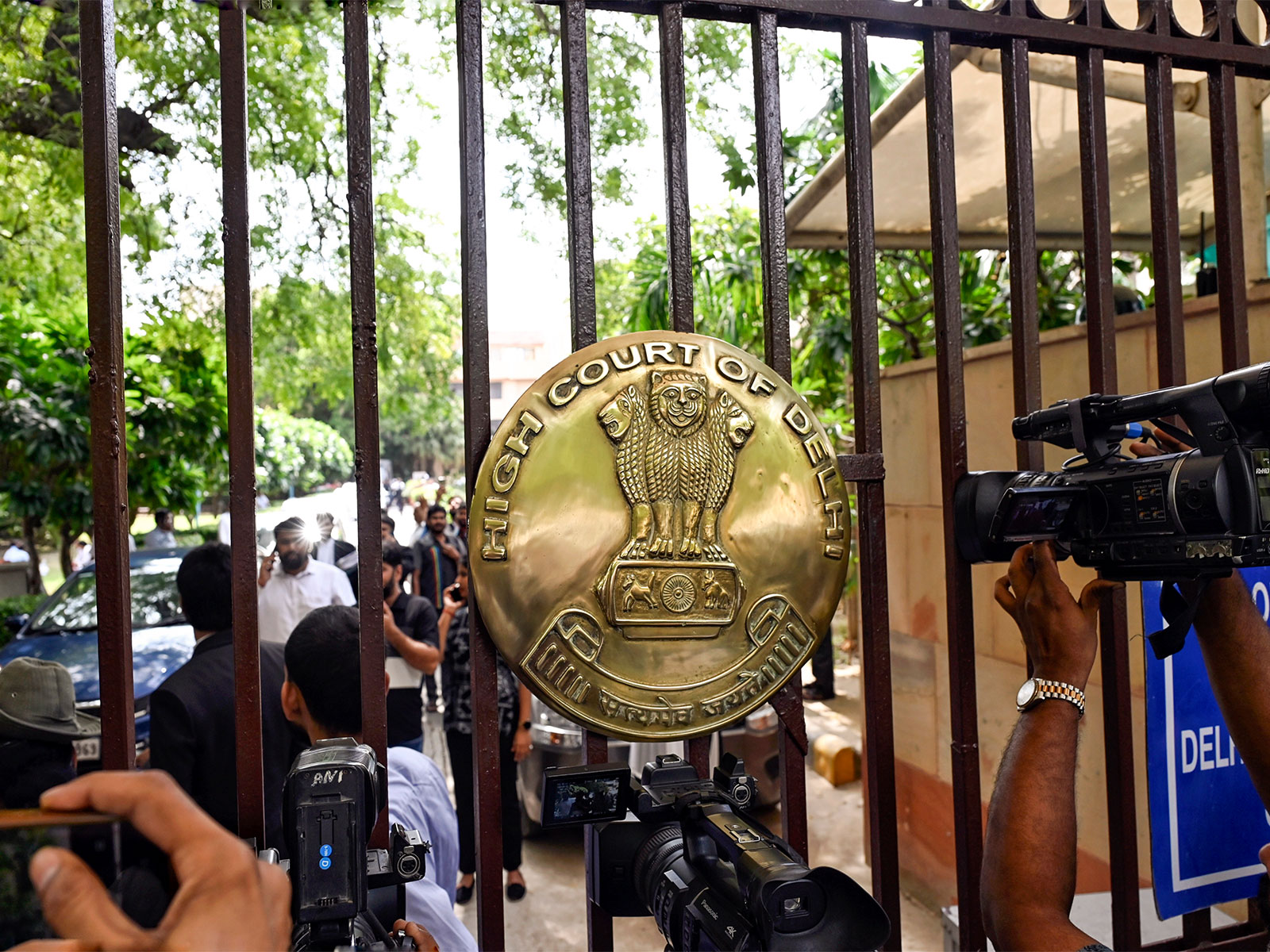
New Delhi [India], October 13 (ANI): An advocate has approached the Delhi High Court seeking strict enforcement of existing rules governing public protests and a uniform standard operating procedure (SOP) to prevent demonstrations from obstructing roads, disrupting traffic and affecting access to courts and commercial areas in the national capital.
In a public interest litigation (PIL), advocate Rishabh Saxena has sought directions to the authorities to ensure that protests are conducted at designated venues in accordance with the law, while balancing the constitutional right to peaceful assembly with the public’s right to unobstructed movement.
The plea seeks enforcement of the Supreme Court’s judgments in Mazdoor Kisan Shakti Sangathan v. Union of India and Amit Sahni v. Commissioner of Police, along with the Delhi Police Standing Order, which lays down conditions for holding demonstrations.
The petitioner has also sought a review of the existing rules to cover the alternative protest venues recently designated by the Delhi Police. He has argued that merely shifting protests from Jantar Mantar to other locations would not address the concerns unless clear rules and effective traffic-management arrangements are put in place.
According to the petition, the petitioner encountered a gathering on or around the carriageway and central traffic island near the Mandi House roundabout on October 12 while travelling from Defence Colony to the Competent Authority at Barakhamba Road for professional work.
He has claimed that the traffic disruption delayed his journey by approximately two hours, causing him to reach his destination around 4 pm. Photographs submitted with the petition are stated to show vehicles, including taxis, auto-rickshaws, motorcycles and private cars, caught in slow-moving or halted traffic near the gathering.
The petitioner has alleged that traffic personnel, barricades, diversion signs and an emergency corridor were not discernible in the photographs. However, the plea acknowledges that the photographs alone cannot establish the duration of the disruption, the total number of vehicles affected or whether traffic arrangements were deployed elsewhere.
The petition cites instances of demonstrations and prolonged sit-ins at Jantar Mantar over the past few years to contend that recurring protests can affect traffic movement and access to business districts, public institutions and other important locations in central Delhi.
It refers to various agitations, including the wrestlers’ protest in 2023 and sit-ins over employment and examination-related issues, and alleges that prolonged demonstrations and traffic diversions have affected commuters, office-goers, traders, patients, emergency services, drivers and daily-wage workers.
The plea further refers to a Delhi Police order dated October 11, 2026, which de-notified Jantar Mantar as a protest venue and designated Ramlila Ground, Burari Ground and CBD Ground as alternative locations.
The petitioner has sought a review and update of Standing Order No. 10/2018, including provisions on participant limits, permitted timings, advance applications, restrictions on structures and marches, and the prohibition on blocking roads and traffic. He has also sought clear conditions for the newly designated venues.
Among the principal reliefs sought are directions to ensure that no demonstration, dharna or public assembly obstructs roads around Mandi House, Jantar Mantar and other areas of central Delhi outside designated protest sites. The plea also seeks unobstructed access to the Delhi High Court and other courts, tribunals and statutory authorities in central New Delhi.
The petitioner has asked the authorities to frame or review a uniform SOP covering advance assessment of the likely traffic impact of protests, deployment of traffic personnel, diversion plans, timely public advisories and coordination with ambulance and fire services to preserve emergency access.
The plea also seeks details of permissions granted for protests at Jantar Mantar between January 1, 2022, and October 11, 2026, along with information on alleged violations of prescribed conditions and the action taken by the authorities.
As interim relief, the petitioner has sought a status report from the Delhi Police Commissioner and the Special Commissioner of Police (Traffic) on the guidelines governing demonstrations, traffic-management arrangements and advisories issued in connection with assemblies and disruptions between October 10 and 12, 2026.
The petition clarifies that it does not seek a blanket ban on peaceful protests but calls for effective enforcement of the existing legal framework to protect the right to demonstrate while preventing avoidable obstruction of public roads and essential services.
The Delhi High Court on Tuesday agreed to hear two petitions seeking standard operating procedures (SOPs) to regulate protests, after the petitioners claimed that recent demonstrations had caused business losses of around ₹2,000 crore and disrupted access to commercial hubs such as Connaught Place.
Senior advocate Sacchin Puri mentioned the matter before the bench headed by the Chief Justice, seeking an urgent hearing. He said one petition had been filed by an advocate and the other by a traders’ association, with both seeking measures to ensure that protests do not disrupt the functioning of courts and commercial activities.
“More than ₹2,000 crores have been lost in recent times due to this. We are seeking implementation of SOPs. It has to be in a manner in which it doesn’t disturb the work of lawyers and traders. Places like Connaught Place became completely inaccessible,” Puri submitted.
The petitions seek a mechanism to regulate demonstrations while protecting the right to protest and minimising inconvenience to the public, traders and lawyers.
The pleas come amid concerns over the impact of protest marches and demonstrations on traffic movement, access to business districts and the routine functioning of institutions in the national capital.
The petitioners have sought clear guidelines to ensure that protests are organised without unnecessarily obstructing public movement or bringing commercial activities to a standstill. The court agreed to hear the matter on Tuesday. (ANI)
Related reading