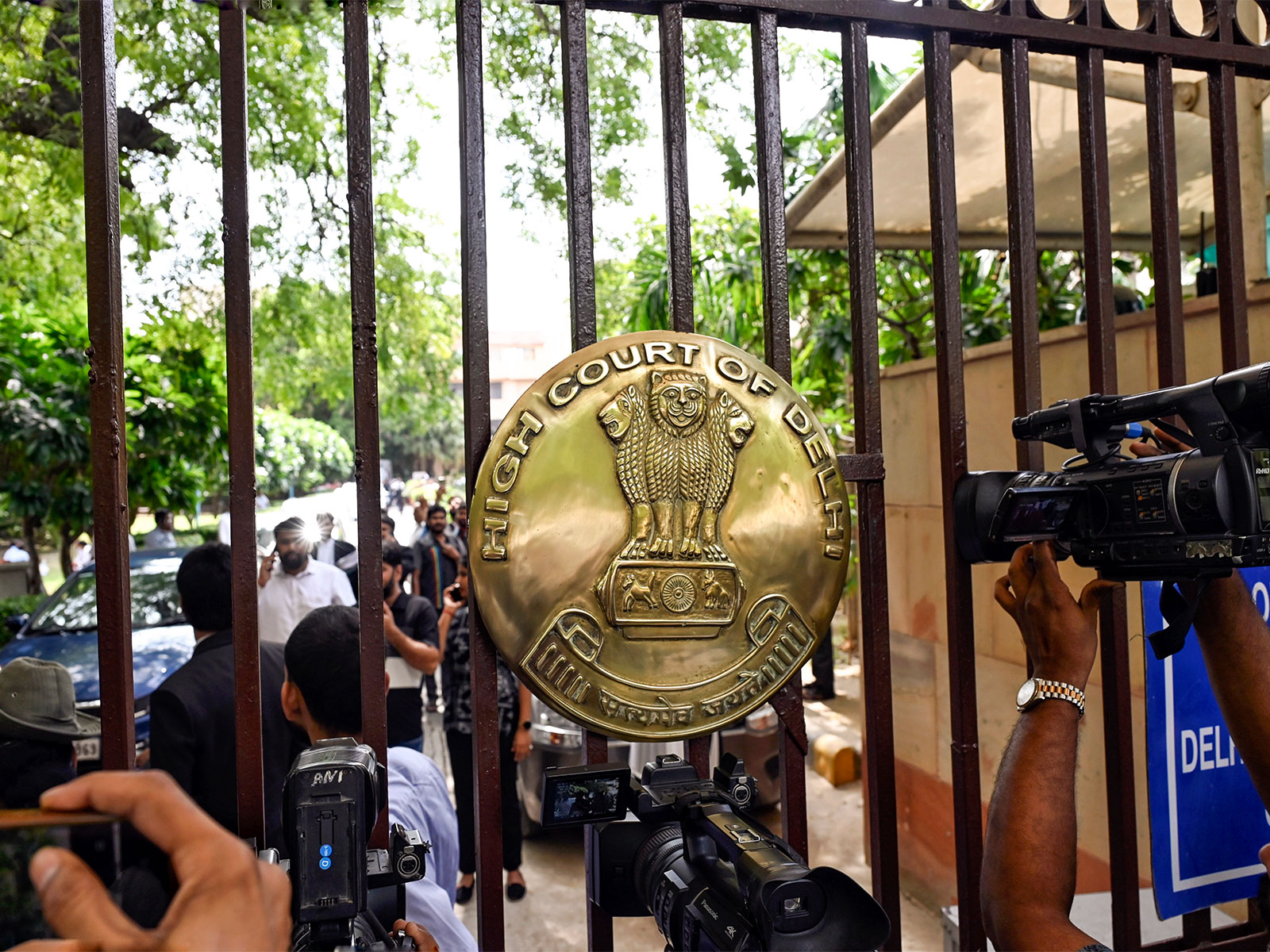
New Delhi [India], September 2 (ANI): The Delhi High Court on Wednesday issued notice on petitions challenging a partial award passed by an International Chamber of Commerce (ICC) arbitral tribunal in a dispute arising out of a mining-services contract connected with the Benga coal mine in Mozambique.
Justice Sachin Datta heard petitions filed by Black Gold Resources Private Limited (BGR) and Trident Chemphar Limited (TCL) against the partial award, which, by a 2:1 majority, allowed TCL, an admitted non-signatory to the contract, to be joined in the arbitration between BGR and Minas de Benga Limitada (MBL).
The Court granted the respondents three weeks to file replies and listed the matter for hearing on October 6, 2026.
The tribunal was headed by Professor Sundra Rajoo, with former Supreme Court judge Justice L. Nageswara Rao and DK Singh as co-arbitrators. In its May 5 partial award, Professor Rajoo and Justice Rao formed the majority in holding that TCL could be joined in the arbitration, while Singh dissented.
During the hearing, Senior Advocate Amit Sibal, appearing for BGR along with advocates Mayank Jain, Shaantanu Aggarwal, Madhur Jain and Arpit Goel, argued that both the mining-services contract and the arbitration agreement were governed by Mozambican law.
He submitted that the tribunal could not have joined a non-signatory without first deciding the applicable law. According to BGR, the tribunal wrongly applied Indian law to the issue despite the underlying contract being governed by Mozambican law. “We cited Mozambican law and in one word the tribunal rejected it,” Sibal submitted.
BGR relied on the Supreme Court’s ruling in Disortho S.A.S. v. Meril Life Sciences Pvt. Ltd. to argue that an arbitration clause ordinarily follows the law governing the underlying contract.
Senior Advocate Abhimanyu Mahajan, appearing for TCL, separately challenged the award on allegations of bias, non-disclosure and institutional failure by the ICC. Mahajan questioned the disclosures made by Professor Rajoo and the ICC’s handling of his appointment and the subsequent challenge against him.
According to TCL, Professor Rajoo had previously served as an arbitrator in another ICC arbitration involving Tata Projects and NMDC, entities allegedly connected with MBL’s ownership structure. TCL argued that the earlier appointment was a material fact that should have been disclosed under the ICC Rules and Section 12 of the Arbitration and Conciliation Act.
The petitioners alleged that when clarification was sought regarding the disclosures, Professor Rajoo initially stated that there was nothing further to disclose. However, after the earlier appointment came to light, he allegedly acknowledged that it ought to have been disclosed and attributed the omission to oversight.
TCL also raised the issue of Professor Rajoo’s alleged non-disclosure of criminal proceedings previously initiated against him in Malaysia in connection with allegations of criminal breach of trust. The proceedings were later quashed.
Mahajan argued that the issue was not the final outcome of those proceedings but whether the parties had received complete and timely disclosure of facts relevant to assessing an arbitrator’s independence and impartiality.
TCL also questioned the role of the ICC Secretariat, arguing that the earlier Tata Projects-NMDC arbitration was an ICC-administered proceeding and should have been identified through the institution’s own records.
Relying on the Delhi High Court’s earlier ruling in the MSA Global case, TCL argued that the matter raised serious concerns regarding arbitrator disclosures and transparency in institutional arbitration.
Senior Advocate Raj Sekhar Rao, appearing for MBL, opposed the petitions and submitted that the ICC Court had rejected the challenge against the presiding arbitrator, although reasons for the decision were awaited.
Rao also informed the Court that Justice L Nageswara Rao had recused himself from the arbitral proceedings.
After hearing the submissions, Justice Datta noted that following Justice Rao’s recusal, the tribunal was presently not fully constituted and was not functioning. Therefore, the Court said that no interim order was required at this stage.
The matter will next be heard on October 6. (ANI)
Related reading