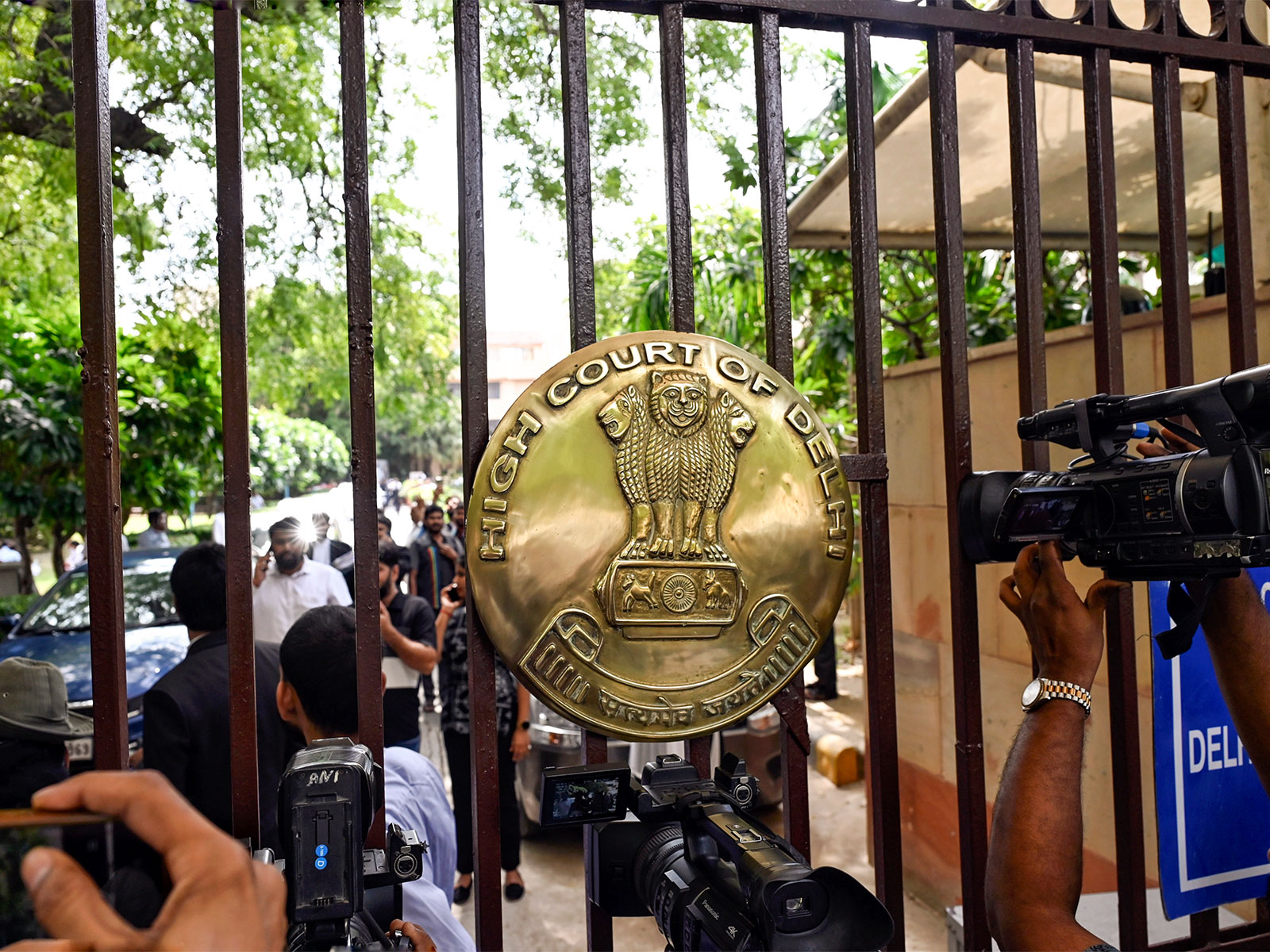
New Delhi [India], July 28 (ANI): The All India Council for Technical Education (AICTE) has informed the Delhi High Court that it has put in place a comprehensive statutory and regulatory framework to prevent the mushrooming of fake and unauthorised technical institutions across the country.
In a counter affidavit filed before the Court, AICTE said it regularly publishes lists of approved and unapproved institutions, issues public advisories before admission sessions and initiates penal action against institutions operating without approval.
The affidavit has been filed in response to a public interest litigation (PIL) filed by advocate Shashank Deo Sudhi and has been sworn by AICTE Director Dr Neetu Bhagat. AICTE submitted that it is a statutory body constituted under the AICTE Act, 1987, to ensure planned and coordinated development of technical education and maintain academic standards throughout the country.
It stated that the AICTE Act empowers the Council to regulate technical education and frame regulations governing the approval of institutions and technical programmes.
According to AICTE, it has framed detailed Approval Process Regulations and an Approval Process Handbook prescribing the procedure and minimum requirements for establishing new technical institutions, introducing new courses and increasing intake in existing institutions. It added that these regulations form the basis of its oversight over technical education institutions.
The Council told the Court that it maintains and periodically updates on its official website lists of approved and unapproved institutions so that students, parents and the public can verify the approval status of colleges before seeking admission. It also issues public notices, particularly before admission and counselling sessions, advising stakeholders to check the approval status of institutions and programmes and cross-check the list of unapproved institutions.
AICTE further submitted that it has established a comprehensive regulatory framework under the AICTE Act, the Approval Process Handbook and other applicable regulations, and takes action whenever institutions are found conducting technical programmes without obtaining the Council’s approval.
The affidavit states that institutions offering technical programmes without prior AICTE approval are liable for penal action under the Approval Process Handbook. Such institutions are declared unapproved, punitive proceedings are initiated against them, and their names are included in the list of unapproved institutions maintained by the Council.
AICTE also stated that institutions functioning from temporary or unapproved locations may face closure and other regulatory action, while the concerned State Governments or Union Territories may be asked to initiate appropriate civil or criminal proceedings against the defaulting institutions or their management.
It further submitted that institutions are not permitted to obtain approval for only some of their programmes. Any institution offering programmes falling within AICTE’s jurisdiction must obtain approval for all such programmes, failing which it is liable to face strict penal action under the applicable regulations. AICTE has also sought liberty to file a more detailed counter affidavit, if directed by the Court.
The counter affidavit has been filed pursuant to directions issued by the Delhi High Court recently, while hearing the PIL filed by advocate Shashank Deo Sudhi seeking action against fake universities and unrecognised higher educational institutions operating across the country.
A Division Bench comprising Chief Justice D K Upadhyaya and Justice Tejas Karia had termed the issue a serious concern, observing that many students, particularly from small towns, enrol in such institutions only to find later that their degrees have little or no value in securing employment.
The Bench had directed the Union Government, the University Grants Commission (UGC) and AICTE to file affidavits detailing the measures taken to curb the spread of fake institutions.
The Court had also asked Additional Solicitor General Chetan Sharma to convey the concerns raised in the PIL to the Ministry of Education and ensure that appropriate action is taken. It further directed the Delhi Government to place on record the steps taken by a committee constituted to investigate fake universities operating in the national capital.
During the hearing, ASG Chetan Sharma had informed the Court that the situation was alarming, with some fake universities even offering courses in vocational studies, law and medicine. The Court had observed that information regarding fake universities was already available in the public domain.
In his PIL, Sudhi has sought directions to stop the operation of fake universities and unrecognised institutions across Delhi and the rest of the country. He has also sought criminal action against institutions identified as fake universities and a CBI investigation into those responsible for establishing and operating them. (ANI)
Related reading