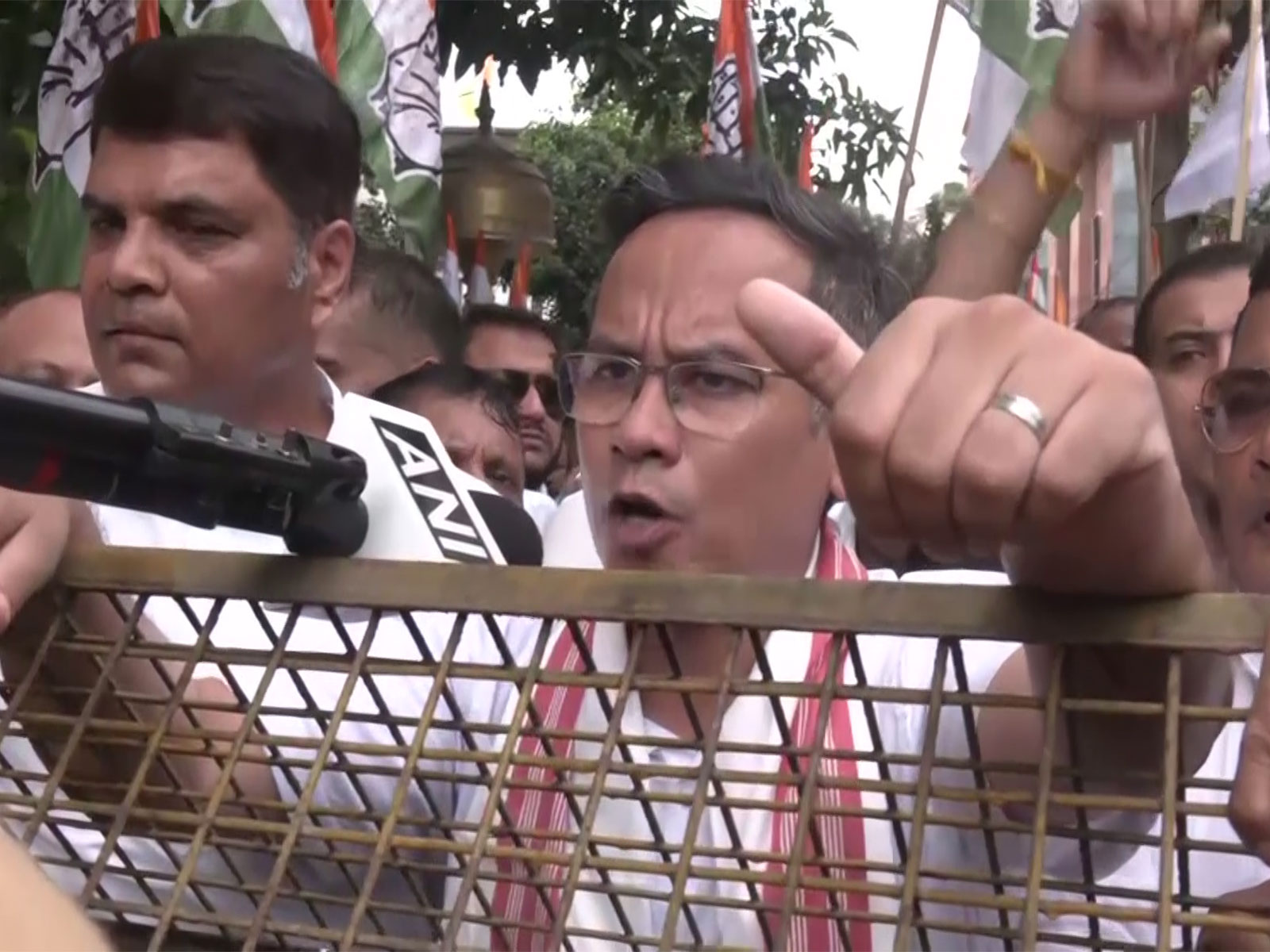
New Delhi [India], September 25 (ANI): The Delhi High Court on Friday directed the Delhi Police to provide an alternate site for bank employees’ unions to hold a protest in the national capital by September 28.
The order came after the police denied and delayed permission for a planned dharna at Jantar Mantar on September 28, 29 and 30.
Justice Amit Mahajan, hearing a plea filed by the United Forum of Bank Unions Delhi State (UFBU), ordered that the decision be communicated to the union by Monday.
In its petition, UFBU had argued that if permission for Jantar Mantar could not be granted, the union should at least be allowed to protest at an alternate location. The court’s direction does not guarantee approval for Jantar Mantar itself, but ensures the police must respond with a decision on a suitable site before the strike begins.
The protest plans are tied to a three-day nationwide bank strike called by UFBU from September 28 to 30, which is expected to affect bank branches across the country.
Speaking about the strike, Shiv Shankar Singh, Working President of the All India Bank Officers’ Confederation, Delhi, said one of the key demands is the implementation of a five-day work week for banks. He noted that this had already been agreed upon during the last wage settlement signed on March 8, 2024, between the Indian Banks’ Association (IBA) and union representatives, but has not been implemented to date.
Singh also said the unions consider the Old Pension Scheme superior to the current system, as it guaranteed financial security even after an employee’s retirement or death, with benefits extended to spouses and families, a provision he said is absent from the New Pension Scheme.
The unions’ other major demands include income tax exemption on the additional 4% contribution made by banks to the National Pension System (NPS), a higher gratuity ceiling under the Gratuity Act, updation of pensions, a uniform Dearness Allowance (DA) on pensions, and a revision of the ex-gratia payment for pensioners effective from November 2022. (ANI)
Related reading