New Delhi [India], July 19 (ANI): Gitanjali J Angmo, wife of Sonam Wangchuk, on Sunday termed the Centre’s concern for the activist’s health as a “charade,” claiming that the government feared his presence at the July 20 march to the Parliament against the NEET-UG paper leak.
The Delhi High Court has refused to grant interim relief to activist Sonam Wangchuk’s wife, Gitanjali J Angmo, seeking his immediate discharge from Safdarjung Hospital and transfer to Medanta Hospital, observing that Wangchuk was not under detention and that the government’s decision to shift him to the government hospital could not be termed arbitrary.
Gitanjali Angmo had approached the Delhi High Court challenging Wangchuk’s continued stay at Safdarjung Hospital, alleging that he had been forcibly removed from Jantar Mantar while on an indefinite hunger strike demanding the resignation of Union Education Minister Dharmendra Pradhan over the NEET-UG paper leak, and was being kept in the hospital without his consent.
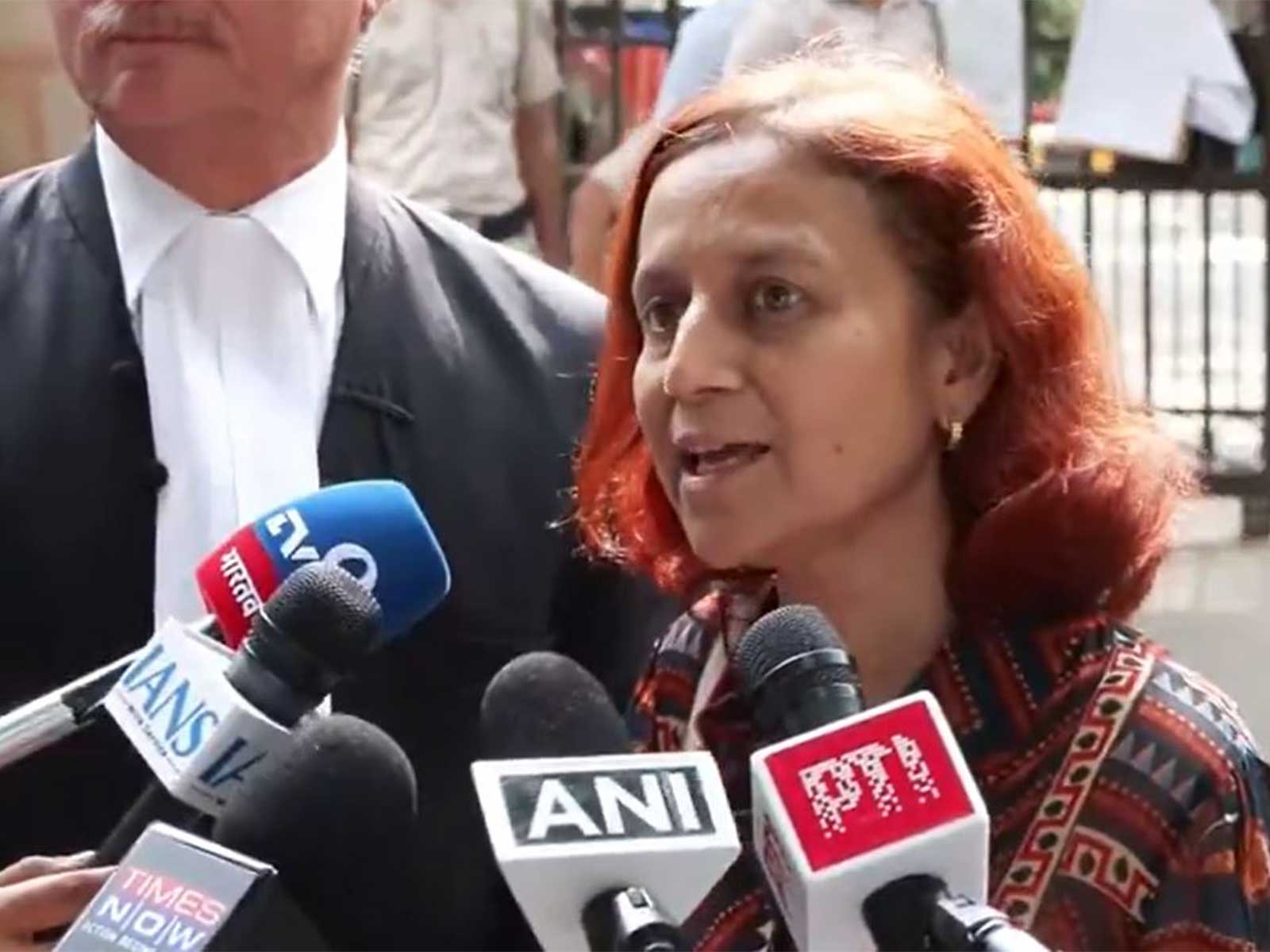
Speaking to reporters outside Delhi High Court, Gitanjali Angmo claimed that Wangchuk’s health was not deteriorating and his potassium level was better than what was recorded at the government hospital.
She said that the police personnel could have informed Wangchuk’s family before taking him to Safdarjung Hospital from Jantar Mantar.
Angmo said, “They said they brought him in because they were deeply concerned about his health, as it was declining. But these claims are incorrect. First of all, his health was not deteriorating at all. If you look at the reports from the evening prior, everything was absolutely normal; his potassium level was 4.3, and all other parameters were normal too. If you were truly so concerned about his health, why did you send police personnel in plainclothes? Why did you so ruthlessly pick him up, put him on a stretcher, and take him away? You could have simply come to conduct a medical test and informed his family that a certain level was low and you wished to take him in for that reason. That is the proper way to handle things in a democracy.”
“If you were genuinely concerned about his health–and I want to say this without mincing words–then this whole narrative about health concerns is nothing but a charade. They were simply afraid that if Sonam set out on his march, hundreds of thousands of people would join him–not just in Delhi, but across the entire country–and they were trying to prevent that. We want to take them to doctors of our choice, where we feel comfortable, because if you look at the report from last night–blood pressure that usually stays at 110/70 had risen to 125/85. This is happening because of the atmosphere being created there,” she added.
Alleging police surveillance at the hospital, she compared the atmosphere to that of Wangchuk’s time in Jodhpur Jail following his arrest in September 2025, after protests in Ladakh over the demand of sixth schedule.
“He is not being allowed to meet his doctors. We want to consult our doctors, whom we are comfortable with. The police are constantly surveilling. When I am in the room with him, a constable accompanies. The environment is similar to Jodhpur Jail. Is it illegal detention? I was not allowed to carry my phone, and Sonam was not handed over his tablet. When we asked for orders, they (police personnel) had no written orders,” Angmo said.
Justice Mini Pushkarna of the Delhi High Court today held that the material placed before the Court did not indicate that Wangchuk was being illegally confined. The Court noted that his wife, brother and other family members have been granted unrestricted access to him and have also been provided a separate room to stay at the hospital.
The Court observed that Wangchuk had been on a hunger strike for nearly 17-18 days before being shifted to Safdarjung Hospital and referred to the earlier Division Bench order directing daily medical monitoring by government doctors.
Recording the Centre’s submissions, the Court noted that Wangchuk was shifted to Safdarjung Hospital due to his deteriorating medical condition.
It also took note of the medical opinion that his sugar and sodium levels were below normal and that his potassium level had fallen to a dangerously low level. The Court further noted that intravenous fluids had not been administered as Wangchuk had not consented to the same.
The High Court held that since the government had shifted Wangchuk to the hospital on account of his medical condition, the action could not be considered arbitrary. (ANI)
Related reading