Raipur (Chhattisgarh) [India], August 14 (ANI): Across Chhattisgarh’s capital Raipur are numerous places, including streets, squares and markets, which have borne witness to the glorious saga of the Indian freedom movement and the supreme sacrifices made by revolutionaries.
During the freedom struggle, various places in Raipur were once strategic command centres where voices against British rule were raised.
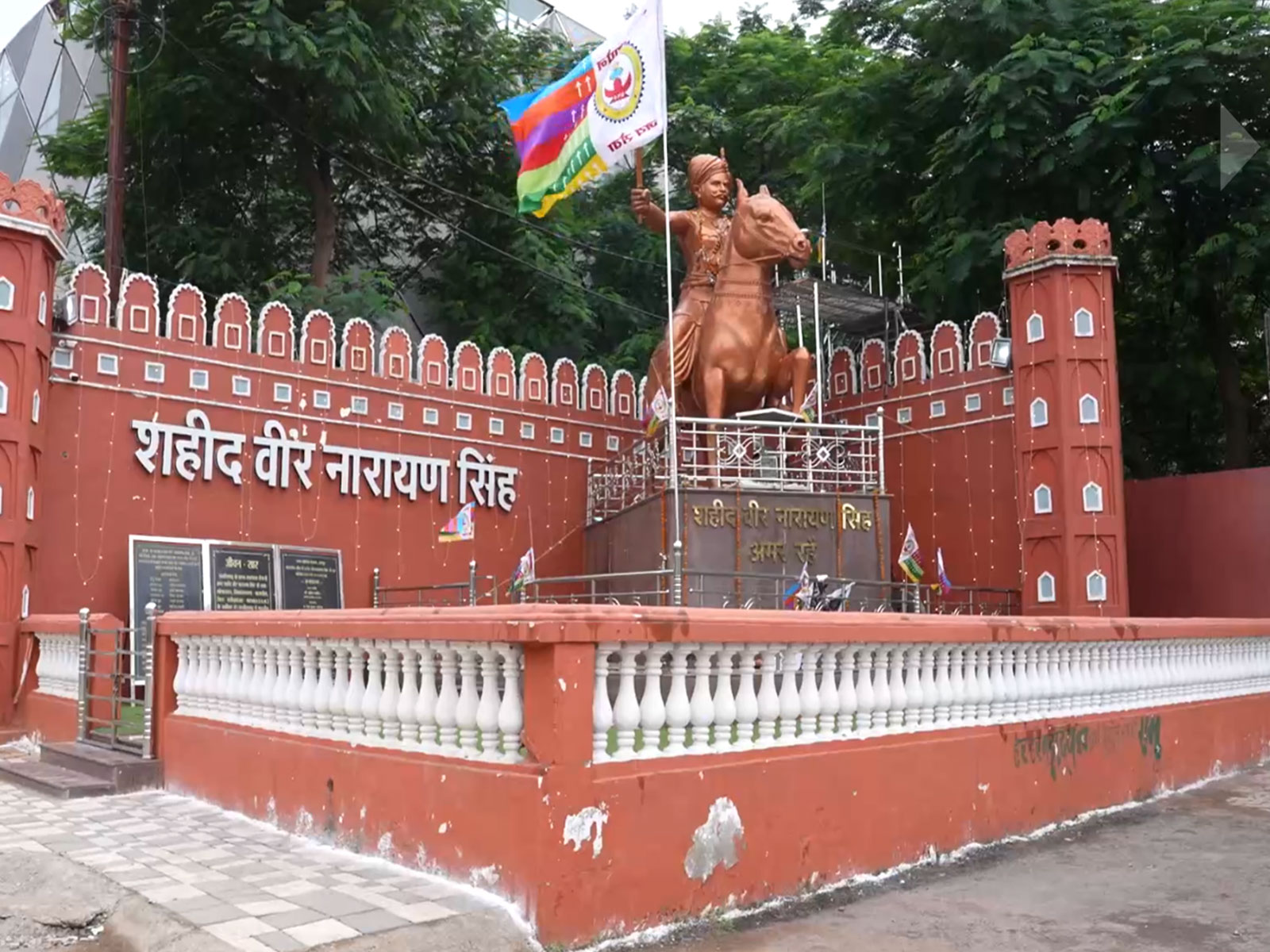
Renowned historian Ramendranath Mishra, associated with the Lakhan Lal Mishra Freedom Fighters Research Chair, said, “In Indian history, the era of the national freedom movement is considered to span from the Revolution of 1857 to 1947. Whenever the commencement of the freedom movement in Chhattisgarh is recalled, the name of freedom fighter Veer Narayan Singh of Sonakhan immediately comes to the fore. Veer Narayan Singh, who revolted against British rule, was imprisoned in Raipur Jail and executed by hanging on December 10, 1857. “
“In his memory, the Jai Stambh Chowk was established at the heart of the city, where a full-size statue of him stands today,” he further added.
Mishra is associated with Lakhan Lal Mishra Swatantrata Sangram Senani Shodh Peeth.
He further elaborated that even after the supreme sacrifice of Veer Narayan Singh, the resistance against British rule in Raipur did not wane. Hanuman Singh and his companions continued the struggle against the British.
On January 22, 1858, 17 other revolutionaries were executed, and therefore, Raipur Jail became a testament to the supreme sacrifice of freedom fighters during the Revolt of 1857.
Second only to Nagpur, Raipur was not merely an administrative centre, it was also a vital hub of freedom movement activities within the Central Provinces, recalls Pt Mishra, adding that revolutionary meetings were held here, strategies were deliberated, and efforts were made to mobilize people into the movement.
Similarly, the premises of Rashtriya Vidyalaya in Raipur became a significant hub for movement-related discussions and meetings, he said.
Likewise, in the campus of Madhav Rao Sapre School, public awareness and national fervour were kindled through lectures and debates during that period.
According to the historian, the Purani Basti area of Raipur was another major epicentre of freedom movement activities. Gathering under the large banyan tree near Turi Hatri (a local market in the Purani Basti area), freedom fighters would sit together to deliberate and carry out membership drives. Prominent freedom fighters like Devikant Jha, Sudhir Mukherjee, and Parasram Soni also had Raipur as their activity centres. Areas like Sadar Bazaar, Gol Bazaar, and Brahmanpara transformed into focal points of national consciousness during that era.
“Mahatma Gandhi’s visit to Raipur marks another crucial chapter in the city’s freedom struggle history. Memories associated with Azad Chowk, Gandhi Maidan, and Anand Samaj Library still evoke that era. Gandhi stayed here during his visit to Raipur and held a meeting with women before departing for Dhamtari,” Mishra said.
According to him, Budha Talab (now Vivekananda Sarovar) also served as a key hub for major activities of that period. From the Vande Mataram Movement to the Non-Cooperation Movement and the Quit India Movement, the voice of national pride echoed through Raipur across different eras.
This means that many of the places we pass by daily were once strategic command centres where freedom fighters carried out planning, organized the populace, and raised their voice against British rule.
In the Central Provinces, second only to Nagpur, Raipur held a position of prime historical significance in the freedom movement. Then came 15 August 1947, the day the nation had waited for decades. Raipur celebrated freedom with immense fervour. Crowds poured into Gandhi Chowk, carrying the Tricolor with joy in their eyes and deep reverence in their hearts for those who sacrificed everything for the nation’s freedom.
“On the very soil of Raipur, where revolutionaries of the 1857 revolt were hanged, the city celebrated the grand dawn of independence nearly 90 years later. As India heads toward its 80th year of Independence, this history of Raipur is not merely a story from the past–it is a legacy for generations to come,” he said. (ANI)
Related reading