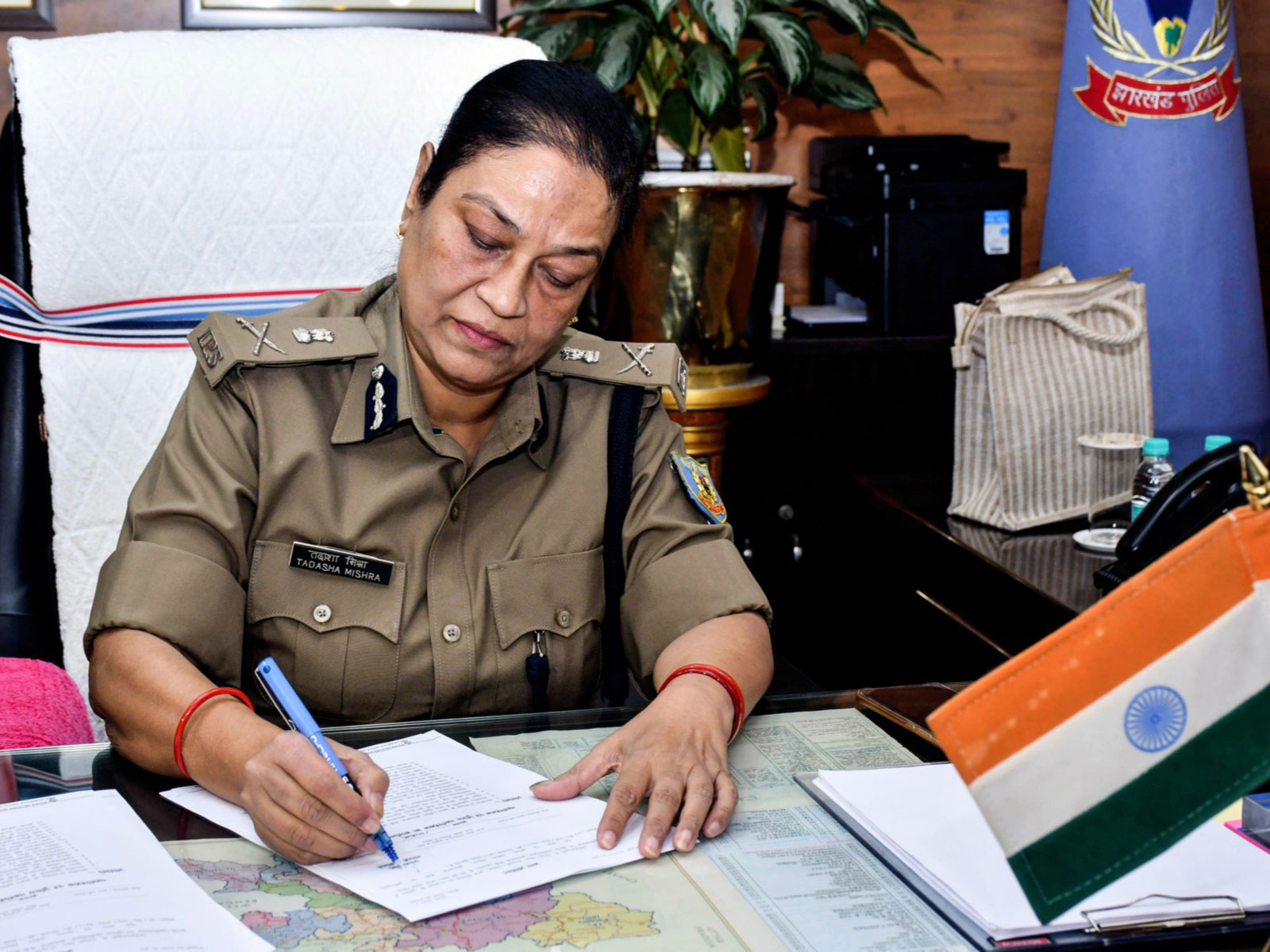
New Delhi [India], October 7 (ANI): The Centre on Wednesday moved to the Supreme Court challenging the appointment of Jharkhand Director General of Police (DGP) Tadasha Mishra, alleging that the appointment was made in violation of the procedure laid down by it for selection of the State police chief.
Solicitor General Tushar Mehta mentioned the application before a bench of Chief Justice of India Surya Kant and Justices Joymalya Bagchi and V Mohana, which agreed to hear and list the Centre’s application.
The Centre has sought a direction to Jharkhand to follow the procedure laid down by the Supreme Court for Director General of Police (DGP) appointments and a declaration that appointments made under the State’s 2025 Regulation are illegal.
The challenge is directed against the “Selection and Appointment of Director General and Inspector General of Police, Jharkhand (Head of the Police Force) Regulation, 2025”, notified on January 8, 2025.
The Centre has asked the court to direct Jharkhand to implement its directions in the Prakash Singh case and, alternatively, declare DGP appointments made under the 2025 regulation illegal.
The Centre has also challenged the appointments of IPS officers Anurag Gupta and along with Tadasha Mishra as DGP.
Gupta was appointed on February 2, 2025 despite having only around three months of service left. Mishra was appointed on December 30, 2025, a day before her scheduled superannuation, after the State amended the Regulation to remove the six-month residual-service requirement.
The Centre said Jharkhand had selectively relied on the Prakash Singh judgment to provide DGPs a two-year tenure while disregarding the mandated selection process involving the UPSC.
The Centre said that the Court’s directions had to be implemented in full and not selectively.
The plea also referred to the Court’s earlier proceedings concerning the State’s failure to forward its DGP appointment proposal to the UPSC and its May 19, 2026 direction seeking a compliance affidavit.
The Prakash Singh case concerns the Supreme Court’s long-running oversight of police reforms, with the Court issuing a series of directions since 2006 to promote institutional independence, transparent appointments and stability in the tenure of senior police officials.
Under the apex court’s framework, the State government is required to appoint the DGP from a panel of three officers shortlisted by the UPSC based on their service record, seniority and experience. The chosen officer is ordinarily entitled to a minimum two-year tenure, irrespective of the officer’s date of superannuation.(ANI)
Related reading