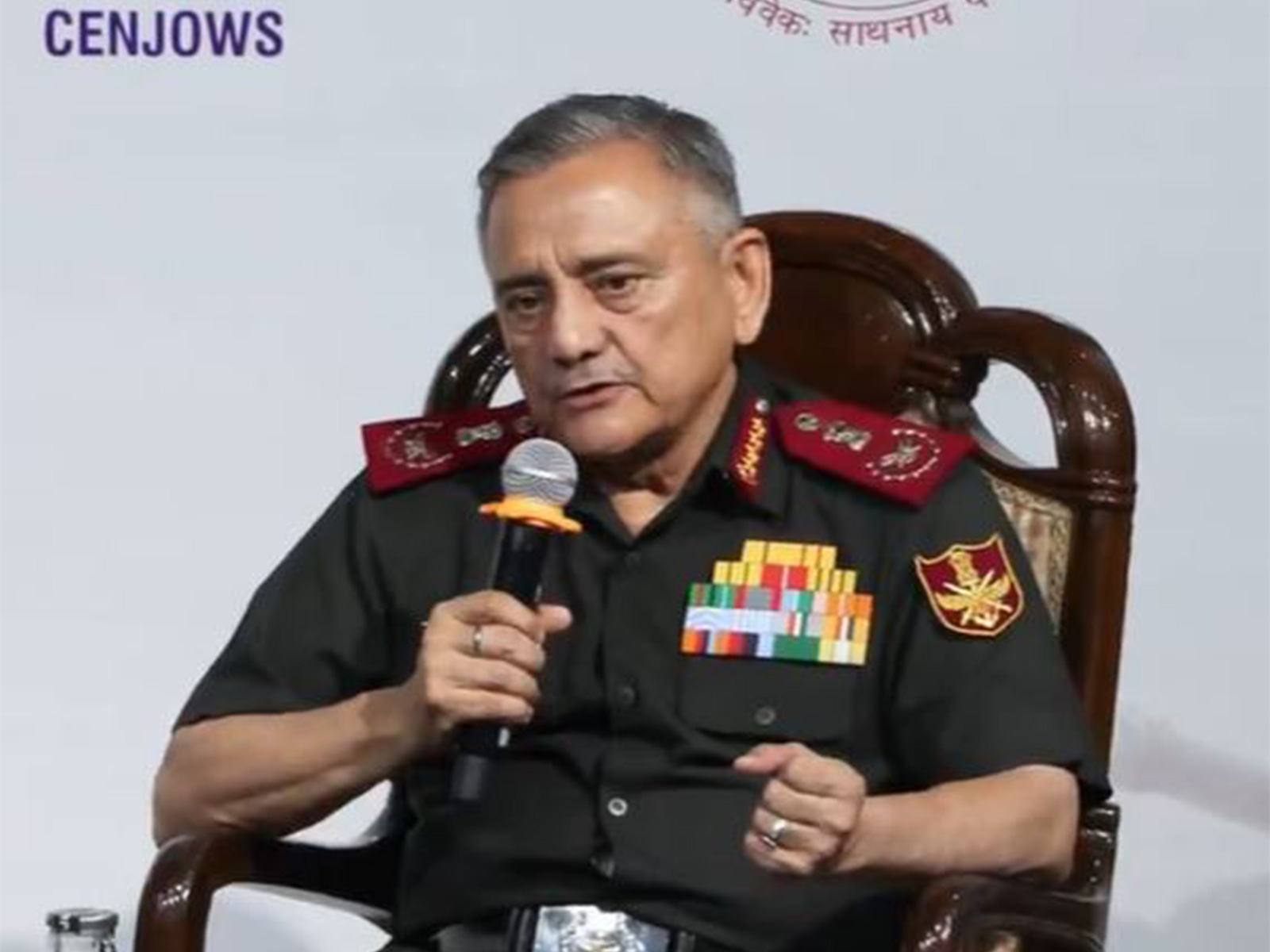
New Delhi [India], May 14 (ANI): Chief of Defence Staff (CDS) General Anil Chauhan on Thursday said he has concluded the long-standing deliberations on the creation of Integrated Theatre Commands and has formally submitted his final report to the Ministry of Defence, marking a key milestone in India’s ongoing military reform agenda.
Speaking at the ‘Kalam & Kavach 3.0’ Defence and Strategic Dialogue held at the Manekshaw Centre in New Delhi, General Chauhan reflected on the extended timeline of the reform process and acknowledged that operational exigencies and institutional priorities had contributed to delays in finalisation.
“In my tenure, the Theatre Command business should have been finished. It didn’t happen. For six to eight months, we were busy during Operation Sindoor, and the Chiefs of Staff Committee (CoSC) never had time to meet and take it forward,” the CDS said.
General Chauhan further informed that the deliberative stage has now reached its conclusion.
He further stated that the process has now reached its concluding stage from the military’s side and has been formally placed before the government for consideration.
“I finally concluded those discussions and handed my report to the minister. Hopefully, it will be carried through,” he added.
Kalam & Kavach 3.0, themed ‘Taking JAI Forward With I²’, featured wide-ranging deliberations on India’s evolving defence and national security landscape. The conclave focused on advancing India’s journey towards Aatmanirbharta through innovation, industrial partnerships, capability development, and future-ready defence technologies, as stated in the release.
During the conclave, Defence Minister Rajnath Singh emphasised that the battlefield of the future will reward those who can shorten the time between an idea, a prototype, and operational deployment. He added that national security cannot rest on old assumptions in the current geopolitical tensions, ongoing conflicts, cyber threats, supply-chain vulnerabilities, and new forms of hybrid warfare.
“National security demands our preparedness, resilience, innovation, and strategic confidence,” he said.
Defence Minister described self-reliance as not only an economic goal, but also a strategic necessity, asserting that a nation that depends excessively on others for critical defence capability remains vulnerable in times of crisis.
“We must design, develop, produce, maintain, and upgrade key systems within our own national ecosystem. That is how we will be able to secure our strategic autonomy,” he said.
Various industry representatives underlined the importance of a robust indigenous manufacturing ecosystem capable of supporting surge capacity and modern conflict requirements, while positioning the Indian industry as globally competitive. They highlighted the importance of collaboration among nations, industry, innovators, and academia in building resilient, technology-driven defence ecosystems, noting India’s growing potential as a global hub for aerospace and security innovation.
The conclave witnessed participation from senior representatives of the Ministry of Defence, HQ Integrated Defence Staff, members of the National Security Advisory Board, senior officers from the Armed Forces, Defence Attaches, scientists, industry leaders, startups, academia, and international partners.
The event comprised multiple high-level sessions, keynote addresses, and panel discussions focusing on critical areas including AI-enabled warfare, autonomous systems, hypersonic technologies, quantum-enabled Command, Control, Communications, Computers, Intelligence, Surveillance, and Reconnaissance (C4ISR), defence manufacturing scale-up, aerospace advancements, and strategic partnerships.
The conclave also featured an exhibition from Indian private industry, MSMEs, and startups in advancing defence innovation. (ANI)
Related reading