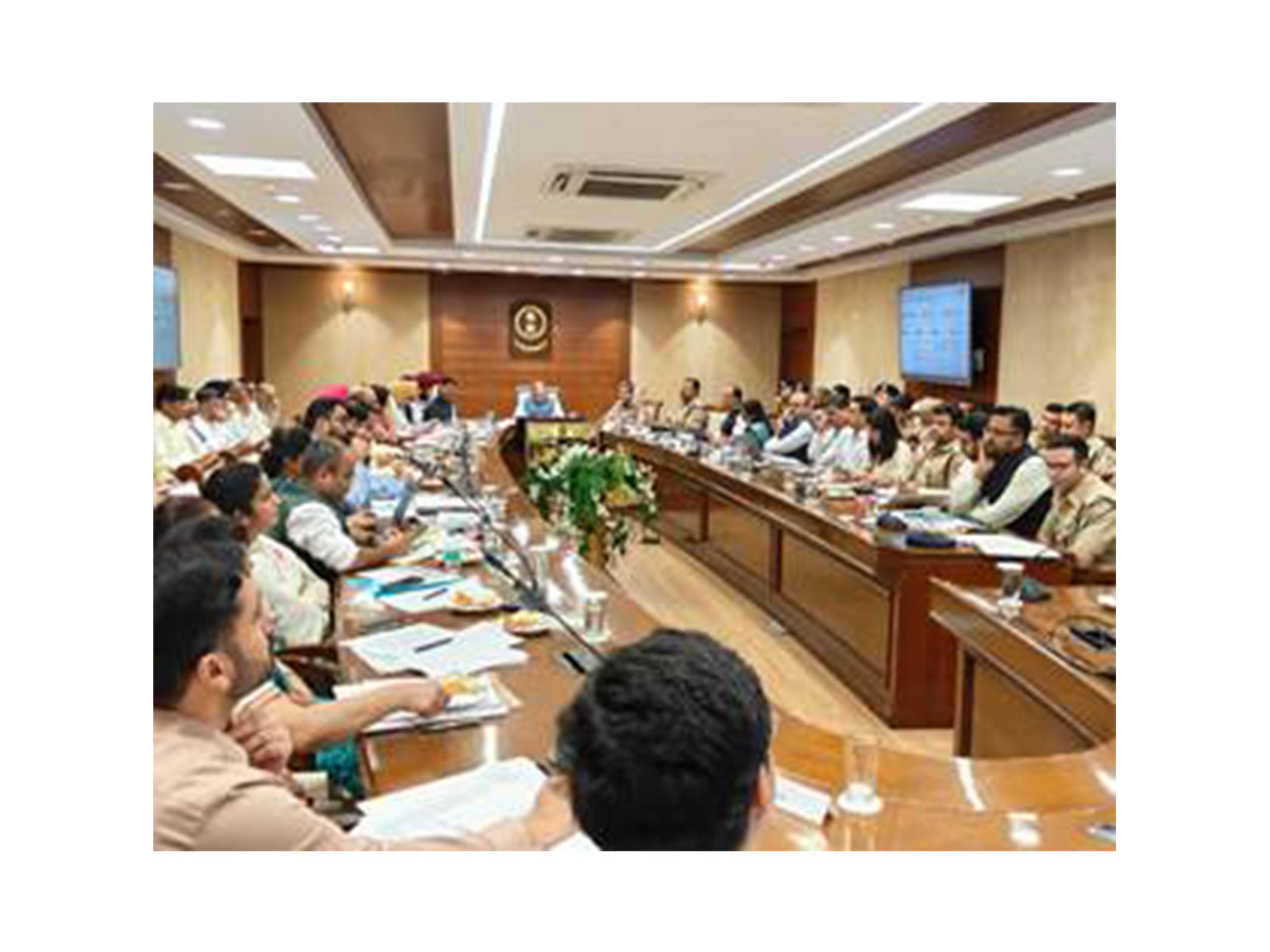
New Delhi [India], October 22 (ANI): The Commission for Air Quality Management in NCR and Adjoining Areas (CAQM), under the Chairmanship of Rajesh Verma, held separate review meetings with the Governments of Punjab and Haryana in Chandigarh on Thursday to review the measures being undertaken for prevention and control of paddy stubble burning and abatement of other key sources of air pollution, calling for prompt action(s) on the ground.
According to the Ministry of Environment, Forest and Climate Change, the meeting with the Government of Punjab focused on the implementation of the State Action Plan for prevention and control of paddy stubble burning in accordance with CAQM Direction No 99 dated May 15.
The Commission reviewed on-ground enforcement measures, District-level preparedness and monitoring mechanisms in place for effective paddy stubble management.
The availability, deployment and effective utilisation of Crop Residue Management (CRM) machinery at the District and farmer levels were reviewed, along with the identification of gaps in machinery utilisation and arrangements for the collection, transportation and utilisation of paddy straw through in-situ and ex-situ management.
The Commission emphasised the need to strengthen the crop-residue supply chain and ensure effective utilisation of available machinery during the peak harvesting period.
The meeting also covered field validation of burnt-area assessment through satellite-based fire alerts, along with District-wise deployment of drones and low-cost sensors for monitoring stubble-burning incidents. Compliance with CAQM mandating the use of paddy straw-based biomass pellets/ briquettes in brick kilns, and progress towards prescribed targets for biomass co-firing in thermal power plants were also reviewed.
The meeting with the Government of Haryana covered a broader range of air pollution sources, including paddy stubble burning, abatement of vehicular pollution, dust from roads and open areas, dust from construction and demolition (C&D) activities and industrial pollution, along with other identified sectoral measures.
With regard to paddy stubble burning, the Commission reviewed implementation of the State Action Plan, including on-ground enforcement, deployment and utilisation of CRM machinery, crop-residue supply-chain management, field validation of burnt-area assessment and the use of drones and low-cost sensors for monitoring burning incidents. Compliance with Direction No. 92 regarding biomass pellets/briquettes in brick kilns and progress on biomass co-firing in thermal power plants were also taken up.
The review of vehicular pollution covered the installation of Automatic Number Plate Recognition (ANPR) systems at fuel and CNG stations for the enforcement of requirements relating to valid Pollution Under Control Certificates (PUCCs), action against end-of-life vehicles, the adoption of cleaner mobility measures and progress towards phasing out diesel-operated auto rickshaws in NCR Districts.
Measures for dust mitigation from roads and open areas, including road-dust control and mechanised road sweeping, were also reviewed.
The Commission further examined measures for controlling dust emissions from C&D activities and implementation of prescribed dust-mitigation measures. The review also covered industrial pollution control, including compliance with applicable norms and monitoring and enforcement measures relating to industrial units and other identified sources.
The Commission emphasised the need for time-bound implementation of State Action Plans, its enforcement and continuous field-level monitoring, supported by close coordination among the concerned State Departments, District Administrations and enforcement agencies.
The States were advised to address implementation gaps on priority and ensure timely corrective action across the respective sectors. The Commission emphasised greater facilitation of farmers with in-situ crop residue management machinery and strengthened ex-situ mechanisms. State Governments of Haryana and Punjab were also advised to implement IEC Action Plans on the ground more effectively.
The Commission emphasised that paddy stubble management should be pursued not merely as a measure to prevent burning, but as an opportunity to improve the well-being of citizens while fostering a robust industrial ecosystem of a circular economy, with greater utilisation of paddy straw as a resource.
The Commission called for prompt action at the ground level and further cautioned the District Administrations that any laxity that leads to a rise in stubble-burning incidents shall be viewed seriously.
CAQM reiterated that sustained and coordinated efforts by the State Governments and all concerned agencies are essential for effective prevention of paddy stubble burning and comprehensive abatement of air pollution, particularly during the critical winter period. (ANI)
Related reading