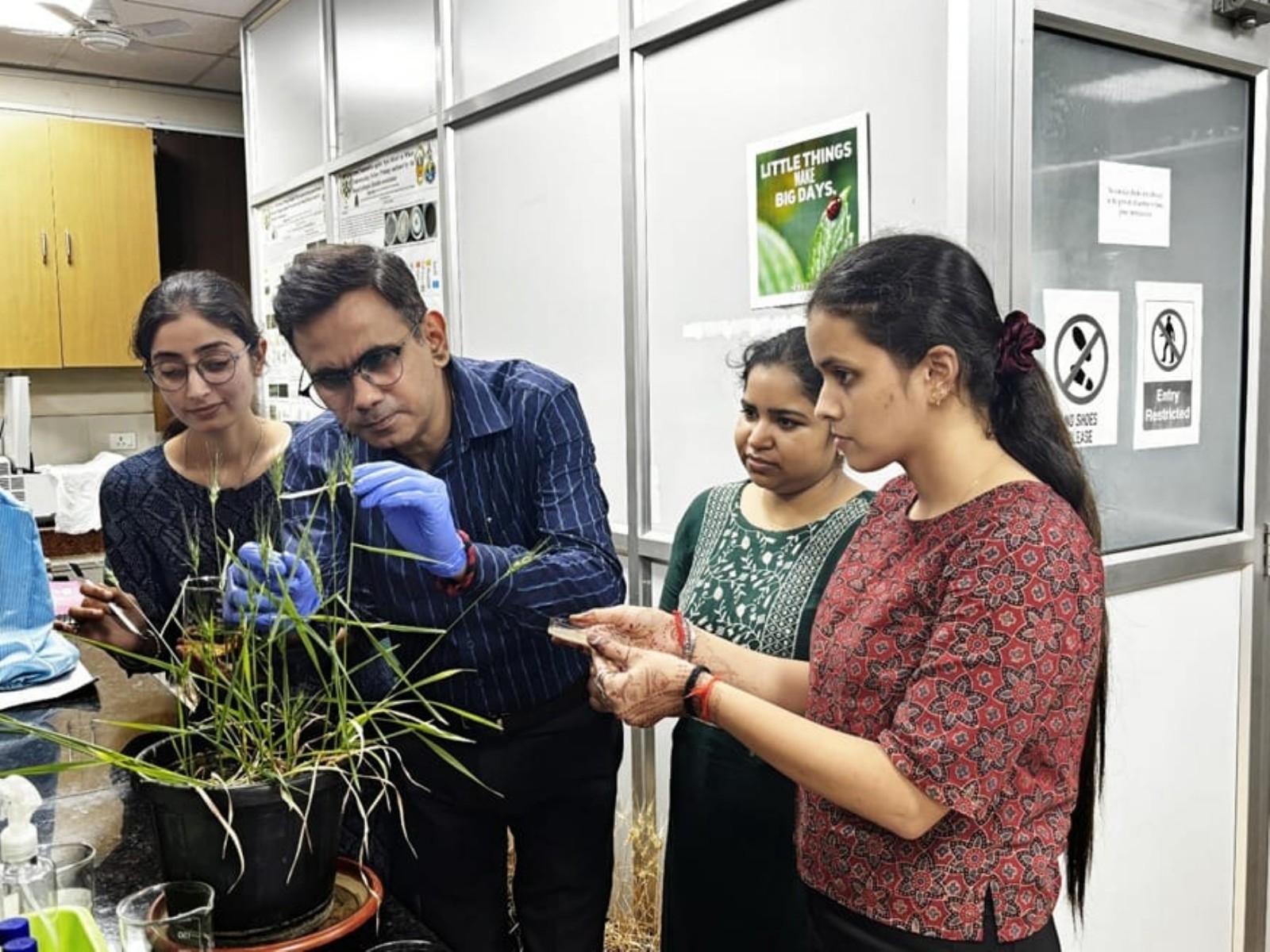
Varanasi (Uttar Pradesh) [India], September 2 (ANI): Scientists from the Department of Botany, Banaras Hindu University (BHU), led by Prashant Singh, have shown that beneficial soil bacteria can strengthen wheat plants against disease while helping them maintain growth and yield under crowded growing conditions.
The study, carried out by Singh, Bandana Devi, Nidhi Yadav and Nandita Dubey, has been published in the internationally recognised Q1 journal Physiological and Molecular Plant Pathology, published by Elsevier, USA.
The research highlights a promising biological approach to improving crop resilience under the complex conditions faced by plants in agricultural fields. The team investigated plant growth-promoting rhizobacteria (PGPR), particularly Bacillus amyloliquefaciens, in wheat challenged with Bipolaris sorokiniana, the fungus that causes spot blotch disease. The researchers grew wheat plants at different densities to create different levels of intraspecific competition stress.
As plant density increased, individual plants had to compete more intensely with their neighbours for light, water, nutrients and space, resulting in reduced growth and greater overall stress.
The results showed that although high plant density reduced growth, PGPR-primed plants consistently performed better than non-primed plants. Following pathogen attack, the primed plants also showed greater resistance to B. sorokiniana across all planting densities.
Importantly, they were able to maintain better growth and yield even under combined competition and disease stress. A key finding was that PGPR did not keep the plant’s defence system permanently switched on. Instead, it prepared the plant to respond faster and more strongly when the pathogen attacked, a phenomenon known as defence priming. This allows plants to balance the demands of growth and defence while avoiding unnecessary energy expenditure.
The researchers further found changes in DNA methylation in regulatory regions of the important defence genes PR1 and PR3, providing molecular evidence that beneficial bacteria can reprogramme aspects of the plant’s defence machinery.
The significance of the research extends beyond wheat disease. At a time when agriculture faces increasing challenges from climate change, multiple stresses and the need for more sustainable crop protection, using beneficial microorganisms to strengthen the plant’s own defence system offers a promising biological alternative.
The study demonstrates the power of working with nature: a beneficial bacterium living around a plant’s roots can help the plant grow better, defend itself more effectively and remain productive under challenging conditions. (ANI)
Related reading