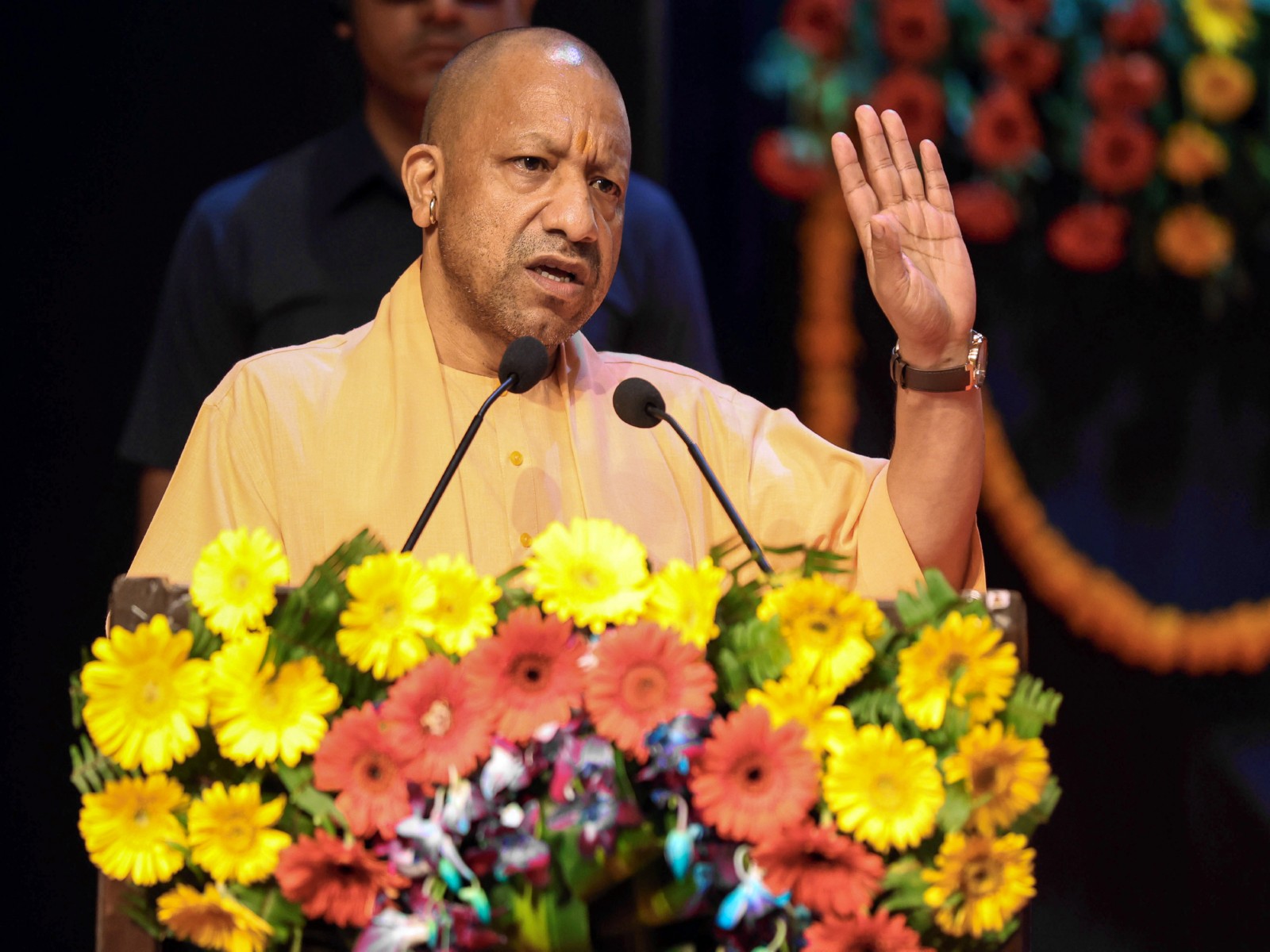
Lucknow (Uttar Pradesh) [India], June 25 (ANI): Uttar Pradesh Chief Minister Yogi Adityanath on Thursday described the Emergency imposed in 1975 as a dark chapter in India’s democratic history, saying it was imposed by the Congress in the “arrogance of power” to crush the constitutional soul of the nation.
https://x.com/myogiadityanath/status/2069937767778545802
In a post on X, the chief minister said, “25 June 1975 stands as a dark chapter in the history of Indian democracy, when the ‘Emergency’ was imposed in an attempt to crush the constitutional soul of the nation. The darkness of the ‘Emergency’ imposed by the Congress in the arrogance of power dealt a deep blow to the freedom of expression and civil rights. To all the great democracy warriors who endured harsh tortures during that difficult time and fought to protect democracy, my heartfelt salutations a millionfold.”
Uttarakhand Chief Minister Pushkar Singh Dhami also criticised the Emergency, calling it a serious assault on democratic principles and constitutional norms.
https://x.com/pushkardhami/status/2069961273375150566
In a post on X, Dhami wrote, “On this very day in 1975, the then Congress government, steeped in the arrogance of power, imposed Emergency on the country, thereby inscribing a dark chapter in the history of Indian democracy.”
He said that during the Emergency, freedom of expression was curtailed, press freedoms were suppressed, and lakhs of citizens and political activists were imprisoned without trial.
“During this period, the freedom of expression was suppressed, the voice of the press was stifled, lakhs of citizens and political activists were imprisoned without trial, and the fundamental rights enshrined in the Constitution were severely curtailed. The Emergency was not merely a political decision, but a profound assault on democratic values and constitutional norms. Even in such adverse circumstances, we pay our deepest respects to all the sentinels of democracy who stood firm against the tyranny, whose indomitable courage is why India remains a vibrant democracy today,” CM Dhami wrote on X.
The Emergency, which is considered to be one of the most controversial periods of independent India’s history, was imposed by former Prime Minister Indira Gandhi from June 25, 1975, to March 1977. It brought significant changes to India’s constitutional, legal and administrative systems. There were political arrests, mass forced sterilisation and beautification drives, among others during the period.
Following its withdrawal, an inquiry was set up and legal provisions were amended to regulate future use of Emergency powers.
The Government of India officially designated June 25 as Samvidhan Hatya Diwas (Constitution Murder Day) to commemorate the historic event and reaffirm the nation’s commitment to democratic values.
Between June 25, 1975 and March 21, 1977, India was placed under a state of Emergency under Article 352 of the Constitution. It was declared in a backdrop of mounting political unrest and judicial developments that shook the legitimacy of the ruling leadership.
In the early 1970s, opposition to the then government intensified. Protests led by Jayaprakash Narayan gained momentum in Bihar and Gujarat. Student-led agitations, unemployment, inflation, and perceptions of corruption fuelled dissatisfaction.
On June 12, 1975, Justice Jagmohanlal Sinha of the Allahabad High Court ruled that the then Prime Minister Indira Gandhi had misused government machinery in her 1971 Lok Sabha election campaign.
The court found her guilty under the Representation of the People Act, 1951 and disqualified her from holding any elected office for six years. The case had been filed by Raj Narain, the socialist leader who had lost to Gandhi in Rae Bareli. His legal challenge resulted in the landmark verdict.
The Supreme Court granted a conditional stay. Gandhi could remain Prime Minister and attend Parliament but was barred from voting. The political crisis intensified, with demands for her resignation.
On June 25, 1975, the then President Shri Fakhruddin Ali Ahmed issued the Emergency proclamation under Article 352, citing threats from internal disturbance. The decision followed a press note from the government accusing individuals, including Jayaprakash Narayan, of provoking the police and armed forces to defy orders.
This was the third Emergency in India’s history, but the first one declared in peacetime. Earlier proclamations were during wars with China (1962) and Pakistan (1971). At that time, Article 352 allowed the President to declare Emergency on three grounds: war, external aggression, or internal disturbance.
The Press Information Bureau states that the phrase “internal disturbance” was used in place of what was later amended to “armed rebellion” through the 44th Constitutional Amendment in 1978. The executive acquired overriding powers, and state authority was brought under central control.
On June 27, 1975, Articles 358 and 359 were invoked. Article 358 suspended protections under Article 19, affecting freedom of speech, expression, assembly, and movement. Article 359 allowed the state to suspend enforcement of fundamental rights under Articles 14, 21, and 22, including equality before law, right to life and liberty, and protection against detention.
Citizens were barred from approaching courts for redress. Opposition leaders including Jayaprakash Narayan, Morarji Desai, Atal Bihari Vajpayee, LK Advani, and others arrested under Maintenance of Internal Security Act (MISA). MISA was used extensively and nearly 35,000 people were detained under preventive detention without trial, as per the Shah Commission.
As per PIB, from June 26, 1975, pre-censorship was imposed on all newspapers. Editors were required to get government clearance before publishing news, editorials, and photographs. The government appointed a national censor along with regional censors to monitor press content. Radio-photo transmissions were also brought under government clearance.
The Emergency was lifted on March 21,1977 and General elections to the Lok Sabha were held between March 16 -20, 1977. (ANI)
Related reading