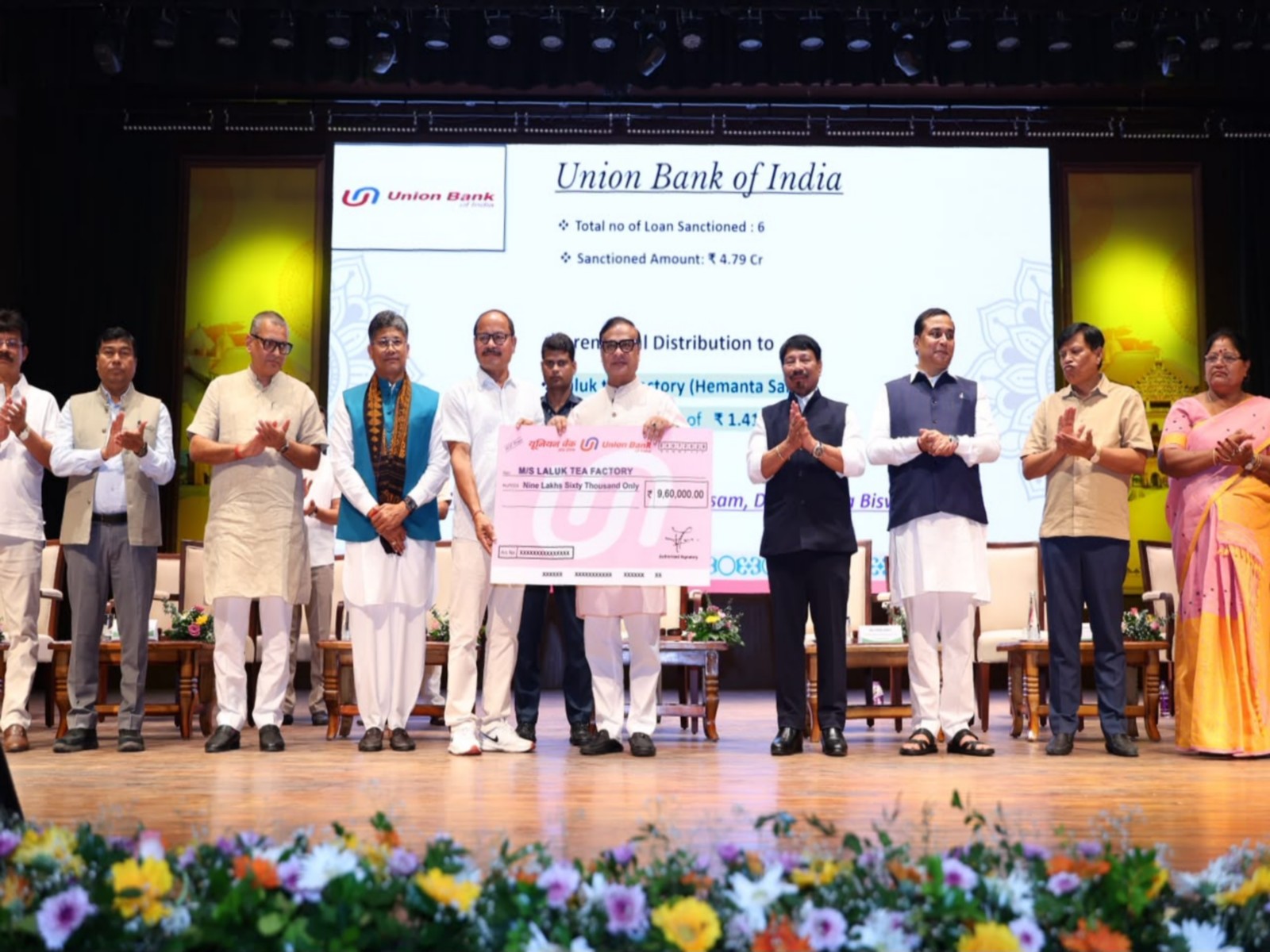
Guwahati (Assam) [India], July 25 (ANI): Assam Chief Minister Himanta Biswa Sarma attended the State-level Workshop on the Agriculture Infrastructure Fund (AIF) at Jyoti Bishnu International Kala Mandir in Guwahati on Saturday.
Farmers, Farmer Producer Organisations (FPOs), agri-entrepreneurs and representatives of banks and financial institutions from across Assam participated in the workshop-cum-awareness programme.
The Agriculture Infrastructure Fund, launched by Prime Minister Narendra Modi on August 9, 2020 under the Atmanirbhar Bharat Abhiyan, is a flagship Government of India scheme that provides interest-subsidised loans for post-harvest management and community farming assets.
Under the scheme, eligible individuals and institutions can avail loans of up to Rs. 2 crore per project with a 3% annual interest subvention for up to seven years, along with collateral-free credit guarantee support.
Addressing the gathering, the Chief Minister said that the scheme was launched to promote value addition to agricultural produce and create modern agricultural infrastructure.
He said the initiative encourages farmers not only to produce crops but also to process, store and market them through facilities such as warehouses, cold storages, custom hiring centres, drones, sensors, pumps, hydroponics, aeroponics, polyhouses, milling units and oil extraction units.
He added that of the Rs. 1 lakh crore allocated nationally under the scheme, nearly Rs. 95,000 crore has already been utilised by farmers across the country.
The Chief Minister said that one of the biggest challenges faced by farmers in accessing institutional credit is the requirement of collateral.
He noted that the Credit Guarantee Fund created under the scheme addresses this concern by providing guarantee cover to banks, thereby enabling collateral-free lending to farmers.
He also observed that Assam’s Credit-Deposit Ratio has improved from 32% to 70%, though there remains scope to increase it further to around 90%.
Explaining the financial benefits of the scheme, Sarma said that the Government provides a 3% interest subvention on loans up to Rs. 2 crore and the lending rate is capped at 9%. While beneficiaries are ordinarily required to contribute 10% of the project cost under the scheme, he announced that the Assam Government will bear 5% of the beneficiary contribution. In the case of Farmer Producer Organisations, the State Government will bear the entire 10% beneficiary share.
He further informed that beneficiaries can also simultaneously avail benefits under other Government schemes, including PM-KUSUM, PMFME, MIDH and RKVY.
Referring to Assam’s allocation under the Agriculture Infrastructure Fund, the Chief Minister said that the State has been allotted Rs. 2,050 crore, against which loans worth Rs. 1,181 crore have already been sanctioned to 893 farmers, FPOs and agri-entrepreneurs. Of this, Rs. 736 crore has already been disbursed.
He highlighted several successful beneficiaries who have secured loans of up to Rs. 13 crore under the scheme and noted that Nagaon district has recorded the highest number of beneficiaries at 131.
The Chief Minister stated that Assam can still avail nearly Rs. 900 crore from its existing allocation.
He further informed that the Government of India has approved an additional Rs. 1 lakh crore under the Agriculture Infrastructure Fund nationwide and expressed confidence that Assam would strive to secure an allocation of Rs. 4,000 crore in the next phase, up from around Rs. 2,000 crore earlier.
Highlighting Assam’s vulnerability to floods, Sarma stressed the need to diversify beyond traditional paddy cultivation and promote horticulture and high-value agricultural products.
He pointed to the growing demand for rice storage facilities across development blocks and the significant potential for expanding mustard oil processing in the State.
The Chief Minister also highlighted opportunities for value addition through processing of ginger and pineapple from Karbi Anglong and Dholai, Assam lemon, Bhut Jolokia, red rice, mushrooms from Kokrajhar and other local agricultural products.
He said traditional organic tea processed using indigenous methods has a distinct market demand and mentioned that tea processing is also an eligible activity under the scheme.
Sharing his recent experience from Japan, Sarma noted the widespread use of eco-friendly bamboo toothbrushes in hotels and said that bamboo can be used to manufacture nearly 180 products, including toothpaste.
He also referred to bamboo oil production at Numaligarh as an example of the State’s emerging value-addition potential.
Expressing satisfaction that more than 800 entrepreneurs have already come forward under the scheme, the Chief Minister called upon the youth of Assam to take advantage of the Agriculture Infrastructure Fund and contribute towards building a self-reliant Assam. (ANI)
Related reading