New Delhi [India], August 30 (ANI): When Prime Minister Narendra Modi put the spotlight on BharatRajya website (www.bharatrajya.com) during the 137th edition of his monthly radio broadcast ‘Mann Ki Baat’ on Sunday morning, he brought national attention to an extraordinary effort to make India’s history accessible.
However, behind the interactive historical atlas, through which users can drag a timeline slider across eight centuries to see who ruled every district in India, lies the story of a self-described “below average dude” whose 15-year-old dream was brought to life not by coding expertise, but by generative Artificial Intelligence.
Krishna Seshadri, a Mumbai resident, had long harboured a frustration with how history is taught in India.
“Teach it as stories, and people carry it with them for life. Reduce it to a list of dates and events, and people start to question why the subject exists at all,” Seshadri writes on his website.
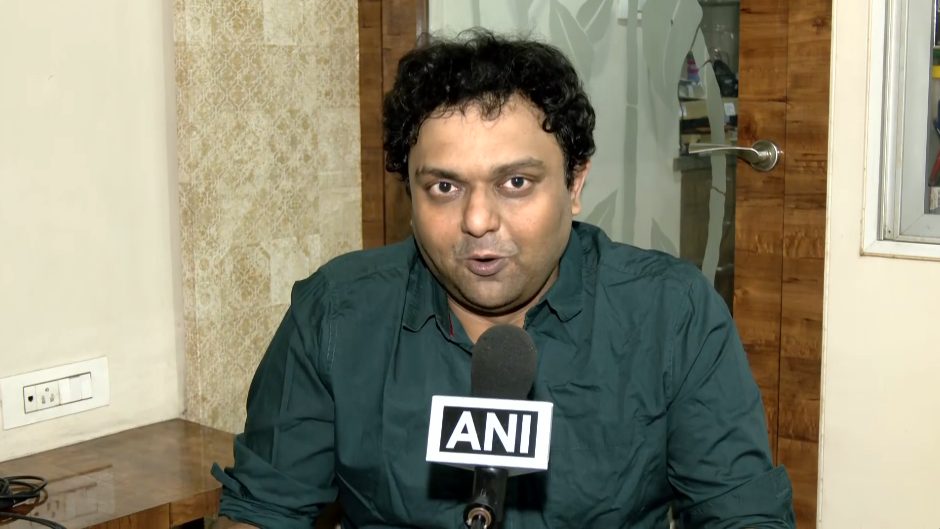
While speaking exclusively to ANI, Seshadri expressed how unbelievable it is to be featured in Mann Ki Baat.
“To be honest, it has not yet sunk in, the adrenaline is still there. I still have not probably realised that what started as a small, little and piddly hobby project could go to such lengths. I am really grateful to everyone, and I am really grateful to the Prime Minister to have taken attention of this small project, but actually explore it and project it on Mann ki Baat,” he said.
Expressing gratitude that PM Modi actually explored the website, he said that it is the “biggest validation” he could recieve from a leader who is so deeply entrenched in Indian history, culture and the Indian way of life.
“The beautiful part about this whole talk was that PM Modi ji not only talked about the website but actually explore it. He scrolled, and he had seen various empires, features that we had created, the correction box. More than him asking questions about this website I am more than grateful that he actually saw and looked through the website. For a person like me who did this as a hobby, Modi ji who is so deeply entrenched in Indian history, culture, and Indian way of life, him appreciating the website is the biggest validation I can ever get for my project.”
Seshadri pointed out that history in India has traditionally been taught from the perspective of one empire or region at a time, rarely giving an all-India view.
“We are never told who else existed alongside the Mughal empire. Who was around when Muhammad of Ghor invaded? Who was ruling in the North East on the day Vasco da Gama landed at Calicut?” he says.
While Seshadri had the historical data mapped out in his head for over 15 years, he lacked the programming skills to build a functioning website. That changed with the arrival of artificial intelligence models, specifically Anthropic’s AI assistant, Claude
“What I lacked was the technical skill to turn any of it into something real. Then Claude came along. Thanks to Dario Amodei and the geniuses at Anthropic – line by line, prompt by prompt, and countless debugging sessions later – a fifteen-year-old idea has finally become something you can open in a browser,” says the self-confessed history buff.
Describing his relationship with programming before building the site, Seshadri adds, “That a guy, whose only association to code was the Pincode he lived in, could build something like this, is because of these great people. Thank you for giving life to something I had quietly assumed would stay an unfulfilled dream.”
Addressing the crowdsourced nature of historical boundaries, Seshadri emphasises that BharatRajya was designed as an explorable canvas rather than a rigid academic text.
“BharatRajya was not built by a tenured committee of historians in tweed jackets, sitting in air conditioned rooms, arguing over footnotes,” Seshadri notes on the site. “It was built by one below average dude, sitting after work and over the weekends, powered by chai and junk food, who loved his history and wanted to make it explorable.”
The interactive atlas currently spans roughly a 1000 districts across more than 800 years (from 700 CE to modern times). Built with an open-source educational spirit, the platform’s mapping data is released under a Creative Commons Zero (CC0) license, allowing students, teachers, and researchers to freely use and remix the map layouts.
The project caught the eye of Prime Minister Narendra Modi on social media around Ashadha Ekadashi, prompting him to speak directly with Seshadri on the phone and share the initiative with the nation on Mann Ki Baat (MKB).
“Some time ago, someone wrote on social media, “On the auspicious occasion of Ashadhi Ekadashi, I am delighted to announce the launch of my initiative to make history interesting.” They further explained that the idea is quite simple: visit the website and select any year. There you can easily find out which ruler ruled over what part of India at that time. I found this quite interesting too and thought of learning more about it. I discovered that this work has been done by Shriman Krishna Seshadri, a resident of Mumbai.,” the PM said in his MKB programme today.
PM Modi began his conversation with Seshadri by asking him, “My friend, I’ve learned that you neither belong to the tech world nor are you a history teacher; yet, you utilized technology to create a website dedicated to history. I am very curious -how did this all come about?”
The Mumbai creator of the website detailed that he was an engineer who pursued an MBA and entered the field of marketing. “However, throughout all this, I maintained a deep interest in history – something I’ve had since childhood. So, I always wanted to do something on history – how to make it interesting and I felt there was immense scope for improvement and change in how we teach history… we could present history to reach people as a story, Seshadri told the PM.
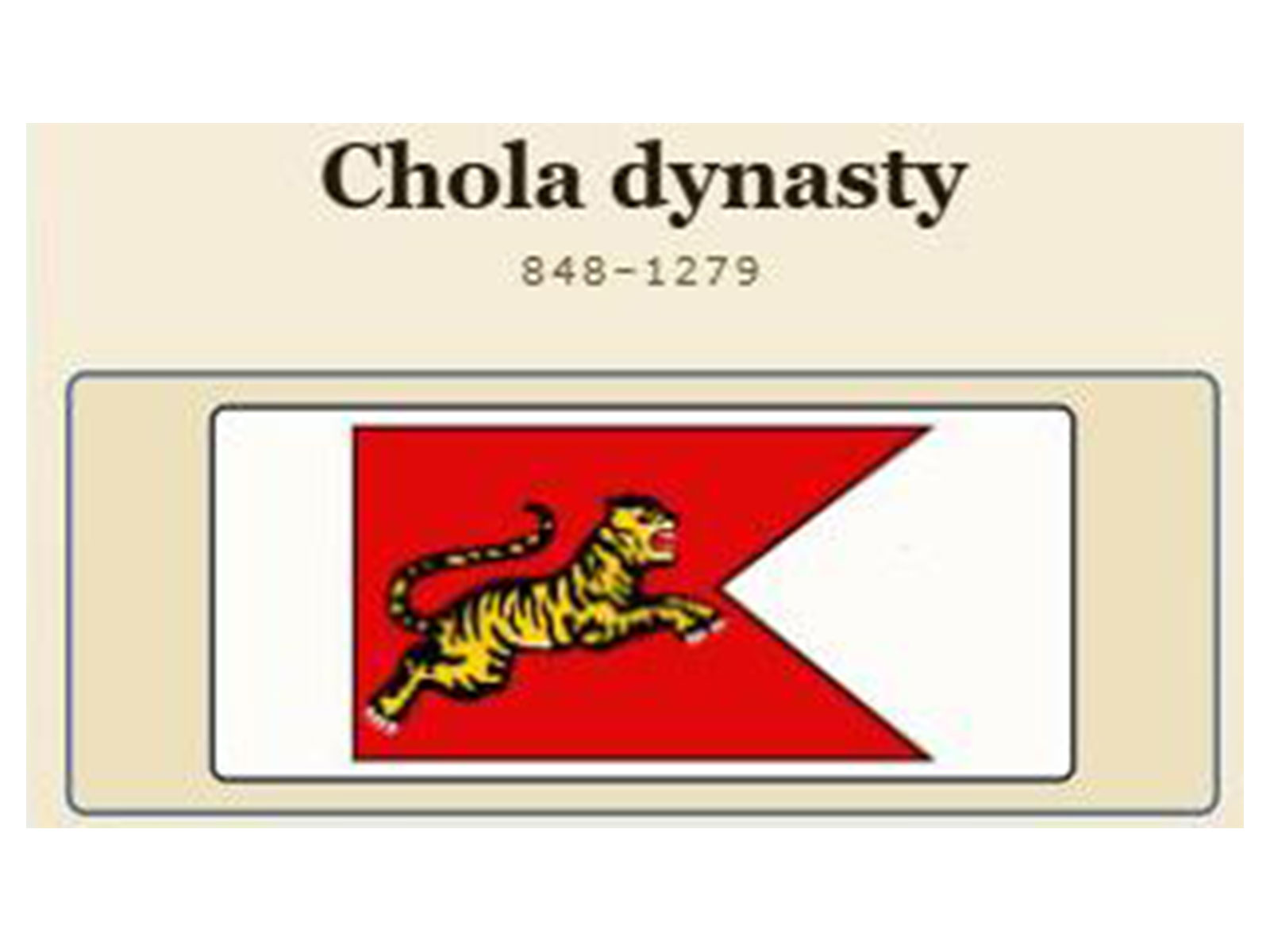
On being queried by the PM, Seshadri said that the way Indian history is taught in our schools and colleges often focuses on the perspective of a single empire or kingdom, with those specific empires receiving disproportionate attention. “Consequently, we remain unaware of many other great empires -such as the Cholas, the Pallavas, the Karkota dynasty of Kashmir, or the Ahoms, who preserved their culture and value system in Assam for at least 600 years. So, I decided to create a site that introduces people to these great empires.”
Further he said that hypothetically if he was allowed to converse with any three figures from Indian history he would pick Rajaraja Chola or Rajendra Chola – who was one of the most powerful and significant kings of the Chola Empire, Hemu, “a military genius who fought 23 battles in his career and won 22 of them” and a woman named Tribhuvan Mahadevi whose story belongs to the Bhaumakara dynasty of Odisha.
During the broadcast, PM Modi casually asked Seshadri about his other interests outside of history and technology. “I am a boring type of person who remains immersed in history and technology,” Seshadri replied, drawing lighthearted laughter from the Prime Minister, who commended his dedication before wishing him success. (ANI)
Related reading