
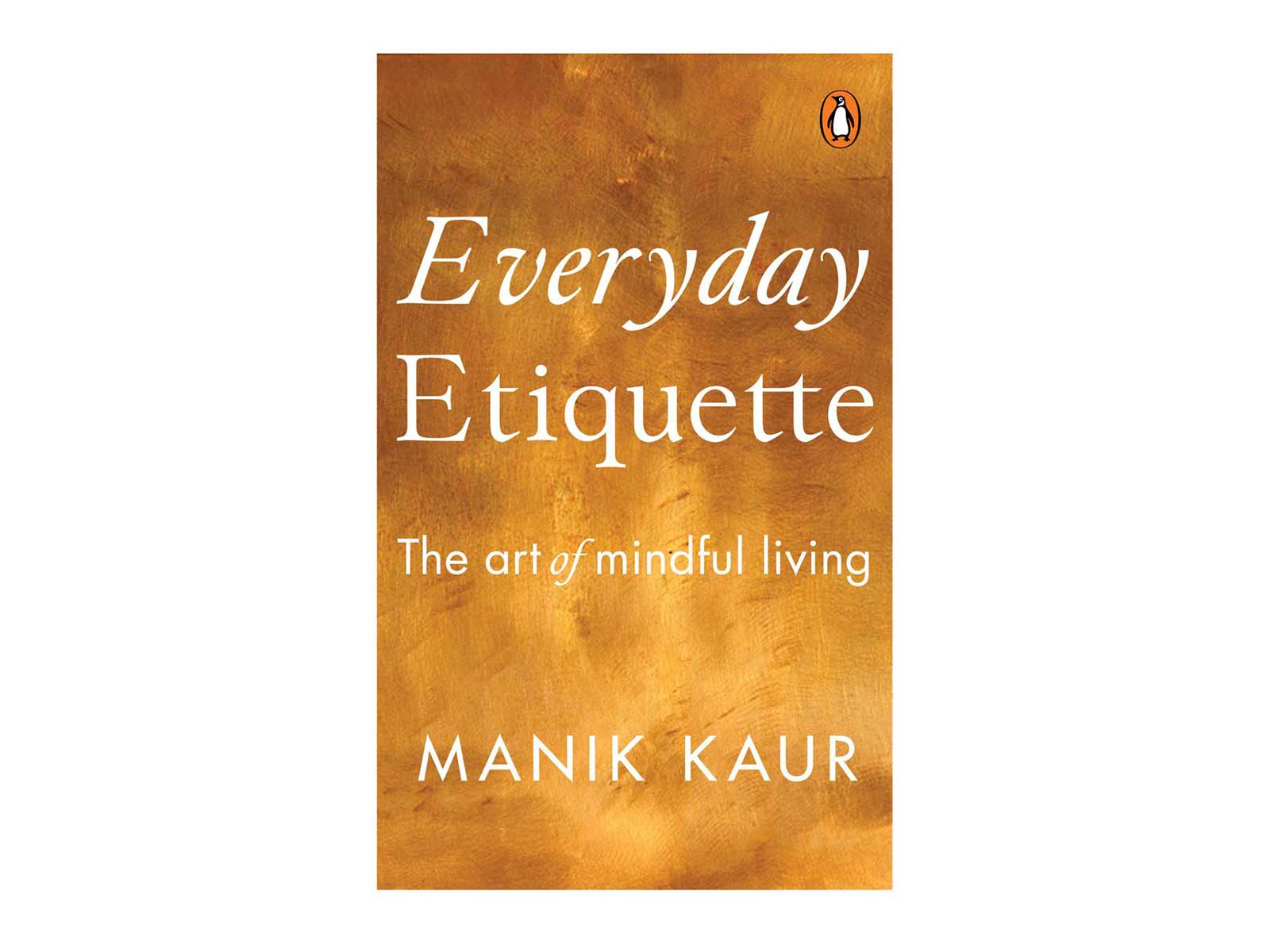
New Delhi [India], August 7 (ANI): There was a time when etiquette meant knowing which fork to use, when to stand, how to address an elder, or how not to embarrass yourself at a formal dinner. Manik Kaur has little interest in rescuing that version of etiquette. Instead, in Everyday Etiquette: The Art of Mindful Living, she argues that grace is not an ornament of privilege but a daily practice of awareness. Etiquette, in her hands, is less about performance than presence, less about polish than kindness. That premise, established in the book’s preface and reinforced throughout its five-part structure, is what gives this work both its emotional warmth and its contemporary relevance.
The book begins where the best books on character often do: at home. Kaur’s beloved Badimama is not merely a family elder but the moral architecture upon which the entire work rests. From the way she folded shawls and greeted household staff to the care she took in dressing even for an ordinary day, Badimama becomes the embodiment of the book’s central thesis–that refinement is what you practise when no one is watching. It is an intimate beginning that immediately distances the book from the stiff manuals of etiquette that once populated drawing rooms. This is memoir braided with mentorship, and the personal voice makes the philosophy believable.
Kaur’s greatest achievement is that she broadens etiquette into emotional intelligence. She reminds us that responding to messages, acknowledging domestic staff, listening without interruption, thanking the cook, arriving on time, and putting away one’s phone during conversation are not social tricks but moral choices. Throughout the book she returns to one beautiful idea: etiquette is mindfulness in action. That phrase alone deserves a permanent place in our vocabulary.
The structure of the book reflects that ambition. Rather than confining herself to table manners or introductions, she journeys through awareness, grace, connection, conduct and relationships. There are chapters on digital behaviour, emotional intelligence, workplace etiquette, hosting, family life, travel, correspondence and friendship. In doing so, Kaur acknowledges a reality that many etiquette writers have ignored: our lives now unfold simultaneously across dining tables, WhatsApp groups, airport lounges and Zoom meetings. Grace has had to evolve because society has.
One of the strongest sections examines digital decency. In an era where ghosting has become normal, group chats become battlegrounds, and public shaming masquerades as honesty, Kaur insists that courtesy should not disappear simply because a screen sits between us. Her observations about replying thoughtfully, resisting passive-aggressive posting, and remembering that every notification belongs to a real human being are among the book’s most persuasive chapters because they speak directly to contemporary life rather than inherited ritual.
As someone who has spent a lifetime in hospitality, I found myself repeatedly nodding through the chapters on dining and hosting. Kaur understands that hospitality is never measured by imported china or expensive cutlery. It is measured by whether guests leave feeling lighter than when they arrived. Her insistence that warmth outranks perfection feels deeply Indian, deeply humane and refreshingly practical.
For me, the journey into etiquette began long before restaurants or Michelin stars. At Modern School, Vasant Vihar, I was the first–and, until I graduated, the only–boy to take meal planning, where etiquette formed part of the curriculum. Years later, after moving to America, I fell in love with a man who treasured Emily Post’s Etiquette almost as a family scripture. Together we read it, and I learnt that every dinner invitation deserved a handwritten thank-you within twenty-four hours, that gratitude was as important as the meal itself, and that even seemingly trivial questions–how to approach asparagus, artichokes or corn on the cob–revealed that etiquette was never really about silverware but about consideration. I smiled at Emily Post’s wonderfully practical observation that some American sandwiches were simply too large to eat elegantly. That humility delighted me. Reading Manik Kaur decades later felt like coming home to those early lessons, translated beautifully into an Indian voice for a modern world. Hers is not Emily Post rewritten. It is something rarer: an Indian philosophy of grace that speaks confidently in its own accent.
Yet perhaps the greatest surprise of this book is that it refuses to remain a “women’s book.” Traditionally, etiquette has been marketed almost exclusively to women, as though civility were their burden alone. Kaur quietly dismantles that assumption. Again and again she addresses professionals, fathers, sons, husbands, executives, students and leaders. Reading these chapters, I found myself wishing that every young man entering college, every newly promoted executive and every father raising sons would spend time with this book.
In a world where identity has become more fluid, social expectations more complex and public discourse often more abrasive than compassionate, men need refinement as urgently as anyone else–perhaps even more so. Not refinement as performance, but as character. The ability to listen before speaking, apologise without ego, greet staff with dignity, disagree without humiliation, and inhabit authority without intimidation are not feminine virtues. They are human ones. Kaur gives us the vocabulary for that refinement, and in doing so offers a quietly compelling manual for modern adulthood.
If there is one gentle criticism to make, it is born from admiration rather than disappointment.
At times, the book’s desire to be comprehensive slightly weakens its literary rhythm. Checklists, summaries, bullet points and repeated “Grace in Action” exercises occasionally interrupt the emotional flow established by Kaur’s anecdotes. A tighter editorial hand might have trusted the stories a little more and the instructional framework a little less. The wisdom is already present; it does not always need reinforcement. Ironically, the book could have benefited from practising one of its own principles: restraint.
That, however, is a small reservation within an otherwise thoughtful work.
It is perhaps no surprise that Everyday Etiquette is already finding a substantial readership. Booksellers are reporting strong demand, suggesting that Kaur has tapped into something many had assumed was fading: India’s enduring appetite for civility, gentleness and thoughtful conduct. Beneath the noise of contemporary life, there remains a culture that still values grace, and Kaur has found an authentic language for speaking to it. Her voice never feels nostalgic for nostalgia’s sake. Instead, it reminds readers that good manners are not relics of another era but practical tools for living well today.
More importantly, one hopes Kaur’s next volume expands this conversation even further. There is fertile ground ahead–etiquette across cultures, interfaith sensitivity, LGBTQ+ inclusion, disability awareness, the etiquette of disagreement in an age of polarisation, and the subtle graces required in an increasingly diverse world. Her philosophy is broad enough to embrace them all.
Ultimately, Everyday Etiquette succeeds because it understands something profoundly simple: people rarely remember the cleverest person in the room. They remember the person who made them feel seen.
In an age intoxicated by visibility, Manik Kaur reminds us of the forgotten elegance of noticing others. That may be the rarest etiquette of all.
This is not a book about perfect manners.
It is a book about becoming a more generous human being.
And that is a lesson that belongs equally to women, to men, and to everyone still learning how to live gracefully in a noisy world. It is a graceful debut from a writer whose greatest strength lies not in telling us how to behave, but in reminding us why it matters. (ANI/Suvir Saran)
Disclaimer: Suvir Saran is a Masterchef, Author, Hospitality Consultant And Educator. The views expressed in this article are his own.
Related reading