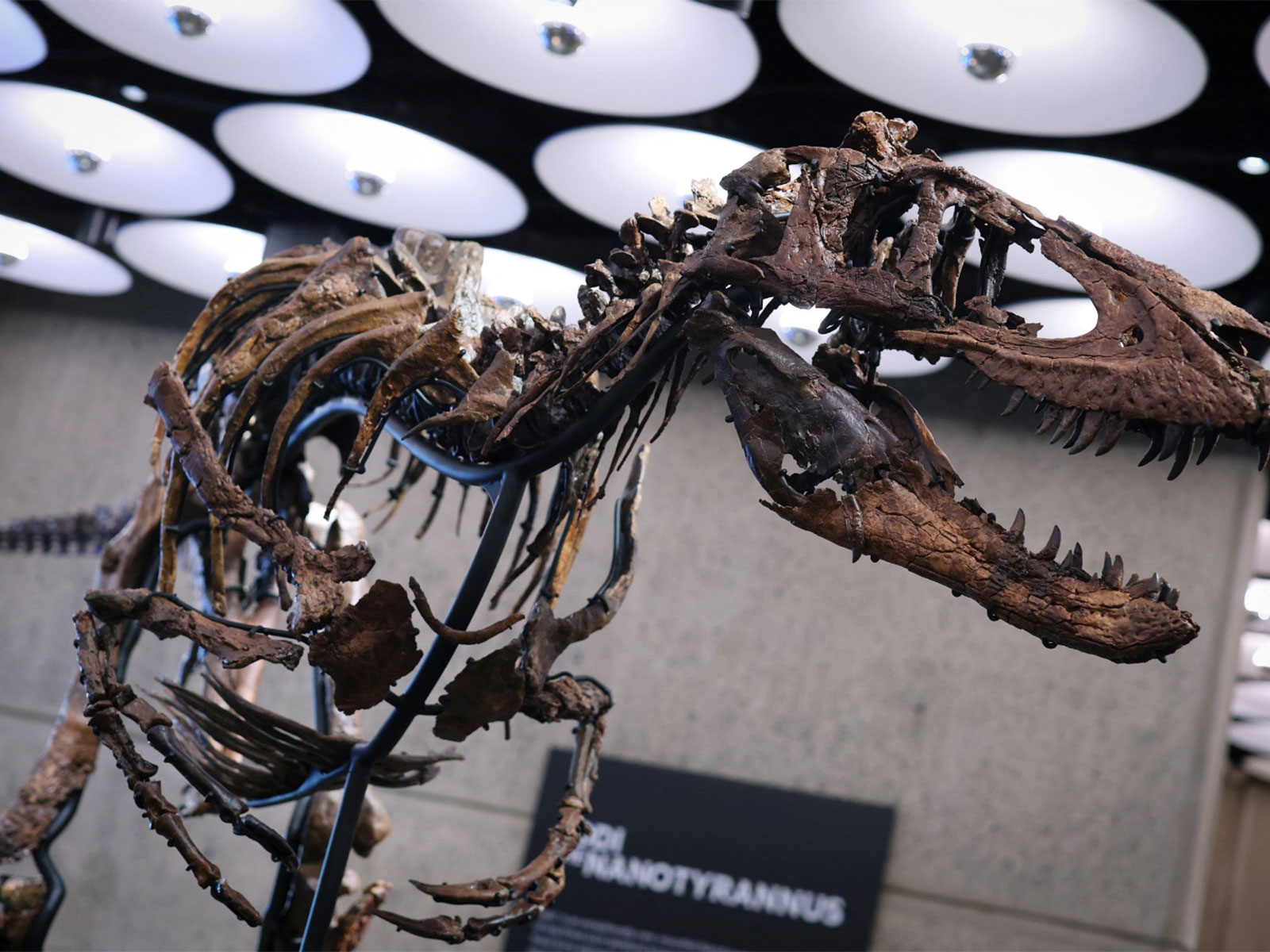
New York [US], October 28 (ANI): A rare Nanotyrannus skeleton, belonging to a smaller relative of the T. rex, has sold for USD 47.3 million at an auction at Sotheby’s in New York following a fierce 12-minute bidding war among six contenders.
The specimen, named Jodi, is one of only three relatively complete Nanotyrannus skeletons known to science. Blowing well past an estimate of USD 6 to USD 9 million, the sale narrowly missed the auction record for a fossil, set in July with the sale of Gus — an exceptional T. rex skeleton that went under the hammer for USD 50.1 million, as per CNN.
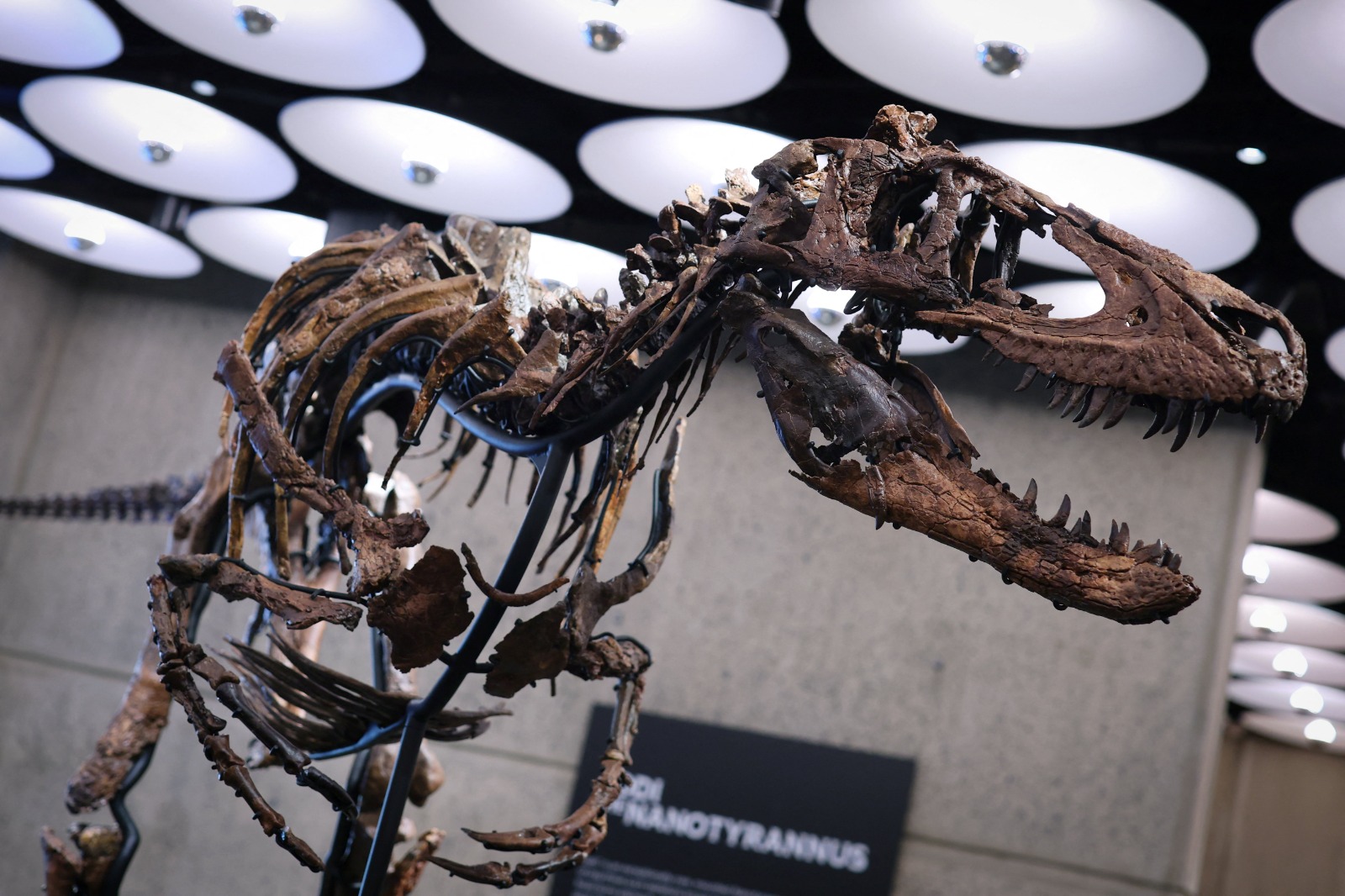
Standing 9.6 feet tall and measuring 19.6 feet long, Jodi is just over half the length of Gus. The scarcity of comparable specimens is likely to have contributed to the eye-watering sale price. However, the very existence of Nanotyrannus as a distinct species remains hotly debated among paleontologists. Only recently have researchers increasingly come to favor the view that Nanotyrannus was a separate species rather than a juvenile T. rex.
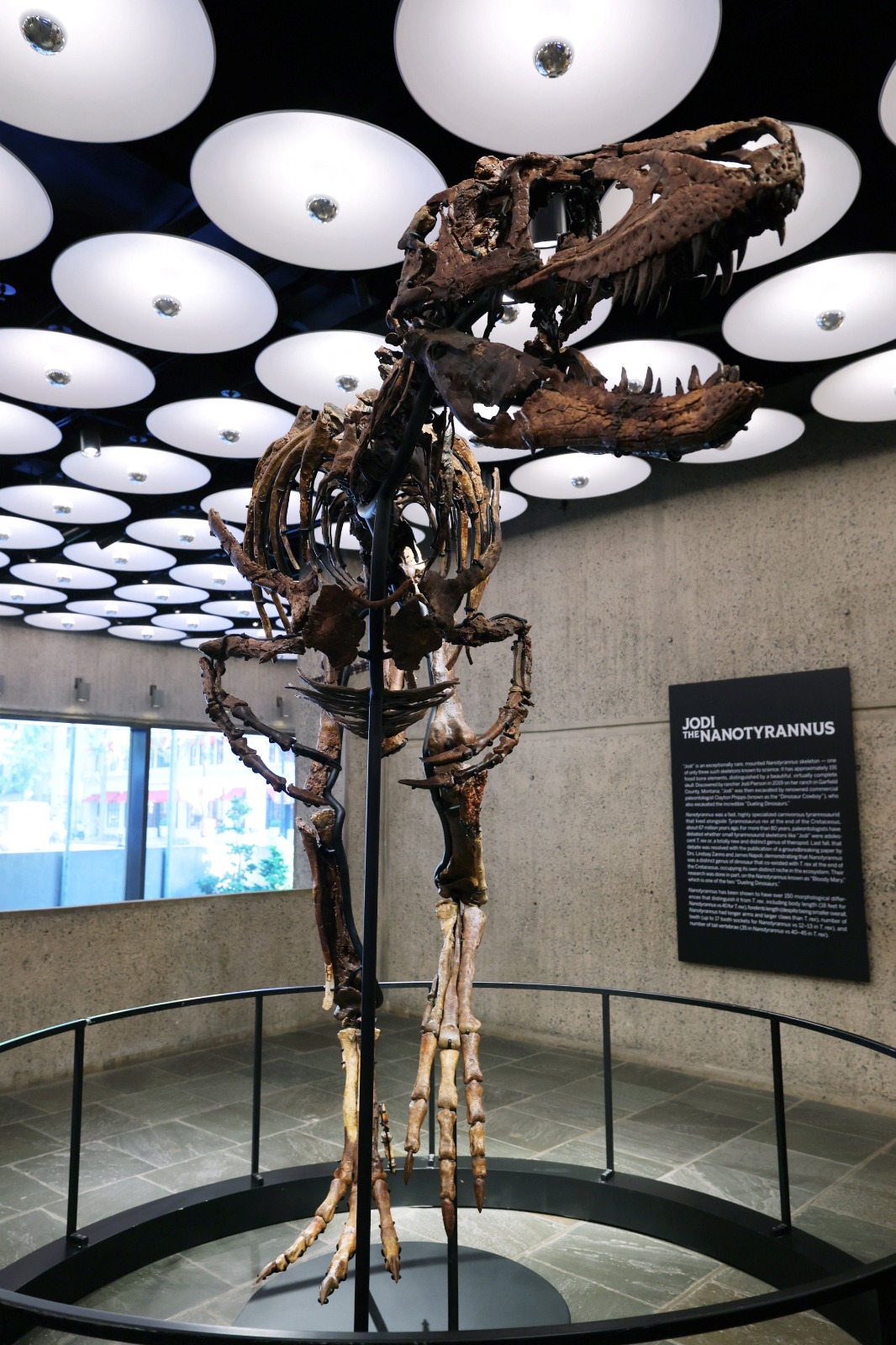
The specimen, according to Sotheby’s, is exceptionally preserved, made up of 191 bone elements, and includes a “virtually complete” skull.
The skeleton was discovered in 2019 by Montana rancher Jodi Pierson, who inspired its name, and excavated by Clayton Phipps, a commercial paleontologist nicknamed the “Dinosaur Cowboy.”
Like several other important fossils previously sold at auction, Jodi comes from Hell Creek Formation, a geological boneyard stretching across Montana, Wyoming and the Dakotas. One of the first skeletons of T. rex was found there in 1902, and the name T. rex was given to the species based on fossils unearthed in the area, according to CNN.
Based on the overall size and bone development, Jodi is an adult specimen, according to Sotheby’s. The missing bones have been replaced with custom 3D printed and sculpted elements, and the fossil was offered with “full rights,” meaning it doesn’t contain any copyrighted elements from other dinosaurs. Its new owner — whose identity is unknown — can therefore create replicas of the skeleton and sell them to museums or collectors. (ANI)
Related reading