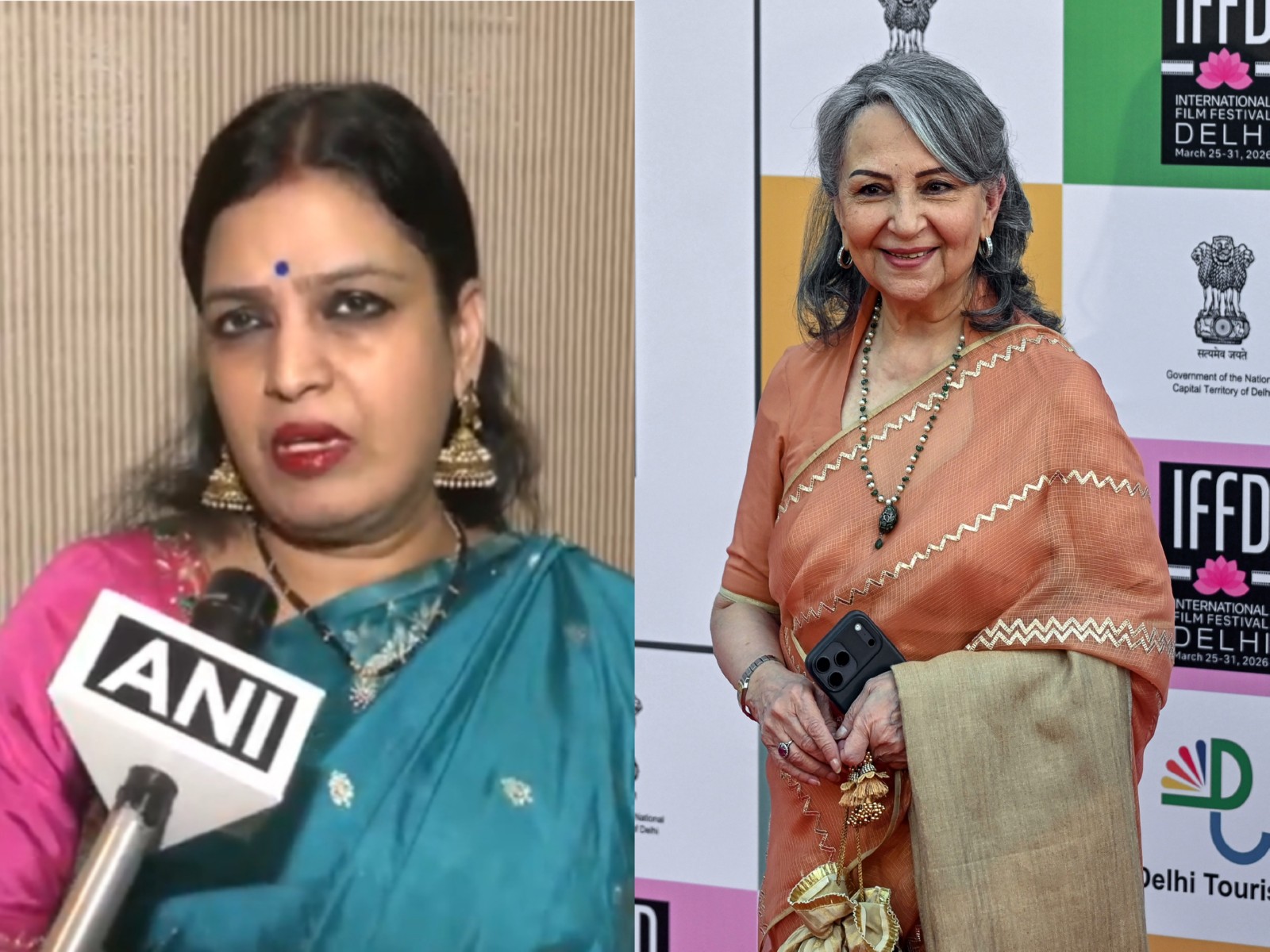
Hyderabad (Telangana) [India], August 22 (ANI): Vishwa Hindu Raksha Parishad (VHRP) National Mahila President Yamuna Pathak has criticised veteran actress Sharmila Tagore over her recent comments on Vande Mataram, arguing that Bankim Chandra Chattopadhyay’s composition should not be viewed primarily through a religious lens.
Pathak said Tagore, as a “daughter of Bengal”, should remember the role the song played during the 1905 anti-partition movement in Bengal and its association with India’s freedom struggle.
She also argued that references to Hindu deities in the poem can be understood as poetic metaphors rather than instructions for religious worship.
“Actress Sharmila Tagore, wife of late Mansoor Ali Khan Patodiji, must stop viewing Vande Mataram through a narrow religious prism. Saluting one’s own motherland is patriotism; it’s not politism,” Pathak said in a conversation with ANI.
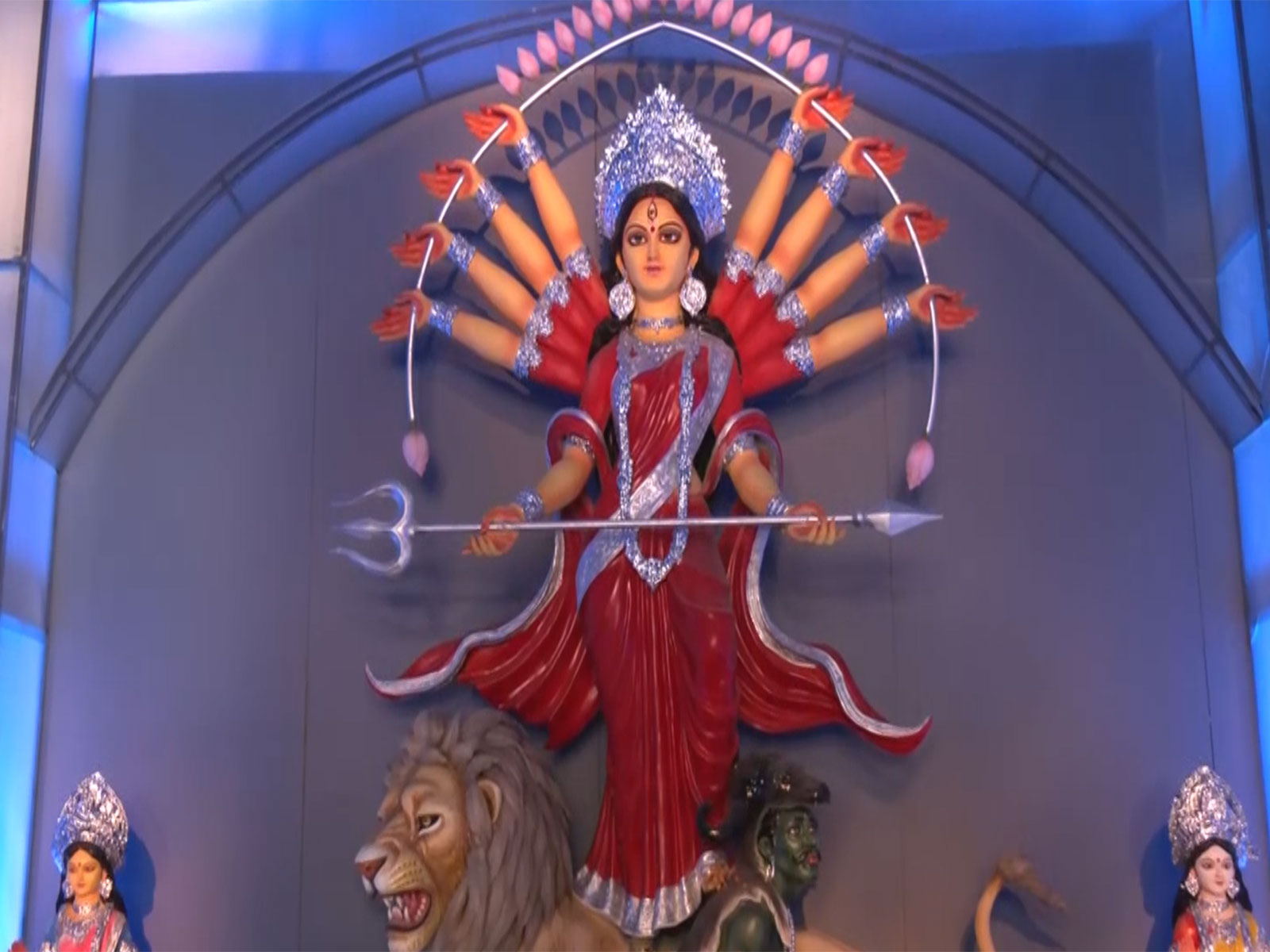
She added that Chattopadhyay “invoked Shakti, Lakshmi and Saraswati as powerful poetic metaphors for Bharat’s courage, prosperity and knowledge, not as a command to perform any religious worship.”
The comments come amid a renewed public debate over the national song and the portions that should be used at public events.
According to media reports, Tagore recently said that only the first two stanzas should be used publicly, expressing concern that later verses referring to deities such as Kali and Durga could make monotheistic believers uncomfortable. She said her concern was about bringing people of different faiths together.
Pathak rejected the idea that the song should be framed as a Hindu-Muslim dispute. Referring to its history, she said Vande Mataram “thundered through Bengal during the 1905 anti-partition movement and became an immortal battle cry against British rule.”
“Hindus and Muslims stood together in Bharat’s freedom struggle then,” she said, while attributing later communal suspicion around national symbols to divisive politics, Jinnah’s separatism and the British policy of divide and rule.
Pathak also invoked Article 25 of the Constitution in making her argument, saying that freedom of conscience does not require the historic significance of national symbols to be diminished.
“Sharmila ji, if you look at Article 25, it protects freedom of conscience but personal religious belief cannot be weaponised to diminish the dignity and historic significance of Bharat’s national flag,” she said.
She further argued that belief in one God and expressing gratitude towards the motherland were not inherently contradictory.
“A person may believe in one God and still bow with gratitude to one’s motherland; there is absolutely no constitutional, spiritual or logical contradiction in that,” Pathak said.
Pathak concluded her statement by rejecting any attempt to define Vande Mataram as belonging to one community.
“Vande Mataram belongs to every Indian and no manufactured communal interpretation can erase its glory,” she said.
Her remarks follow similar criticism from actor-politician Kangana Ranaut, who also responded to Tagore’s comments. Kangana shared a video of Tagore’s recent interview on her Instagram Stories on Thursday and said she respected the veteran actor’s right to have reservations about the national song, while disagreeing with her interpretation.
Speaking from the perspective of an artist, Kangana argued that poetry frequently uses metaphor and imagination to communicate broader ideas.
She said Vande Mataram represented the spirit of the freedom struggle and described Bankim Chandra’s invocation of Shakti as a call to awaken strength rather than an instruction relating to religious practice.
“I appreciate that Sharmila ji has spoken about her reservation on Vande Mataram, but I am shocked as an artist how can her views on art/poetry can be so limiting and contrived, in any poetry or song words are metaphors, a poet or artist uses all kinds of imaginations draws unbelievable parallels to bring about the desirable effect, Vande Matram is the spirit of freedom struggle Bankim Chandra ji is compelling the nation to awaken the Shakti within, how can you reduce such a great piece of art to mere religious practice,” Ranaut wrote.
She also urged people to move beyond what she described as a “Hindu-Muslim mindset” while discussing the song, referring to strength as a broader concept.
The latest exchange takes place against a wider political debate over Vande Mataram. The Congress has maintained a preference for the first two stanzas, reflecting its 1937 position, while recent government efforts have pushed for full official renditions of Chattopadhyay’s composition.
The controversy also intensified after video footage from the Congress headquarters showed Kharge and Sonia Gandhi conversing while Vande Mataram was being rendered during Independence Day celebrations on August 15.
The BJP subsequently accused the party’s top leadership of disrespecting the national song and demanded a public apology. (ANI)
Related reading