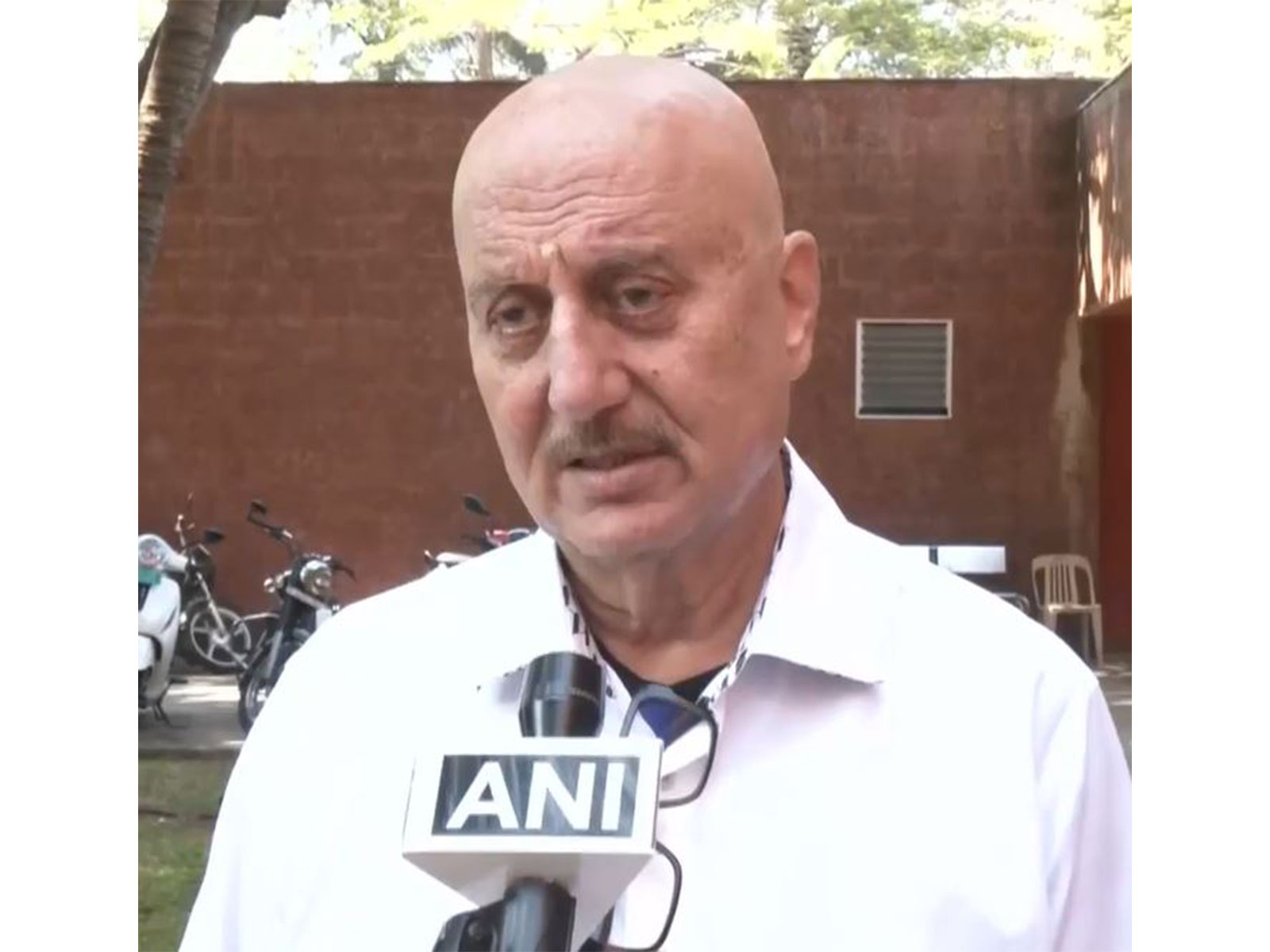

Panaji (Goa) [India], November 22 (ANI): India’s growing potential as a global filming and production destination came into focus at the 57th International Film Festival of India (IFFI), as policymakers and industry leaders discussed opportunities to strengthen the country’s position in the international filmmaking landscape.
The panel discussion, titled ‘Filming Made Easy: India’s Rise as a Global Filming and Production Hub’, was held on Sunday. The panel featured Prithul Kumar, Joint Secretary, Ministry of Information and Broadcasting; Grainne Brundson, Chief Operating Officer, Screen Australia; and veteran actor Anupam Kher.
The discussion explored how India Cine Hub (ICH), the single-window digital platform spearheaded by the Ministry of Information and Broadcasting and operated by the National Film Development Corporation (NFDC), is facilitating filmmaking in India. Film critic and journalist Rajeev Masand moderated the session.
Opening the discussion, Kumar said that the integration of State governments into the India Cine Hub portal marked a significant step towards simplifying filming permissions. Filmmakers can now use a common application form to seek clearances from multiple authorities, including municipal bodies, traffic departments, Indian Railways and the Archaeological Survey of India (ASI), through a single digital interface, as per a press note shared by the Ministry of Information and Broadcasting.
“Around 32 services have been mapped onto the platform. Applicants can track the progress of their applications through a dashboard, while payments, wherever required, are facilitated through secure payment links. Efforts are also underway to integrate drone-related permissions available through the Digital Sky platform,” said Kumar as quoted in a press note.
Highlighting the growing ease of filming in India, Kumar noted that international film shooting permissions, which have a stipulated processing period of 28 days, have taken an average of just 18 days since 2015. He also cited Madhya Pradesh’s deemed-approval provision, under which applications are treated as approved if no decision is communicated within 15 days.
Reflecting India’s growing appeal as a filming and co-production destination, Kumar noted that the number of international productions approaching India for such opportunities has risen from 25–30 to 100–200 annually.
He encouraged production professionals and service providers to register on the portal, enabling filmmakers from across the world to discover and access India’s production resources.
Speaking about opportunities for India-Australia collaboration, Brundson said India’s diverse filming locations, filmmaking talent and strong emotional connect with audiences made it an attractive destination for international partnerships.
She highlighted the growing popularity of Indian cinema in Australia, observing that more people watched an Indian film than an Australian film in the country last year. The growing Indian-origin population and strong cultural, educational, sporting and business links between the two countries, she said, offered significant opportunities for collaborative storytelling.
Underlining the importance of government support for filmmaking, Brundson said, “Every film is a start-up and a miracle. It begins with a dream or an idea and takes dedication, passion and the support of others to bring it to life.”
She added, “Successful co-productions go beyond financial collaboration and risk-sharing, creating opportunities for creative exchange. She highlighted the potential for Indian and Australian filmmakers to learn from each other’s storytelling traditions and explore shared experiences, including diaspora narratives, to create stories that resonate with audiences in both countries,” as quoted in a press note.
Appreciating the government’s initiative to establish the India Cine Hub platform, Anupam Kher said that the process of obtaining filming permissions had improved considerably.
He observed that India’s diverse landscapes, food, costumes and cultural settings offered filmmakers an extraordinary range of creative possibilities.
Emphasising that cinema transcends geographical boundaries, he said, “Emotions don’t have any different nationalities. The only thing that you need is the possibility of shooting,” as quoted in a press note.
Kher also noted that the single-window system benefits not only established producers but also newcomers, writers, production professionals and aspiring directors. He cautioned against the emergence of middlemen who could exploit filmmakers under the pretext of facilitating permissions.
The discussion brought into focus the growing opportunities for India to emerge as a preferred destination for international film productions, supported by streamlined permissions, diverse locations and opportunities for creative collaboration.
In keeping with IFFI’s role as a platform for global cinematic exchange, the session highlighted how stronger industry partnerships and an enabling filmmaking ecosystem can open new avenues for Indian cinema on the world stage.
IFFI 2026 is set to continue till November 28. (ANI)
Related reading