
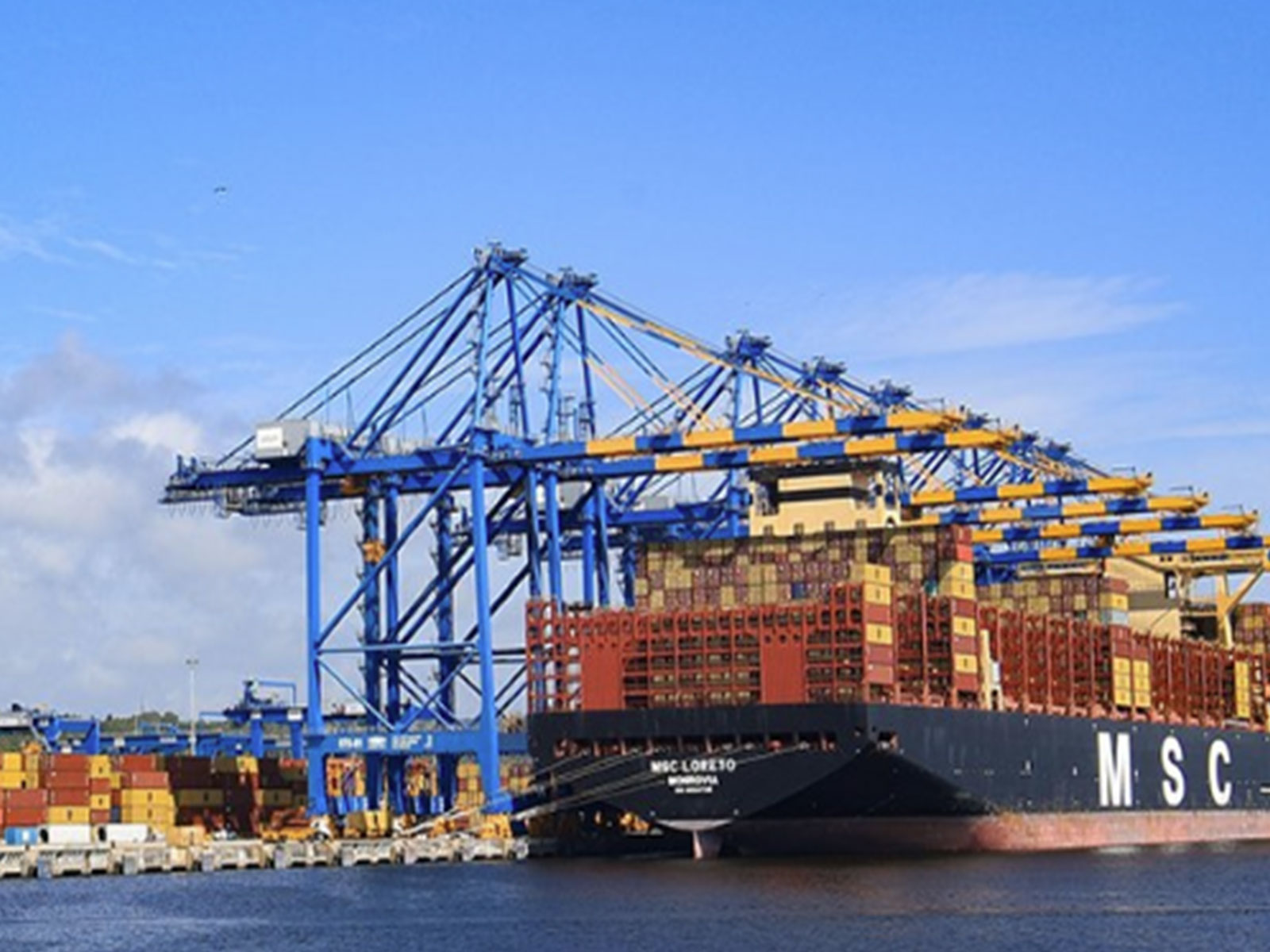
New Delhi [India], September 25 (ANI): Adani Ports’ Vizhinjam International Seaport is raising the bar for container handling in India, with advanced automation, precision and seamless operations strengthening its emergence as a global transshipment hub. The port handled around 17,400 containers from a single vessel, MSC Loreto, marking one of the highest-volume vessel calls at an Indian port, the company said on Friday.
Sharing the update on its official X account, the company said MSC Loreto arrived from Singapore and is one of six Ultra Large Container Vessels (ULCVs) in the MSC Irina series.
“17,262 TEUs. A milestone that speaks to Vizhinjam’s growing scale. MSC Loreto, one of six ULCVs in the MSC Irina series, recorded a remarkable 17,262 TEU exchange at Vizhinjam, one of the highest-volume vessel calls at an Indian port,” the company said in the post.
TEU, or twenty-foot equivalent unit, is a standard measure used by the shipping and logistics industry to describe the cargo-carrying capacity of container ships and the volumes handled by ports and terminals.
Highlighting the technology and operational capabilities supporting the port’s growing scale, the company said, “Arriving from Singapore, the call reflects the port’s growing capabilities, powered by advanced automation, technology, and the people behind every seamless operation.”
The latest milestone underscores Vizhinjam’s growing ability to handle some of the world’s largest container vessels and high-volume cargo exchanges as it scales up its role in global transshipment operations.
Commissioned in December 2024, Vizhinjam is a deep-draft transshipment port with an annual capacity of 1.6 million TEUs. Ongoing expansion is expected to more than triple its capacity to 5.7 million TEUs by December 2028, further strengthening its ability to handle growing transshipment volumes.
Its strategic location, about 10 nautical miles from the East-West shipping route connecting Europe, the Persian Gulf and the Far East, positions Vizhinjam to tap international container traffic that would otherwise be handled by overseas transshipment hubs.
The port has a natural draft of 18–20 metres, a 2.9-km breakwater and an 800-metre berth. Its infrastructure includes eight quay cranes and 24 fully automated yard cranes, supporting faster and more precise container movement.
“During FY26, Vizhinjam port handled 1.3 million TEUs. In its first year, Vizhinjam port handled 1.3 million TEUs and 615 vessels, becoming the fastest Indian port to cross the 1 million TEU milestone,” the company said in the release.
Vizhinjam subsequently crossed 2 million TEUs and handled 950 vessels within 18 months. It has also handled more than 70 ULCVs, the highest among Indian ports, along with 283 vessels longer than 300 metres and 98 vessels requiring a draft of more than 16 metres.
The growing frequency of large vessel calls, backed by automation, deep-draft infrastructure and expanding capacity, highlights Vizhinjam’s push to establish itself as a major global transshipment hub. (ANI)
Related reading