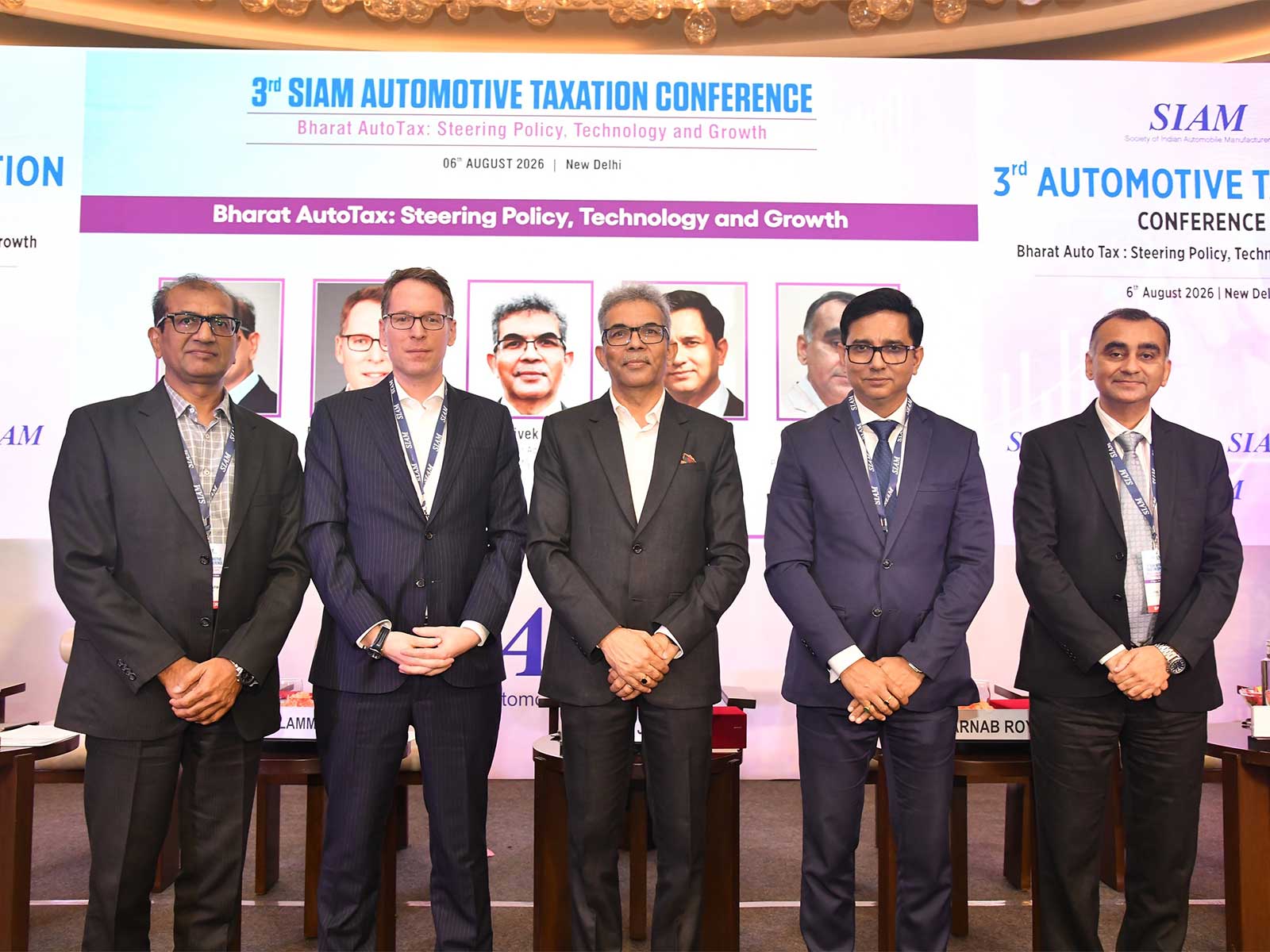
New Delhi [India], August 6 (ANI): The Society of Indian Automobile Manufacturers (SIAM) organised the 3rd SIAM Automotive Taxation Conference 2026 to shape a future-ready tax ecosystem, themed “Bharat AutoTax: Steering Policy, Technology and Growth”.
The event deliberated on policy reforms, digital transformation, and emerging global taxation trends shaping the automotive industry. Discussions addressed agile tax policies, transfer pricing, Pillar Two, Tax Deducted at Source (TDS) reforms, audit and dispute resolution, and the growing role of Artificial Intelligence (AI) in tax administration and compliance.
Addressing the gathering, Sanjeev Agarwal, Chairman, SIAM Direct Tax Group and Head, Taxation & Customs, BMW India, said, “Tax is no longer just a compliance function. It is increasingly a strategic enabler, supporting investment decisions, supply chain resilience, risk management, competitiveness and trust with stakeholders.”
“Compliance must become seamless, governance must become proactive, policies must remain agile, and trust must become real,” he added.
In a special address, Vivek Johri, Senior Advisor, KPMG India, pointed out that “The automobile industry is changing rapidly, and this presents an opportunity to align the tax framework with the technologies and business models driving the sector today.”
“The industry looks forward to working closely with the government to build a shared understanding of the key issues and support a more streamlined tax environment,” he said.
Focusing on global operational shifts, Carsten Lammers, Chief Financial Officer, BMW Group India, said, “Tax functions have moved from a back-office role to the boardroom as a strategic business priority and this is improving the ease of doing business. India is the next big opportunity, supported by a growing middle class, rising consumption and strong manufacturing capabilities,” he stated.
Detailing tax governance mechanics, Arnab Roy, Chief Financial Officer, Maruti Suzuki India, outlined that “The need of the hour is to build on the success of ‘One Nation, One Tax’ and move towards ‘One Nation, One Governance’.”
“GST 2.0 has helped drive industry growth and demand, but seamless credit transfer, greater tax certainty, faster dispute resolution, structured government-industry dialogue and a stronger digital mindset will be essential to further improve the ease of doing business,” he added.
Emphasising technological integration, Veeresh Prasad, Co-Chairman, SIAM Taxation Policy Group and General Manager (Indirect Taxation & Impex), Toyota Kirloskar Motor, discussed software-driven processes.
“AI is shifting the conversation from traditional tax functions to identifying emerging risks, prioritising transactions that need attention and preventing disputes before they arise,” he said.
Moving toward resolution practices, Anil Sahani, Co-Chairman, SIAM Taxation Procedure Group and Vice President (Finance), Head, Tax, Maruti Suzuki India, spoke on voluntary compliance.
“The question before us is no longer whether reforms are required, but how we can make audits more collaborative. Litigation should be the last resort, and the rest should be resolved by trust,” he stated.
Focusing on global compliance changes, Sanjay Seth, Co-Chairman, SIAM Direct Tax Group and Head – Taxation, Hero MotoCorp, discussed regulatory measures.
“The way the automobile industry has grown has also had a definite impact on how companies price and manage transactions within their global business operations,” he said.
The conference also witnessed expert deliberations by representatives including Rajat Kapoor, D D Goyal, Ms Nidhi Grover, Rajeev Dii, Prashanth Agarwal, Pradeep Mitra, Chetan Joshi, Ms Ankita Rungta, Vijay Iyer, Ravi Poojary, Sobhan Kar, Shivam Mehta, Santosh Singh, Rakesh Dube, and Srivatsan Chari.
The conference concluded with the automotive industry committing to work alongside the Government to develop a modern, globally competitive taxation framework designed to foster innovation, investment, and long-term economic growth. (ANI)
Related reading