
New Delhi [India], June 29 (ANI): The US-Israel strike on Iran on February 28 and the corresponding response from Iran paralysed the movement of sea traffic in one of the most important chokepoints of global energy trade- ‘The Strait of Hormuz’. With a tenous peace deal in place and a 60-day negotiation between the two sides ongoing, the Strait is finally seeing free movement of tankers and ships. What stood out during the crisis was India’s response to the energy needs of its people.
This was achieved through a layered, consumer-first response: control orders within days, a sharp lift in domestic production, an excise cushion on petrol and diesel, aggressive supply diversification and energy diplomacy, a whole-of-government demand-management effort, and a deliberate decision to let the State and the public sector marketing companies absorb the cost rather than pass it to the household. It rests on a decade of investment in terminals, pipelines, refining capacity, strategic reserves and source diversification that turned a structural vulnerability into a managed event.
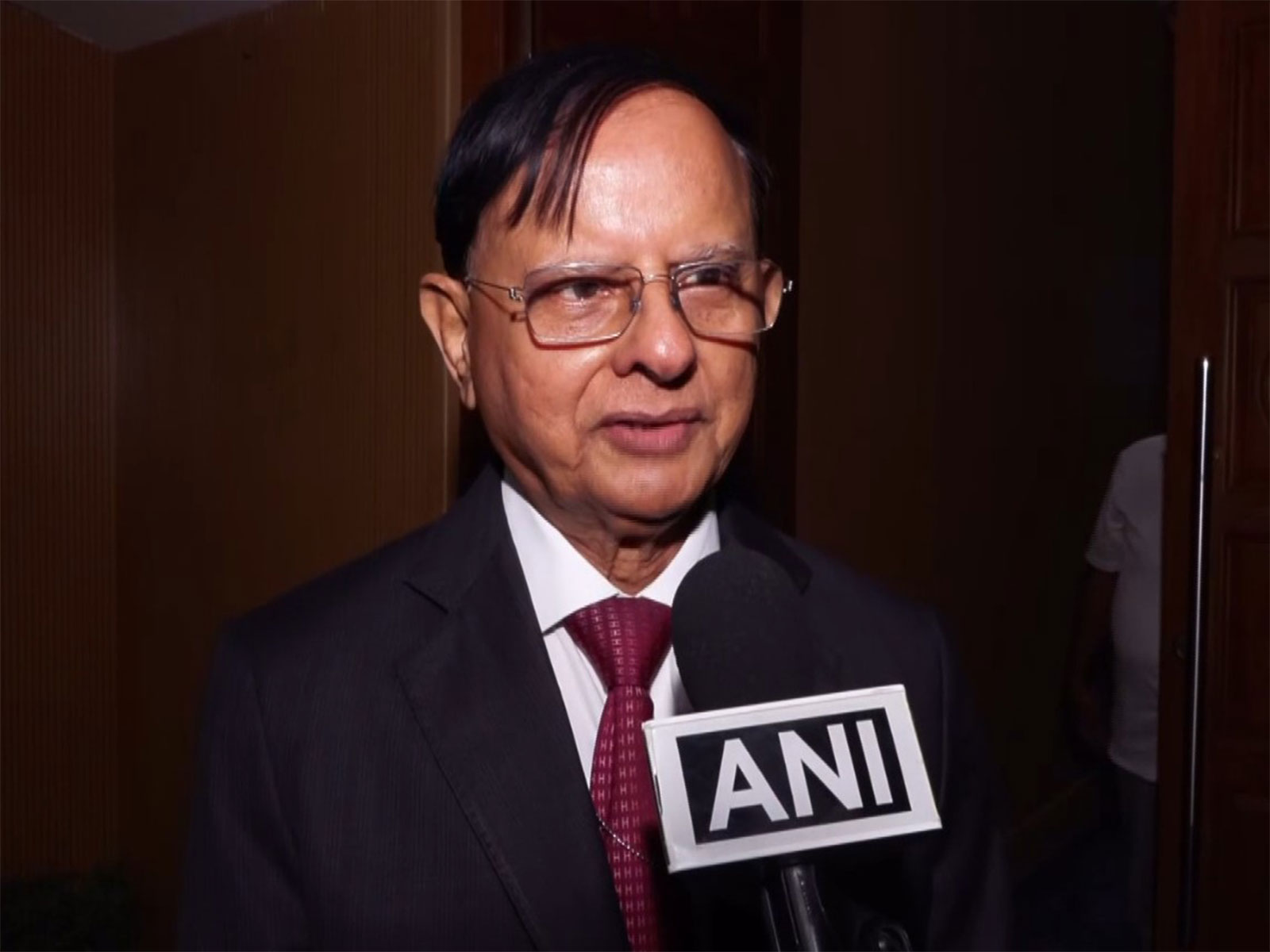
Vartika Shukla, former Chairman & Managing Director Engineers India Limited says that a robust system built over the last 10-12 years has helped build resilience and self-sufficiency at multiple levels that acted as a shock absorber.
“I think we are very resilient and that resilience comes from the strength of the oil and gas sector, the complete import terminals for LPG, LNG, our refineries who are very well equipped to face these challenges, both in terms of having the ability to increase their production, which they did, they increased their LPG production tremendously to fill in that gap, as well as if you know we are export oriented in terms of the excess of petroleum oil products which we produced. So we have huge self-sufficiency. We have about 258 million tons per annum of refinery capacity, going up to 300 million tons. And this export, which gives us the buffer to supply to our own citizens. The network that we have, the retail outlets, 77,000 across the complete east to west, north to south, every corner of India, 33.5 crore households getting LPG. I think it’s a very, very robust system, built stronger over the last 10-12 years, and that has actually given that shock absorber to the nation like ours wherein the common man didn’t feel the pinch of the you know the West Asia crisis,” she told ANI in an interview.
Shukla says India’s strong diplomatic relationships helped in ensuring several vessels could pass through the strait even during the crisis
“The oil marketing companies and the Shipping Corporation of India have had a huge role to play in the discussions and the dialogues which happened. It also rests on India’s strong diplomatic relationship with countries, the balancing act which India has played so beautifully, balancing superpowers like US and Russia. We have a very strong relationship with UAE today… We are also good customers and a great nation with a very strong leadership which is anchoring the growth of the complete country. So we are in a position wherein we cannot be ignored,” she said.
Uninterrupted LPG supply was one of the clearest successes during this period. An LPG Control Order was issued within eight days of the disruption, directing all refineries to maximise output by diverting propane, butane, propylene and butene streams. Within seven days, domestic production rose from thirty-five to fifty-four thousand tonnes a day, well above the residual import requirement of about thirty thousand metric tonnes a day, so that the shortfall was substantially replaced by domestic output alone. Refineries that had never produced LPG were reconfigured to do so.
“Over the last decade plus, our LPG import terminals have increased from about 11 to 22. The oil marketing companies and even supported by the other refineries in the country who are in the joint venture and private sector space, have lived up to the need of the hour and ramped up their LPG production. So their ramping up was something like about 30 plus TMT per day to almost 53-54 TMT per day, which is substantive in terms of bridging that deficit which was due to lower cargoes coming through the Strait of Hormuz. We technically import about 60% of our LPG… And the control order, which was issued at the initial stage for LPG, was a kind of a transparent mechanism to make the industry understand as to where the government wanted the whole economy to go. Diversifying LPG supplies has also been our focus, and normally most of it is through, as I mentioned, through the Middle East, but supplies which have now started coming from other countries will definitely stabilize the price as well as stabilize and kind of cushion this crisis the shape of this crisis if it were to kind of emerge again,” Vartika Shukla said.
The consumer was also protected. With the import-linked cost of a 14.2 kg cylinder rising above 1,600 rupees, the regulated price to any household was held at Rs 942 rupees, and the effective price to a Pradhan Mantri Ujjwala Yojana beneficiary at Rs 642 after a direct benefit transfer of Rs 300 on the refills that cover a typical household’s annual consumption, reaching more than 10.58 crore connections.
“When there are exigencies and when there are situations which are not the business as usual, measures need to be taken. And it is for any governance to put the household first. People have to have the availability of energy at the right price. And you see the prices were not raised for LPG at all, and it was available to the households because we need to cook… So I think that is paramount and on that part this control order was necessary. In hindsight if you see it played out very well. And we do understand that industry also has to be supported, but I think the priority is first to make sure that citizens get their two meals a day and and it’s good that the resilience has been such that now everything is back to normal. The cushioning of such a multi-faceted, multi-linked economy will be reduced substantially by this very narrow period of time where there was shortage of LPG or the price was higher for the non- you know for the commercial LPG segment,” Vartika Shukla said.
The supply effort was matched by coordinated demand management across government. The environment authorities permitted small eateries to fall back temporarily on alternative fuels. State governments, municipal corporations, industry associations and the oil marketing companies came together to keep commercial LPG moving where a crisis might otherwise have stalled distribution. The response was national in the fullest sense, drawing in ministries, states, local bodies and industry behind a single objective of uninterrupted supply to the household.
“India is the largest democracy. And the strength of our democracy rests on the fact that the government of India, the honourable Prime Minister and the complete governance is always focused on giving energy at the lowest cost to the people. While many prices were raised all across the world, some even curtailed and even kind of rationed the supplies, it was sufficient in volume for our citizens. The government of India at the right time, stepped in to reduce the excise duty both on petrol and diesel such that the pinch to the common man is, you know, not felt and the economy continues to grow with the same vibrancy,” Vartika Shukla added.
Unlike some countries, India did not declare any emergency, did not ration households, shorten working weeks, closed schools or order driving bans. The only curbs it applied were on commercial and bulk LPG and on the export of diesel and aviation fuel, and these were to protect the domestic household. Through the entire four-month crisis, the kitchens of India’s families kept burning. (ANI)
Related reading