New Delhi [India], May 13 (ANI): Industry experts on Wednesday stressed the urgent need for India to strengthen raw material security for critical minerals, metals, coal and scrap, saying these resources are essential for achieving the country’s manufacturing, infrastructure and clean energy ambitions.
Speaking at the inaugural session of the National Conclave on Raw Material Securitization for Metals & Minerals, themed ‘Advancing Self-Reliance, Resilience & Resource Security’, experts highlighted that India’s growth plans, including electric vehicles, semiconductors, renewable energy and steel production expansion, depend heavily on reliable access to raw materials.
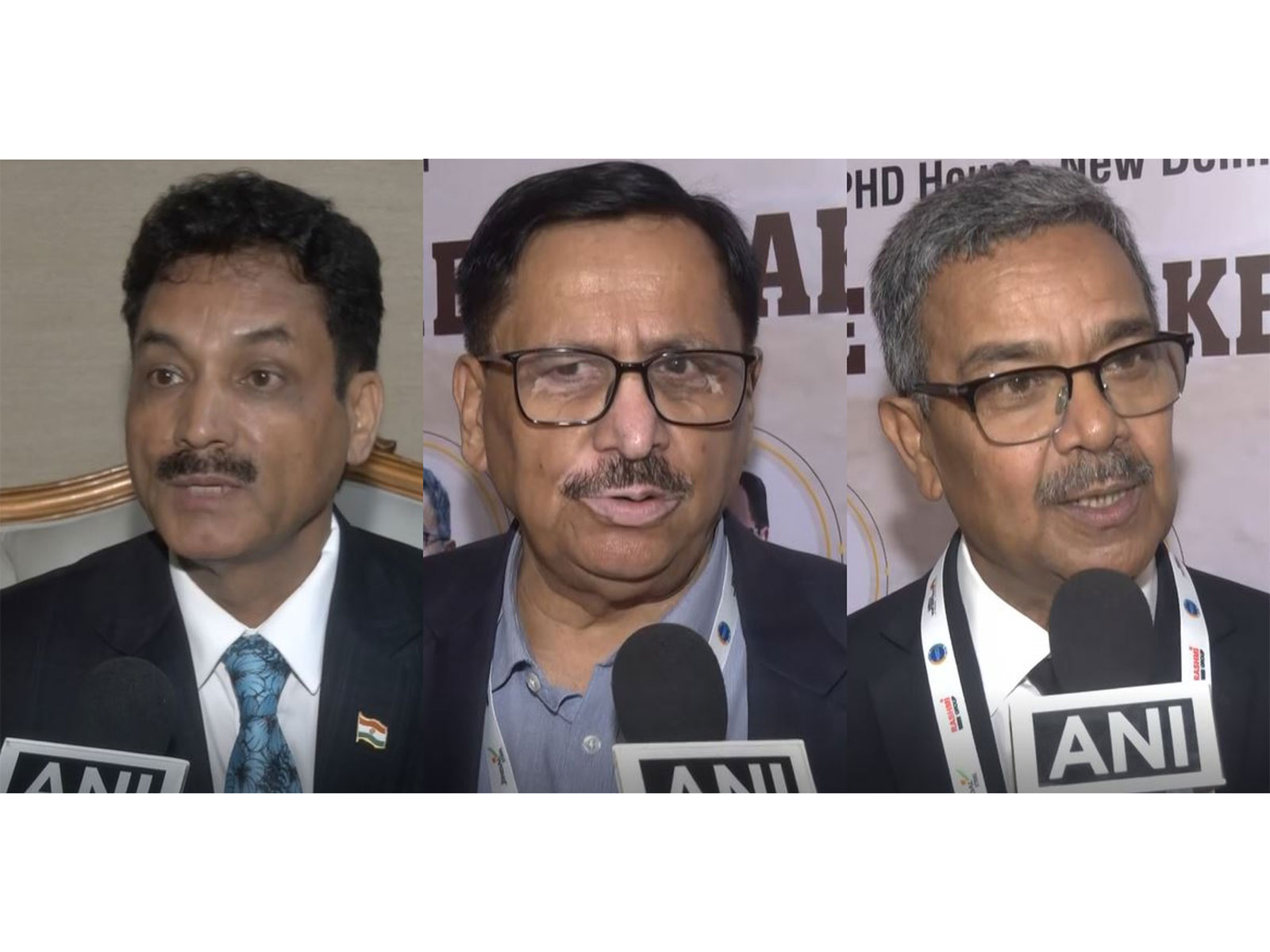
Ranjeet Mehta, CEO and Secretary General of PHDCCI, said critical minerals have become a “strategic asset” for India as the country moves towards its Viksit Bharat 2047 vision.
“As India is growing, we have a semiconductor mission, then we have electric vehicles, have renewable energy. So much of solar power is being deployed in the country. To manufacture all that, I think these critical minerals are very, very important,” Mehta said.
He added that India needs stronger public-private partnerships and better technology for the extraction of minerals.
“We need to focus on public-private partnership, and we need to create an ecosystem where industry can chip in, and they can get into these minerals,” he said.
Mehta further said India’s push to become a USD 5 trillion economy and the rapid expansion of the defence and renewable energy sectors have made raw material access a key national priority.
“I think in all these missions it is important to have the raw material for these things,” he added.
Anil Dhawan, Director General of the Alloy Steel Producers Association of India, said raw material security remains one of the “most prominent” concerns for the steel industry, especially as India targets 300 million tonnes of steel production under the National Steel Policy.
“The most prominent issue of today for the industry, steel industry, that is the raw material security,” Dhawan said.
He said India has sufficient iron ore reserves, but the country remains heavily dependent on imported coking coal due to coal quality.
“For every one ton of steel, you need almost 600-700 kg of coal, which has to be imported,” he said.
Dhawan also pointed to shortages in steel scrap availability, saying domestic supply remains inadequate despite the government’s scrappage policy.
“Twenty-five million tons of scrap is available domestically. Thirteen million tons is being imported,” he said.
On the impact of geopolitical tensions and wars, Dhawan said rising freight costs and supply disruptions are affecting the industry globally.
“There is a raw material cost issues, some raw material availability issues, energy issues, and therefore there is an impact, definitely,” he said.
Alok Sahay, Secretary General of the Indian Steel Association, said raw material security has become even more critical amid evolving geopolitical conditions and global sustainability norms.
“Given the geopolitical situation, we have to ensure that steel production is never suffered because that’s key to India’s infrastructure growth,” Sahay said.
He said there is need for access to high-grade iron ore and better scrap generation policies to remain globally competitive.
“Unless we have a high-grade iron ore, we can’t be sustainable, and then we cannot be competitive globally because sustainability has become a major issue,” he said, referring to evolving global carbon and trade regulations such as CBAM (Carbon Border Adjustment Mechanism).
CBAM is a climate-related import policy introduced by the European Union to impose carbon costs on imported products such as steel, cement, aluminium and fertilisers. (ANI)
Related reading