
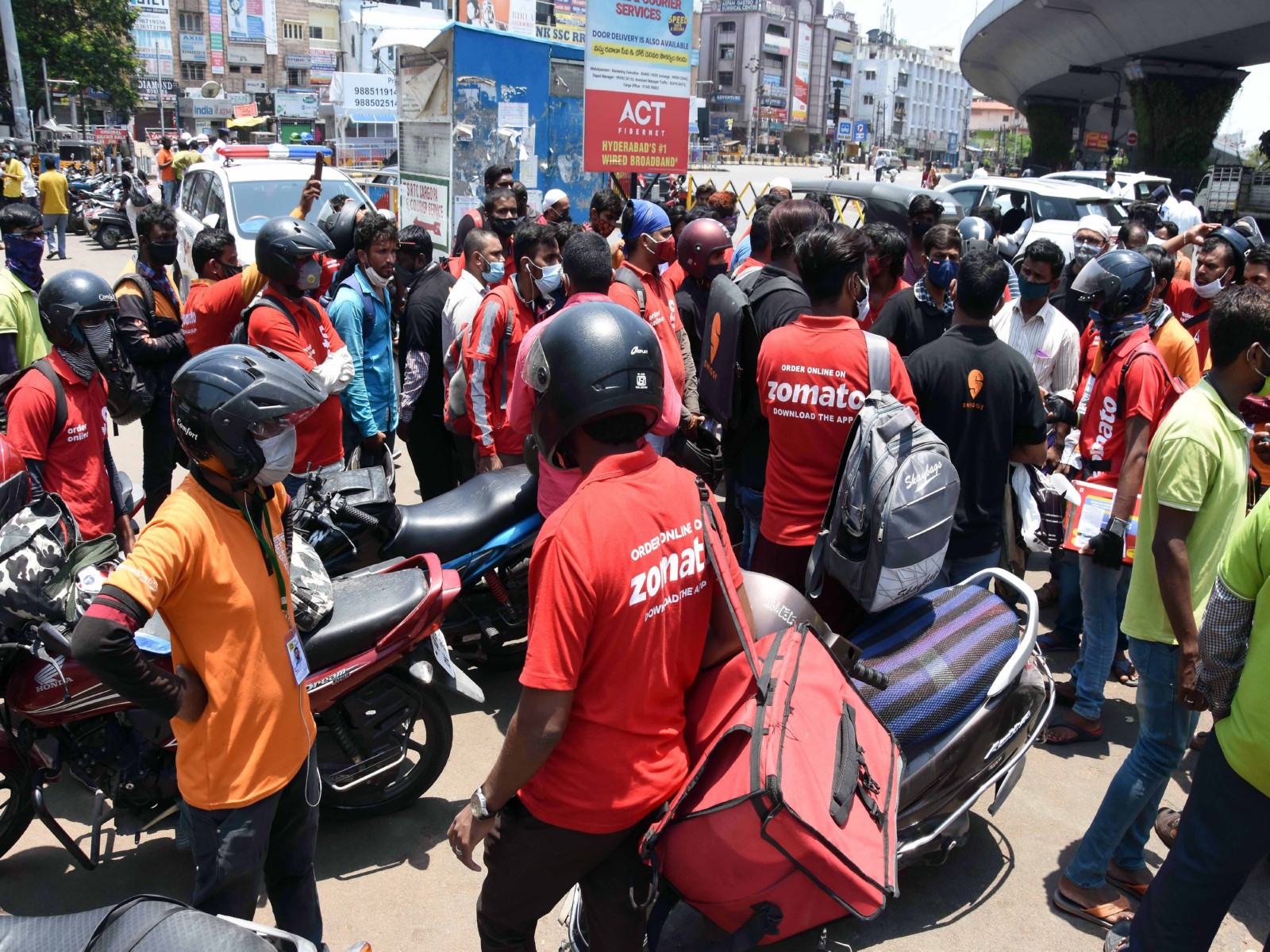
New Delhi [India], August 27 (ANI): Quick commerce is rapidly expanding beyond India’s major metropolitan markets, with dark stores now spread across 477 cities, as newer players target untapped geographies while established companies deepen their networks in key markets, according to a CLSA report.
The brokerage said the expansion is increasingly taking a measured approach in newer markets, with relatively smaller dark store networks being used to test local demand and unit economics before companies scale up.
“At the same time, emerging players are increasingly targeting geographies that remain underpenetrated by incumbents,” the report further added.
CLSA said this could give newer entrants a “first-mover advantage” as quick commerce adoption expands beyond Tier-1 cities. It also expects established players to benefit later from consumer awareness built in these markets, potentially reducing the cost of developing the category.
The report highlighted significant differences in the networks of major players. Across the top 10 cities, there were 3,536 dark stores, excluding Amazon and JioMart. Blinkit had the largest network with 969 stores, followed by Zepto with 828, Flipkart Minutes with 627, Swiggy Instamart with 615 and BigBasket with 497.
Blinkit accounted for around 30 per cent of dark stores across the top 10 cities and more than 34 per cent nationally, while maintaining the highest store count in six of the top 10 markets. The report said Blinkit’s presence also becomes stronger outside the largest cities and that it operates exclusively in more than 180 cities where other major quick commerce players are not present.
Competition is also shifting within major markets. CLSA noted that Flipkart Minutes has already surpassed Swiggy Instamart in both dark store count and pincode coverage across the top 10 cities. Swiggy, meanwhile, added the highest number of dark stores among the top three players over the past month, pointing to a focus on increasing network density.
The report said higher density can support faster delivery, wider assortment and better utilization of logistics networks. At the same time, pincode additions by the top three players have lagged overall additions across the ecosystem, indicating that smaller players are increasingly moving into untapped locations.
“As these markets mature, established players may be able to scale more efficiently by leveraging existing consumer awareness and demand, reducing the need for significant category-building investments,” CLSA said.
With quick commerce moving into a wider set of cities, the next phase of competition is likely to depend not only on network scale but also on how efficiently players can establish and expand operations in newer markets. (ANI)
Related reading