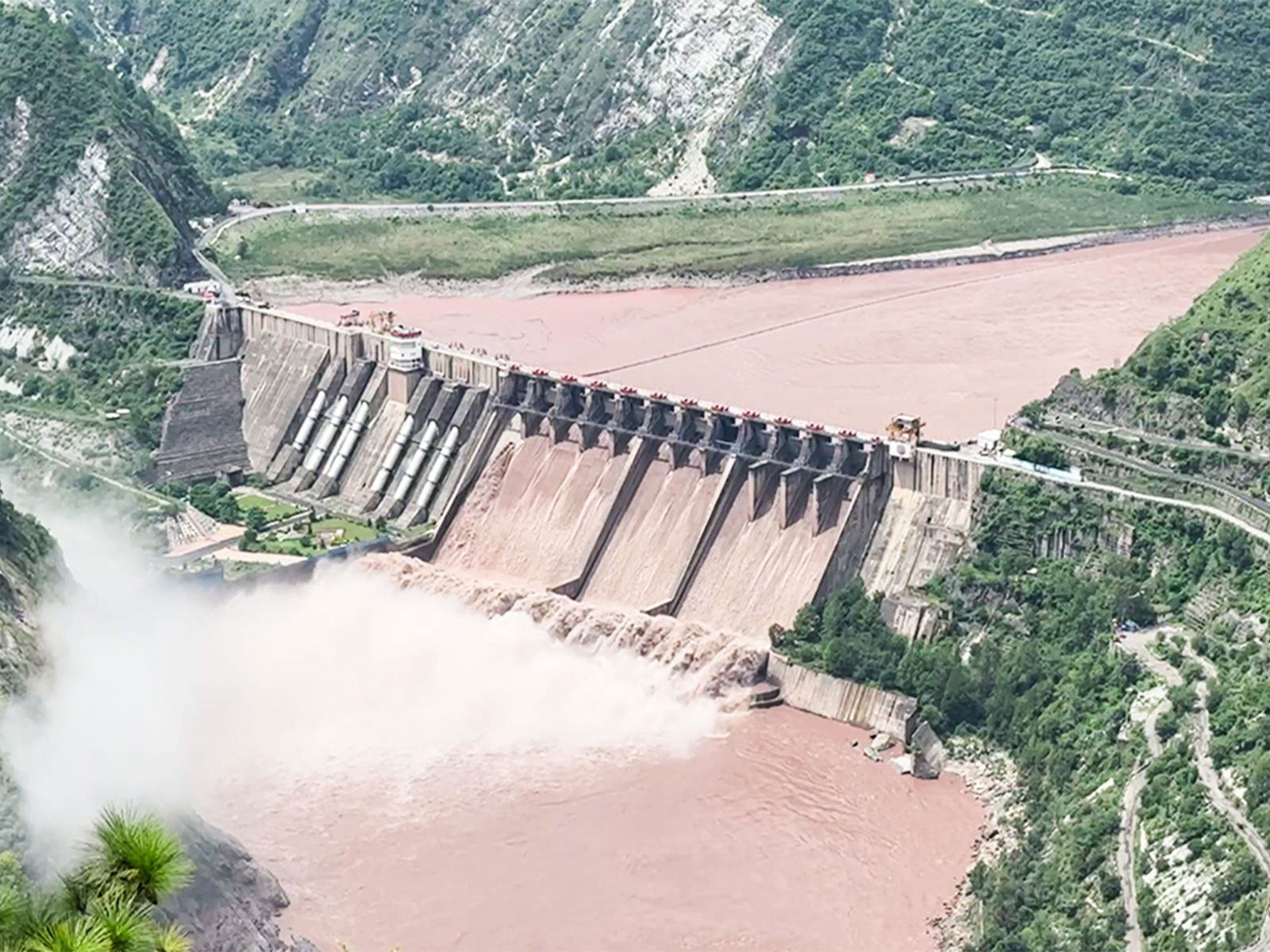
New Delhi [India], September 8 (ANI): All-India reservoir storage advanced to 70.3 per cent of capacity as on September 3, up from 67.8 per cent the previous week. The position against the ten-year normal also recorded an improvement, with the departure narrowing to -3.3 per cent from -3.7 per cent, according to a report by Dolat Capital. The data showed that weekly storage build-up slightly outpaced the historical seasonal norm, even as wide regional divergences persisted across different parts of the country.
Regionally, storage levels showed contrasting trajectories. Western India led the country at 81.2 per cent of capacity, though its cushion over normal narrowed to +9.9 per cent from +13.0 per cent.
Central India extended its surplus, with storage rising to 80.6 per cent of capacity and the margin over normal widening to +6.1 per cent from +4.2 per cent.
Eastern India reversed back into a surplus over normal, reaching +6.1 per cent from -0.6 per cent previously, as storage climbed to 69.6 per cent of capacity.
In Northern India, storage edged up to 62.7 per cent of capacity from 60.2 per cent, with the shortfall against normal holding steady at -18.5 per cent.
Southern India was the only region to register a decline, with storage easing to 56.8 per cent of capacity and the deficit against normal deepening to -19.1 per cent from -18.1 per cent. Telangana remained the weakest point within the region, with its shortfall against normal exceeding 43 per cent.
The report noted that “The all-India rainfall shortfall for the season was unchanged from the previous week at -14 per cent. Regional trends, however, diverged further.”
East & Northeast India recorded a further improvement, with the deficit narrowing to -24 per cent from -26 per cent a week earlier. Northwest India also improved, moving from -11 per cent to -8 per cent. The trend was less favourable in the other two regions, with Central India slipping to -5 per cent from -4 per cent, while the South Peninsula saw its deficit deepen to -27 per cent from -24 per cent.”
Weather patterns showed that a well-marked low-pressure system tracked across East and Central India, driving normal-to-above-normal precipitation there, while the South Peninsula and West India witnessed subdued activity. A fresh low-pressure area over central Uttar Pradesh, with its monsoon trough extending eastward, maintained East and adjoining Central India as the most active belt.
Overall spatial coverage deteriorated, with the share of area experiencing deficient rainfall rising to 49 per cent from 39 per cent, while the normal category declined to 46 per cent from 54 per cent. The large-deficient and excess categories held at 0 per cent and 5 per cent respectively, while large-excess fell to 0 per cent from 2 per cent.
Regarding agricultural operations, the report stated that “Kharif sowing progress regained some ground during the week, though the recovery was uneven across crops. The overall shortfall against last year narrowed to 17.7 lakh ha, from 18.9 lakh ha the previous week, driven largely by a sharp improvement in coarse cereals.”
Pulses extended its surplus further, while oilseeds and sugarcane held broadly steady near their prior week’s positions. Rice and cotton, however, moved the other way, with both shortfalls widening further.
Looking ahead, India Meteorological Department forecasts pointed to subdued rainfall through mid-September, with East and Central India remaining the primary exceptions amid persistent global climate pressures. (ANI)
Related reading