
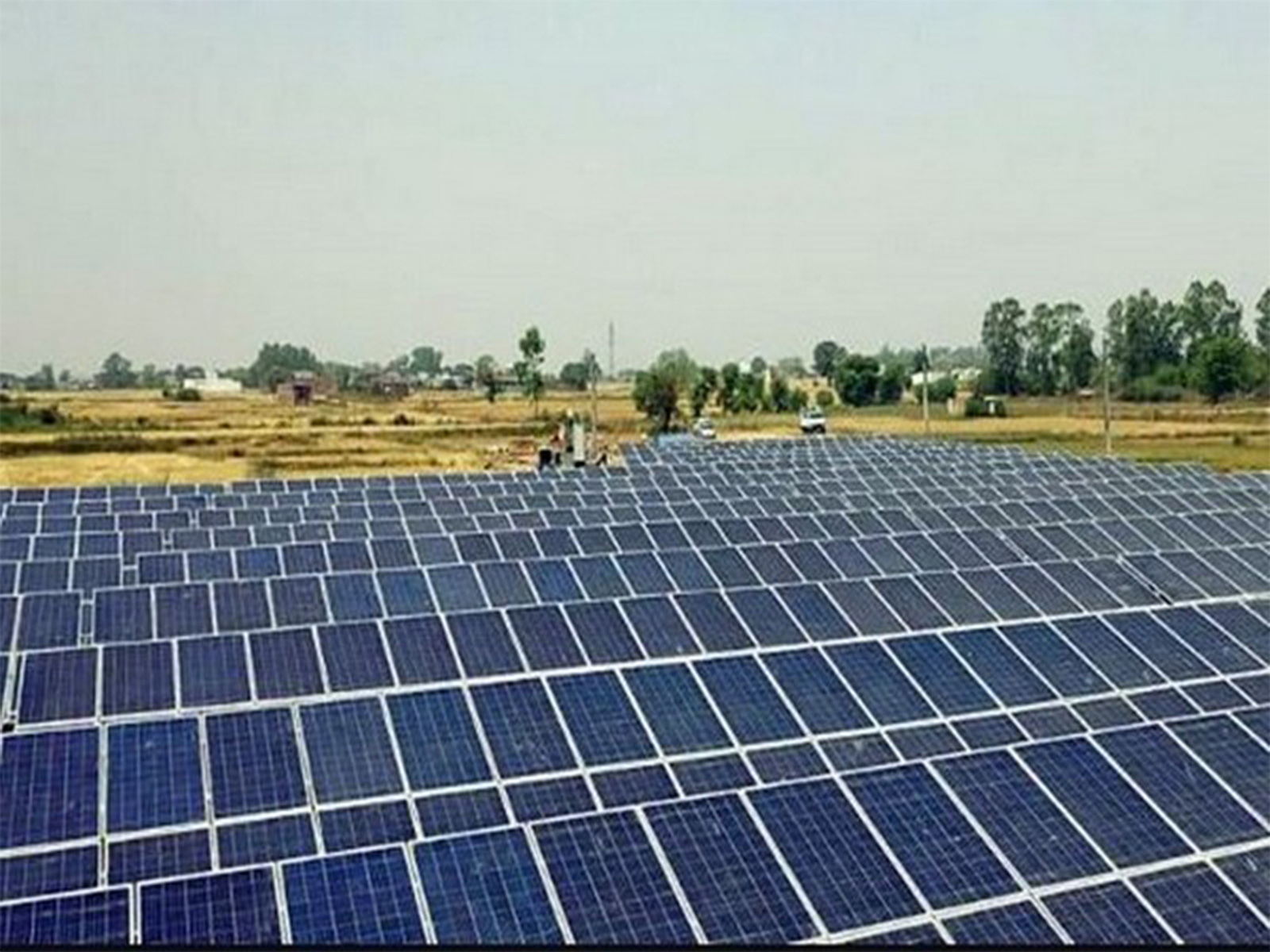
New Delhi [India], June 15 (ANI): India’s solar energy demand is projected to grow at a 22 per cent compound annual growth rate (CAGR) while overall power demand will rise at 6 per cent over FY26-35E, driven primarily by the rapid expansion of power-intensive data centers.
“We estimate India’s power demand to grow at a sustained 6% CAGR over the next decade, driven by economic growth, rising urbanisation, manufacturing expansion and increasing electrification across sectors,” according to a report by Nuvama.
As per the report, the country’s total power consumption, which stands at approximately 1,848 billion units (BU), is expected to reach nearly 3,228BU by FY35. This represents an incremental demand of more than 1,380BU over the next decade. In a bull case scenario, solar demand could see an even higher growth rate of 25 per cent CAGR.
The structural shift in the energy mix will significantly elevate the position of solar power within the national grid. The base case projections from the report showed the solar share in total power consumption rising from 9 per cent in FY26 to 33 per cent by FY35, with the potential to hit 37 per cent in a bull case scenario.
“Beyond traditional demand drivers, India’s solar-driven power FDRE/RTC is poised for a very strong and sustained basecase demand growth of 22% CAGR over FY26-35E, led by the emergence of renewable power-intensive data centres and GH2,” the report added.
The acceleration of artificial intelligence, cloud computing, and data localization regulations has transformed India into a strategic hub for data centers. This digital infrastructure expansion directly correlates with escalating electricity requirements.
As per the report, because electricity accounts for 30 per cent to 40 per cent of a data center’s operating expenses, operators are increasingly moving toward renewable energy to manage costs and lower emissions.
“Increasing growth in the AI market has directly translated into higher power demand. AI has emerged as mainstream from being under experimentation,” the report noted. “With the development of new AI models, including GPT, Gemini and DeepSeek, comes a significantly higher appetite for data centre capacity and electricity.”
This transitions from a historical context where India’s total installed power capacity grew from 382GW in FY21 to over 533GW by FY26, marking a 7 per cent CAGR.
Solar capacity led this expansion, growing at a 30 per cent CAGR from 40GW to 150GW over the same period, lifting its capacity share from 9 per cent to 28 per cent.
Wind capacity reached 56GW and hydro capacity grew to 57GW by FY26.
Looking ahead, the report estimated an incremental base solar capacity addition of approximately 416GW during FY26-35E, dwarfing the 145GW added over the FY16-26 period. Green hydrogen and data center industries alone are expected to necessitate an additional 251GW of solar capacity in the base case, and 406GW in the bull case.
“Our base case suggest green hydrogen and data centre capacity shall add another 251GW solar capacity, while it is 406GW capacity in the bull case scenario,” the report stated. “Given solar capacity expansion in our base case, the share of solar shall rise from 28% in FY26 to 61% by FY35 and to 65% in the bull case.” (ANI)
Related reading