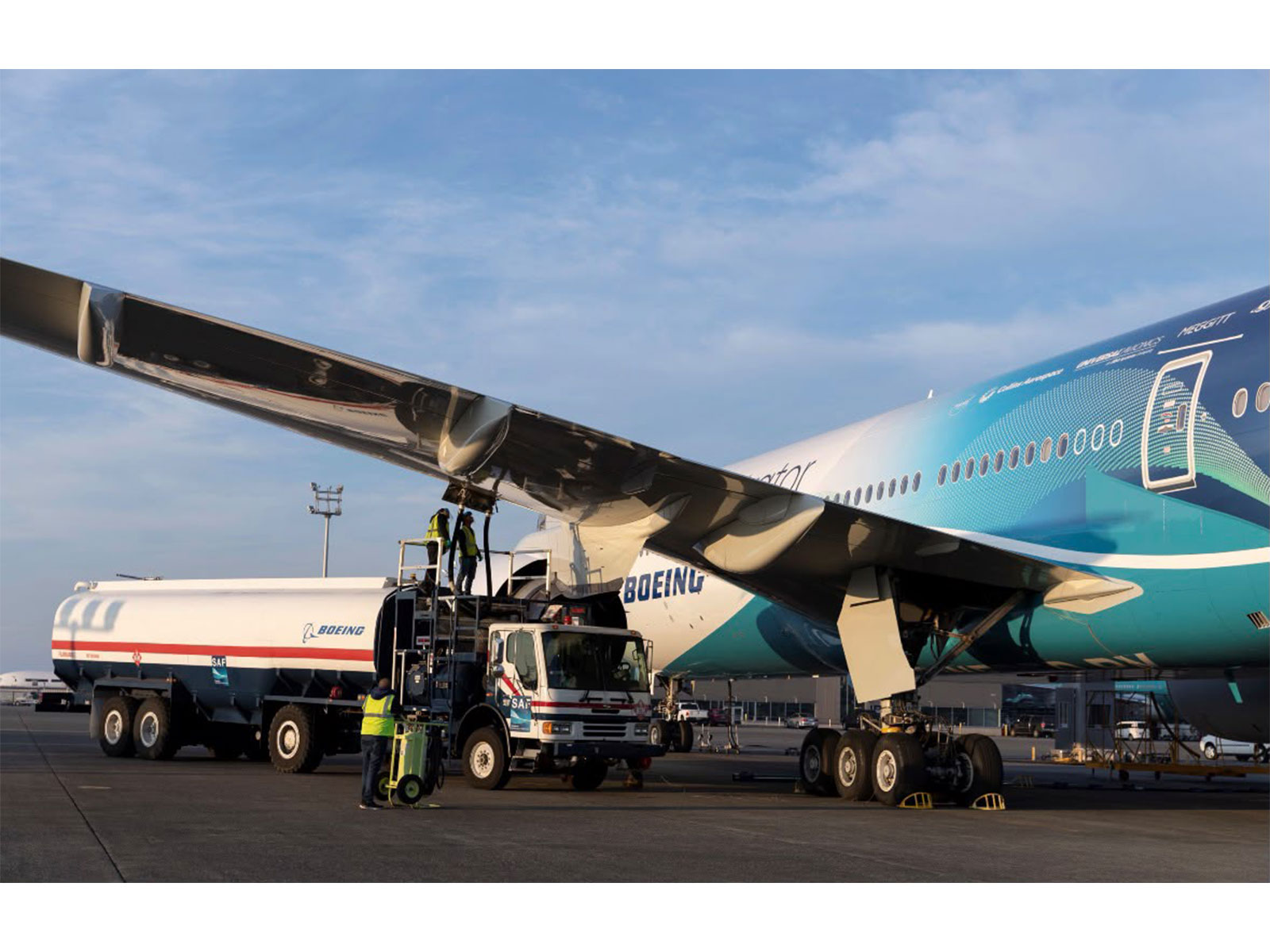
New Delhi [India], September 29 (ANI): Boeing and the Roundtable on Sustainable Biomaterials today released a comprehensive report assessing India’s readiness for Sustainable Aviation Fuel adoption, offering an evidence-based roadmap for the country’s next phase of development.
The report rates India’s overall SAF readiness at 52 per cent, reflecting moderate but advancing preparedness as the nation shifts from early-stage efforts toward broader adoption. Developed by RSB, the assessment evaluates preparedness across nine dimensions: feedstock, production capacity, policy and regulation, supply chains and logistics, market demand, investment and financing, research and development, technology readiness, and enabling infrastructure and services.
India has set SAF blending targets of 1 per cent by 2027, 2 per cent by 2028, and 5 per cent by 2030 and has committed to participate in the International Civil Aviation Organization’s Carbon Offsetting and Reduction Scheme for International Aviation (CORSIA) from 2027.
Under a 5 per cent blending scenario in 2030, SAF demand for both domestic and international aviation is projected at approximately 720 million litres (about 0.6 million tons per year). This compares with an estimated production potential of 14–33 million tons per year.
The report highlights both strengths and opportunities in India’s SAF journey amid rising aviation demand. It underscores that realising the country’s potential will depend not only on production capacity but also on coordinated development of the broader enabling ecosystem.
Boeing, aligned with industry goals, remains committed to supporting airline customers and policymakers in India and globally in meeting emissions-reduction targets by helping build a robust SAF ecosystem.
“As one of the world’s fastest-growing aviation markets, India has an important role in enabling sustainable aviation and pursuing a deliberate and well-researched path to SAF adoption is key,” said Salil Gupte, president of Boeing India & South Asia. “This report is valuable because it confirms exactly where India has the foundational capacity to enable SAF adoption and because it identifies specific opportunities ahead.”
RSB Executive Director Bettina Paschke added that “India’s Sustainable Aviation Fuel opportunity is substantial. This assessment gives stakeholders a common evidence base from which to act, and RSB looks forward to continuing to convene and support the collaboration needed to translate India’s potential into sustainable impact.”
The report emphasises that coordinated action among government, industry, financiers, and other stakeholders will be essential to advance the SAF market in India. (ANI)
Related reading