
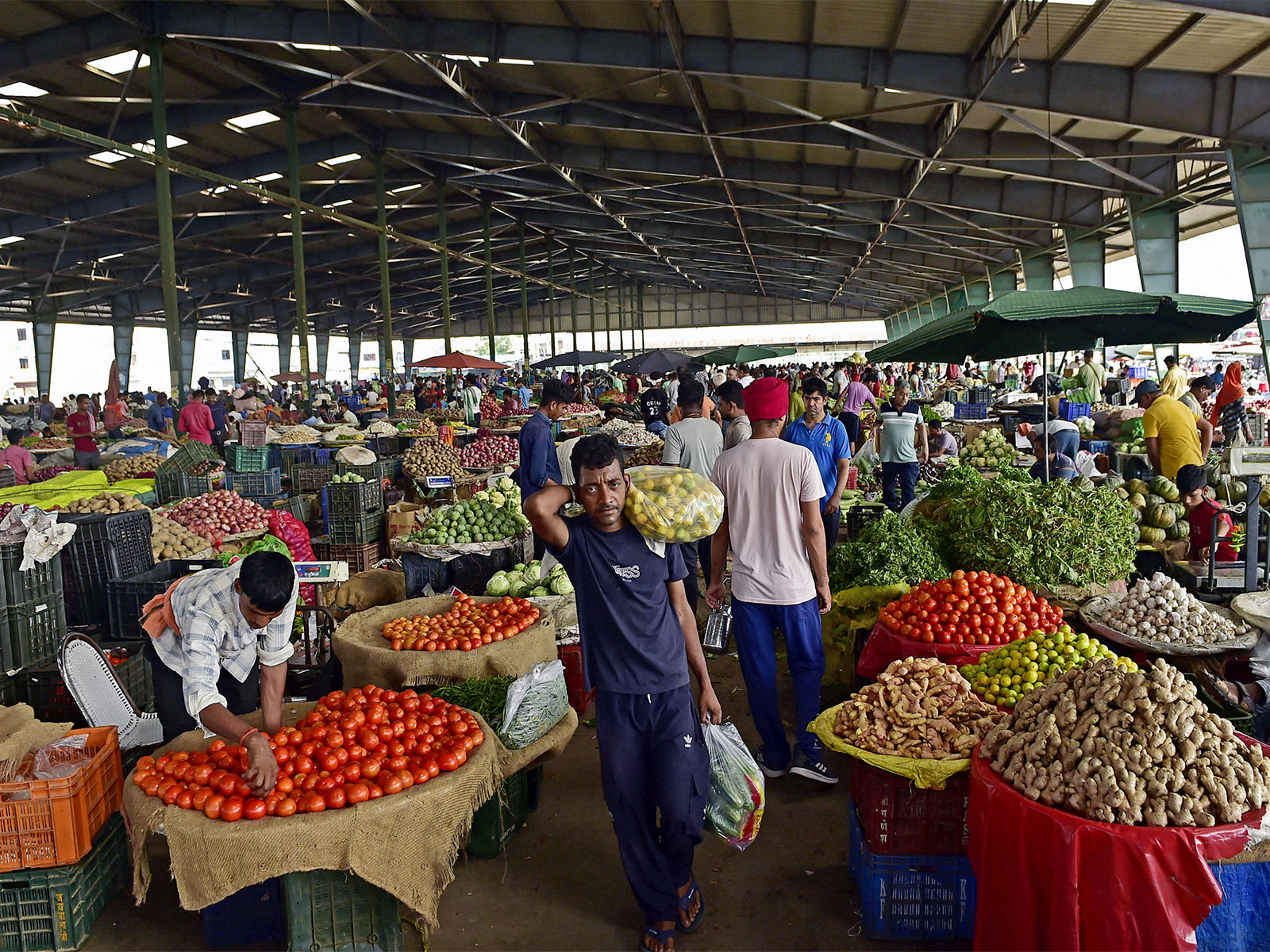
New Delhi [India], August 12 (ANI): India’s retail inflation rose to 4.45 per cent in July from 4.38 per cent in June, mainly driven by a pickup in food inflation, particularly higher prices of onion, ginger and garlic, according to data released by the Ministry of Statistics and Programme Implementation on Wednesday.
Food inflation, measured by the Consumer Food Price Index (CFPI), increased to 5.52 per cent in July from 5.32 per cent in June. Rural food inflation stood at 5.79 per cent, while urban food inflation was 5.05 per cent.
Among key food items, onion inflation accelerated sharply to 22.54 per cent in July from 4.73 per cent in June. Inflation in ginger rose to 83.62 per cent from 50.41 per cent, while garlic inflation increased to 35.36 per cent from 17.93 per cent.
The increase in headline inflation was partly offset by continued deflation in several vegetables. Potato prices declined 16.56 per cent year-on-year in July, while lady’s finger and peas recorded deflation of 5.52 per cent and 5.27 per cent, respectively. Tomato prices also fell 4.59 per cent, compared with a 31.92 per cent increase in June.
Inflation in the combined food and beverages division stood at 5.24 per cent in July, while transport inflation was 4.43 per cent. Restaurants and accommodation services recorded inflation of 7.72 per cent.
Housing inflation was 2.22 per cent in July, compared with the overall CPI inflation of 4.45 per cent. Rural inflation remained higher than urban inflation at 4.84 per cent, against 3.96 per cent in urban areas.
Apart from food, sharp price increases were recorded in select personal goods. Silver jewellery inflation stood at 109.84 per cent in July, while gold, diamond and platinum jewellery recorded inflation of 32.98 per cent.
On a sequential basis, the CPI index for the combined sector increased to 107.94 in July from 107.00 in June.
The July inflation figures are provisional. The data set was compiled from price information collected from 1,407 urban markets, including online markets, and 1,465 villages across States and Union Territories, with a 100 per cent response rate in both rural and urban markets. (ANI)
Related reading