New Delhi [India], September 25 (ANI): India needs to diversify its energy supply routes and broaden trade partnerships across Europe, Asia and Southeast Asia as geopolitical conflicts expose vulnerabilities in concentrated supply chains and reliance on a limited set of major economic partners, economist Kent Oliver Bhupathi said.
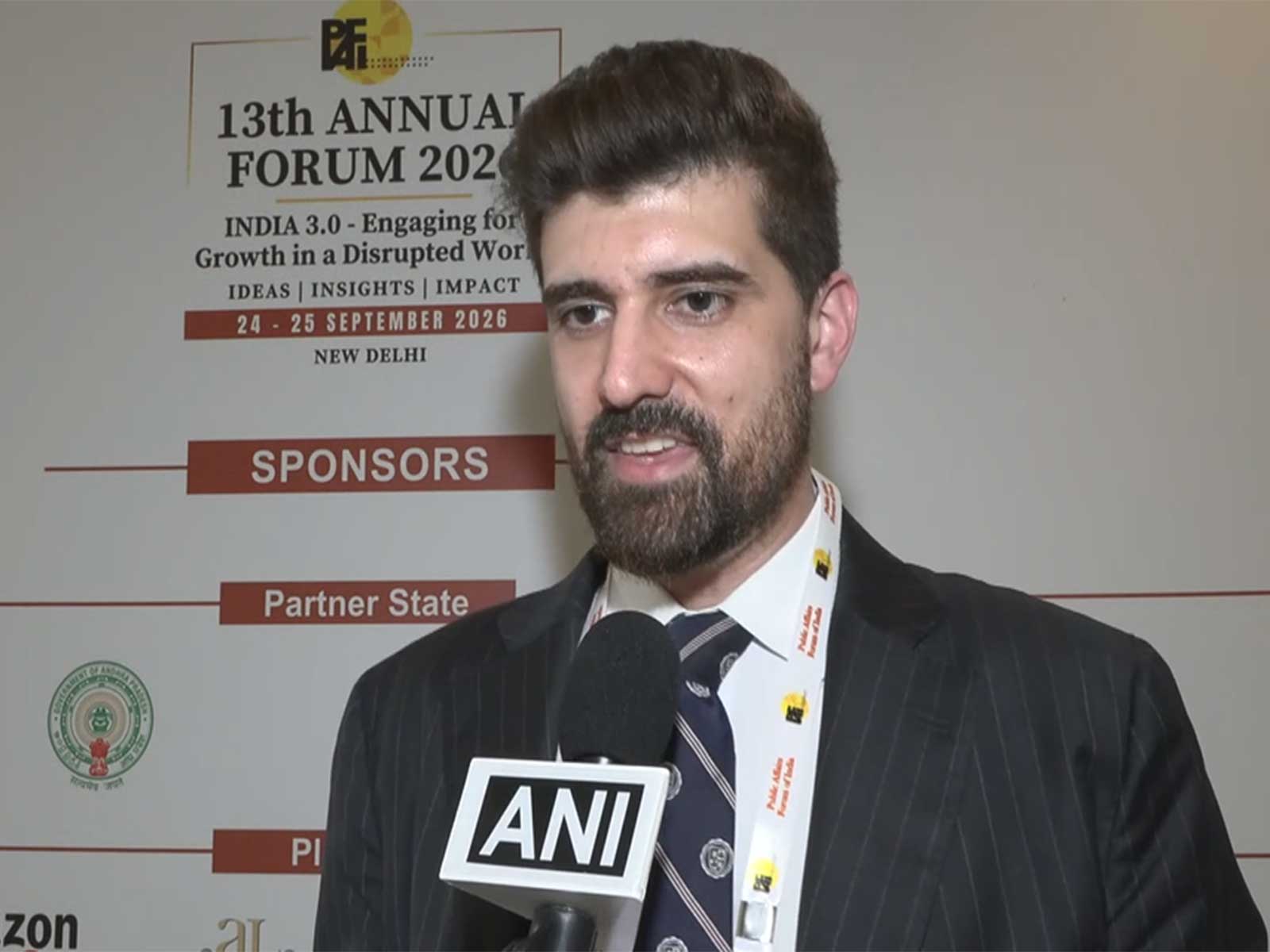
Speaking to ANI on the sidelines of PAFI’s 13th Annual Forum, Bhupathi said India’s dependence on international supply chains for LPG and oil makes it important to diversify both its energy sources and the routes through which supplies enter the country.
“India should really focus on its supply chain networks,” Bhupathi said, adding that the country needs to diversify its pipelines and ports of entry as it does not produce enough of its own energy.
He said the challenge extends beyond ensuring that oil and petrol reach India, as the country also needs a more diverse network for distributing supplies after they arrive.
“There needs to be a healthier and more diverse set of entry points and conditions by which the supply chain can be managed,” he said, adding that the beginning of the Iran conflict highlighted these vulnerabilities.
Bhupathi said geopolitical uncertainty is also forcing countries to reassess their dependence on traditional partners and India should similarly widen its economic relationships.
“India cannot just be a great place to produce for the US, it needs to consider more avenues by which it has more European partners, more Asian partners,” he said.
He said India has made progress with the UK and European Union on trade policies but can go further by working with smaller economies, particularly in Southeast Asia.
“It doesn’t just have to be the US leaves China and goes to Vietnam, India can also start considering this Southeast Asia more robustly,” Bhupathi said.
On US Treasury yields, Bhupathi said yields are currently hovering at what he described as an all-time high, making borrowing more expensive and putting pressure on equities as the risk-free rate becomes more attractive.
At the same time, he said the environment is becoming more favourable for the dollar, increasing pressure on exchange rates, including the rupee.
Asked about the Russia-Iran Sanctions Act and its possible implications for India-US talks, Bhupathi said he was not in a position to comment on the specific provisions of the legislation. He, however, said that more broadly, India would need to consider diversifying its energy sources over the longer term, particularly given its reliance on Russian-priced oil.
“With constrained Russian economic conditions, that’s going to be an increasingly difficult situation for India if it doesn’t start thinking about diversifying its energy needs,” he said.
Bhupathi said India could also expand renewable energy efforts to reduce dependence on foreign oil, while noting that such a transition would not happen overnight. (ANI)
Related reading