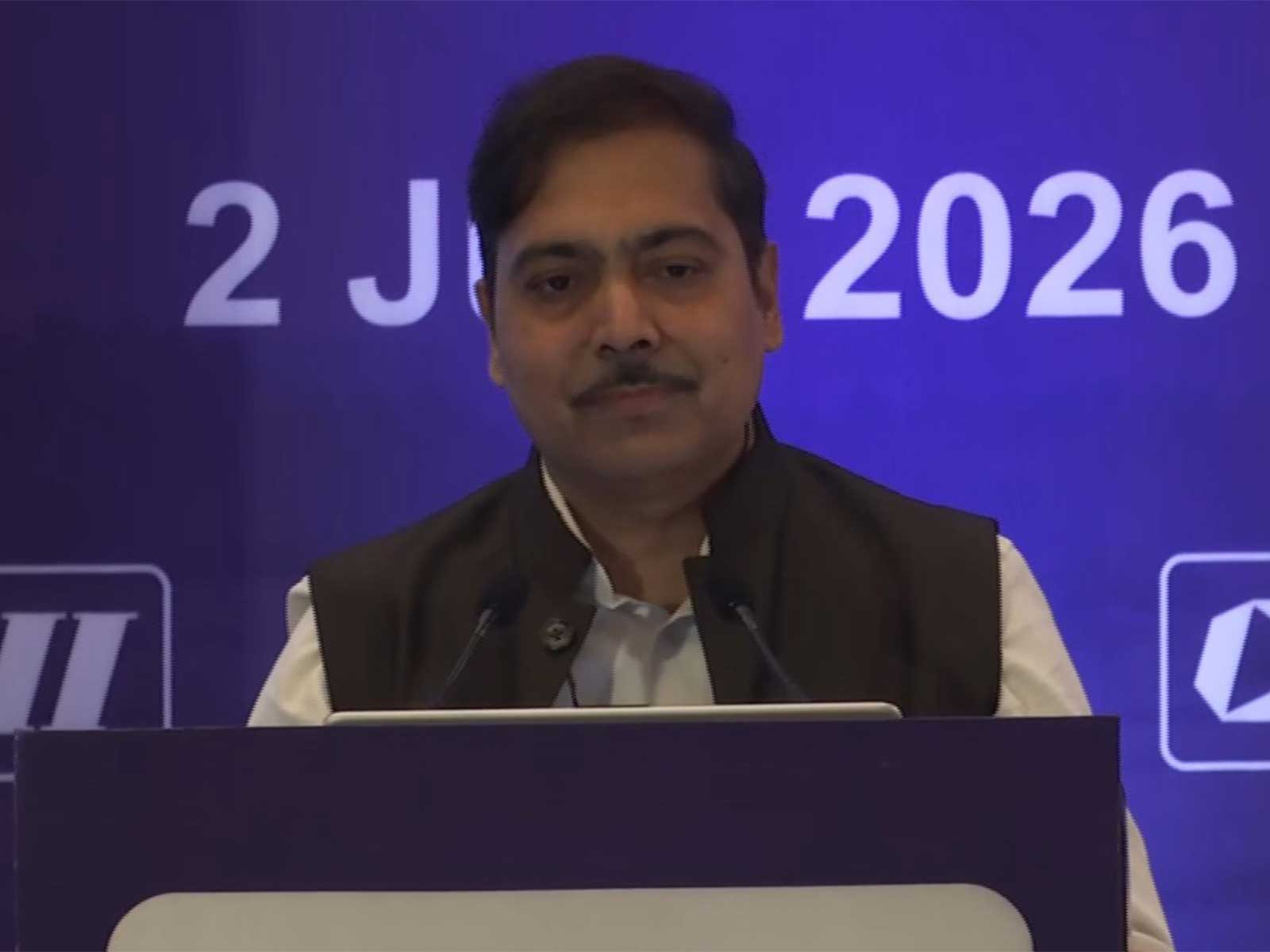
New Delhi [India], July 2 (ANI): The Ministry of Petroleum and Natural Gas is working on an integrated GOBARdhan scheme aimed at addressing key challenges facing the compressed biogas (CBG) sector, including feedstock availability, offtake assurance, pricing certainty and long-term policy visibility to primarily strengthen India’s energy security, Alok Tripathi, Joint Secretary (Gas), Ministry of Petroleum and Natural Gas, said on Thursday.
“We are trying to address those issues and now we will be coming up with an integrated scheme and the Ministry of Petroleum has been mandated to basically develop this scheme, which we are going to call the GOBARdhan scheme. Through this scheme, we would like to take care of the challenges which have been highlighted by the CBG producers and other stakeholders,” he said while addressing a CII conference on CBG.
He further added that “We would like to have an offtake assurance mechanism so that whatever CBG is produced is secured. No molecule of CBG should be wasted. We would also like to have price certainty,” Tripathi said.
He said recent geopolitical developments, particularly in the Middle East, have underlined the need to strengthen India’s energy security by boosting domestic natural gas production.
India consumes around 190 million standard cubic metres (MSCM) of natural gas annually, of which nearly 50 per cent is imported, making the country vulnerable to global supply disruptions despite diversified sourcing.
“The recent crisis has taught us a very good lesson that if we have to improve our energy security, we have to be dependent on enhancing our production. That cannot be ignored. Otherwise, whenever any import disruption happens, we are always in trouble,” he said.
Tripathi described CBG as a strategic domestic energy source with multiple benefits beyond energy production. CBG enhances energy security, strengthens the rural economy, converts waste into wealth and promotes a circular economy, making it an important pillar of India’s clean energy transition.
Highlighting government initiatives, Tripathi said several ministries and state governments have introduced schemes to support the CBG ecosystem.
“As of now, around 210 CBG plants have been commissioned with a capacity of around 1,600-1,700 tonnes per day. An additional 300 plants have already been registered with the Government of India with an additional capacity of around 2,400-2,540 tonnes per day,” he said.
However, Tripathi acknowledged that the sector continues to face commercial challenges despite its socio-economic value.
“CBG ecosystem is having a lot of socio-economic value, but the business environment is uncertain because of many challenges. We had challenges related to feedstock. We had challenges related to disposal of by-products. There is a requirement that we need to have a policy framework which can mitigate these challenges and also give confidence to CBG producers that they have long-term policy visibility,” he said.
On pricing, Tripathi said the government believes CBG prices should no longer be linked to compressed natural gas (CNG) prices, which fluctuate with international markets.
Tripathi also highlighted CBG’s infrastructure advantage over other clean fuels.
“If you take any other type of gas, let’s say hydrogen, you need to create separate infrastructure. Whereas in the case of CBG, you don’t require any separate infrastructure. You can use the existing pipeline network and existing dispensing infrastructure by simply injecting CBG,” he said.
He said the Centre has prepared a Model State CBG Policy and has urged states to adopt provisions such as concessional land allocation, feedstock security and other enabling measures.
Tripathi further said the government is engaging with other ministries to create markets for CBG by-products. Discussions are underway with the Ministry of Power on using biomass residues for co-firing in thermal power plants and with the Department of Fertilizers on promoting the utilisation of organic manure generated by CBG plants.
“We, along with other ministries, will be undertaking awareness campaigns so that the by-products are effectively utilised. If the by-products are not disposed of efficiently, the plant efficiency and growth of the CBG ecosystem will be affected,” he added. (ANI)
Related reading