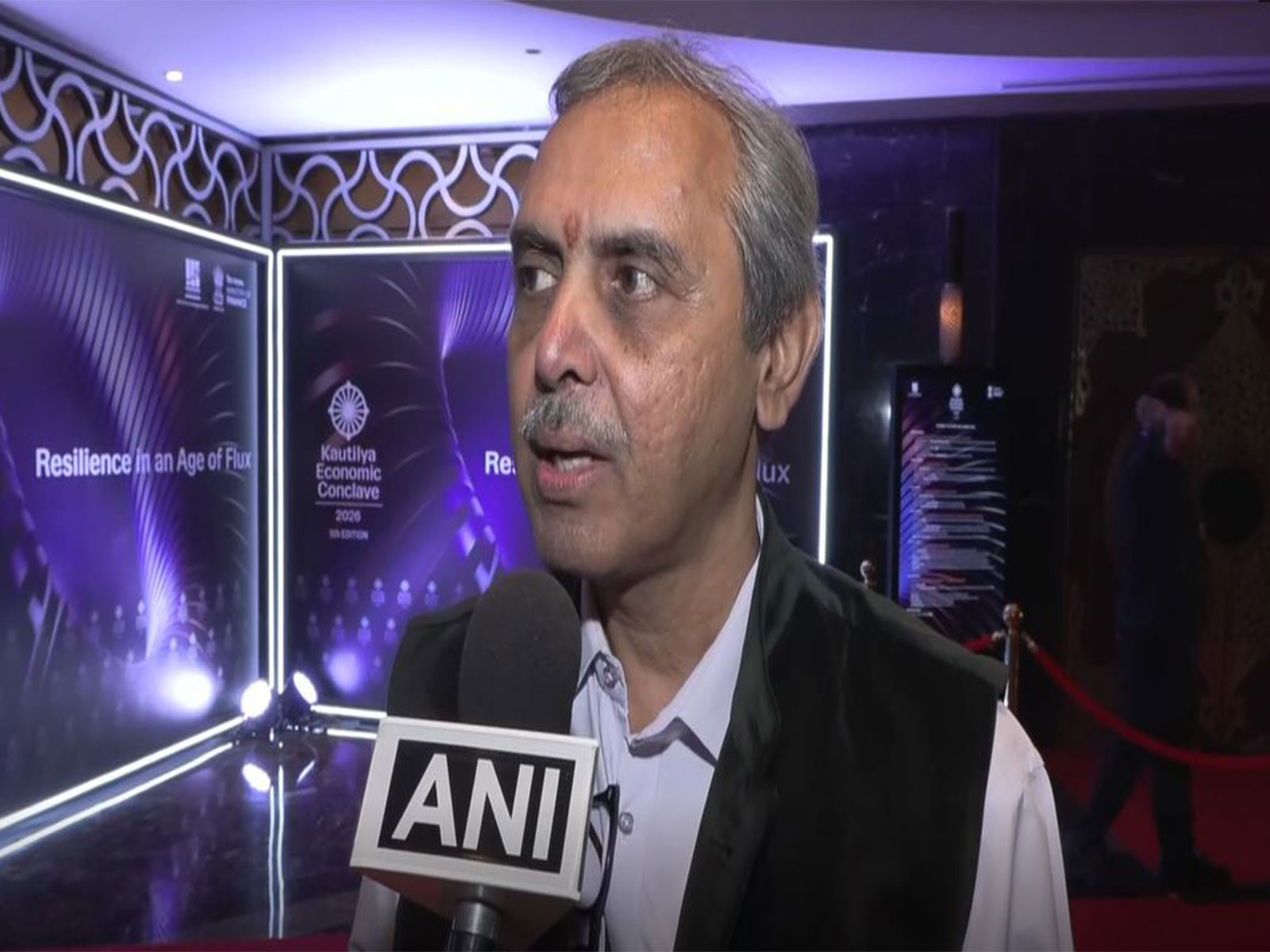
New Delhi [India], October 3 (ANI): Higher fuel costs and tighter financial conditions are already weighing on global demand and raising the cost of capital, with India better placed than several developed economies but still exposed through imported energy and foreign savings, World Bank Group Executive Director and UIDAI Chairperson Neelkanth Mishra said on Saturday.
Speaking about two of the four major channels – food, fuel, fertiliser and finance – through which geopolitical disruptions can hit economies, Mishra said the impact was already visible in fuel consumption and global financial markets.
“The stress in the global markets is already visible, so fuel prices have risen. You look at fuel demand or fuel demand growth globally has already come off,” Mishra said.
“All of these issues are real, they are not in the future,” he added.
Latest global data point to a sharp demand impact. The International Energy Agency, in its September Oil Market Report, forecast world oil demand to fall by 2.5 million barrels per day in 2026 as high fuel prices and supply disruptions weigh on consumption.
The fuel shock is particularly significant for India because of its high dependence on imported crude oil. Petroleum Planning and Analysis Cell data show India’s crude oil import dependence is close to 90 per cent of consumption.
Mishra said pressure was also building through finance as higher global bond yields raised borrowing costs.
“In finance, the bond yields have gone up so substantially that it is already pinching, so mortgage rates, new mortgage issuance, all of those stresses are now building up,” he said.
He, however, said India should not mechanically link its interest-rate policy to developments in the US or other advanced economies.
“This linkage between global rates and Indian rates is something that I do not think is appropriate,” Mishra said.
“The fiscal condition, the fiscal laxity that we are seeing in developed markets is not something that we have seen here,” he added.
The Centre has budgeted its fiscal deficit at 4.3 per cent of GDP in 2026-27, lower than the revised estimate of 4.4 per cent in the previous year.
Mishra cautioned that India was still exposed to tighter global financial conditions because it relies partly on foreign capital to finance investment.
“Our economic strategy has been to incur a current account deficit, which is why we have more investment than we have savings, so we rely on foreign savings,” he said.
“If foreign savings become more expensive and less available, there is already an impact on our growth,” he added.
Latest RBI data show India’s current account deficit stood at USD 4.2 billion, or 0.5 per cent of GDP, in the April-June quarter of 2026-27.
On monetary policy, Mishra said any RBI rate increase should be based on domestic conditions rather than simply following the global rate cycle.
“From a forward looking perspective perhaps some rate hikes can be considered,” he said.
“But linking it to the Fed’s problems, they have a very different debt to GDP, they have a very different inflation situation, I do not think there is any link,” Mishra added. (ANI)
Related reading