NewsVoir
New Delhi [India], September 16: XCath Robotics, a medical device company advancing endovascular surgical robotics, has received Breakthrough Device Designation from the U.S. Food and Drug Administration (FDA) for its Iris Surgical Robotic System for remote robotic-assisted mechanical thrombectomy in patients with acute ischemic stroke.
The FDA’s Breakthrough Devices Program is designed to support the development of medical devices that have the potential to provide more effective treatment for patients with life-threatening or irreversibly debilitating conditions. For XCath, the designation provides increased opportunities to interact with FDA experts and receive support during the regulatory development and review process as the company advances the Iris System.
“FDA Breakthrough Device Designation is an important milestone for our mission,” said Eduardo Fonseca, Chief Executive Officer of XCath. “We look forward to continued collaboration with the FDA as we advance the development and evaluation of the Iris System. The real-world learnings from our investigational cases are helping us shape the system to expand access to life-saving stroke care for the millions of patients we ultimately hope to serve.”
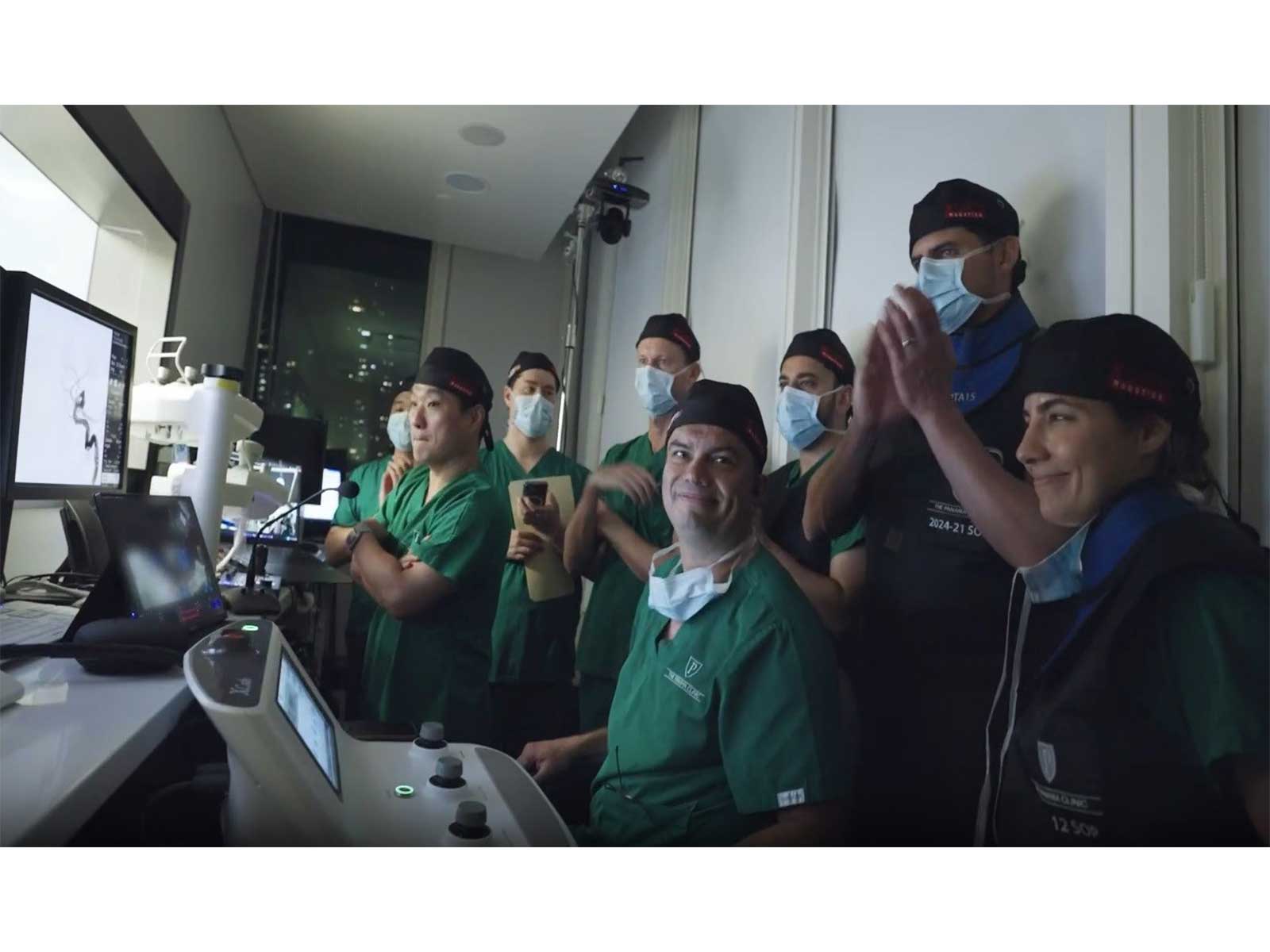
The designation follows XCath’s landmark March 2026 achievement: the world’s first remote telerobotic mechanical thrombectomy in a living patient. During a clinical investigation known as Operation Robo Angel, renowned neurosurgeon Dr. Vitor Mendes Pereira, operated the Iris System from a control station in Santiago, Panama, to treat a patient more than 120 miles away at The Panama Clinic in Panama City.
By enabling specialist physicians to operate on patients remotely, the Iris System could help break down the geographic barriers to specialist stroke care. Mechanical thrombectomy is widely regarded as the gold standard treatment for patients suffering a large vessel occlusion (LVO) stroke – the deadliest and most disabling type of ischemic stroke. However, access to the procedure remains unequal.
The potential significance of remote treatment is particularly clear in India, which faces a growing stroke burden and significant disparities in access to specialist treatment. Stroke is the fourth biggest killer in India, resulting in 700,000 deaths each year. The country accounts for 10% of the global stroke burden, with cases rising 51% over the last three decades.
It is estimated that each year, more than 270,000 patients in India are eligible for a mechanical thrombectomy – but only 1,000-2,000 procedures are performed nationwide. Just 20% of the population lives within one hour of a stroke centre capable of performing a thrombectomy, while 55% of stroke and cardiac deaths are caused by a delay in seeking care.
For patients suffering an LVO stroke, the consequences of missing timely treatment can be devastating, with 77% of patients either dying or being left with severe disability. Globally, it is estimated that one in four adults will experience a stroke during their lifetime, yet the global median rate of access to mechanical thrombectomy is just 2.79%.
Next month, XCath is due to release a documentary about Operation Robo Angel.
(ADVERTORIAL DISCLAIMER: The above press release has been provided by NewsVoir. ANI will not be responsible in any way for the content of the same)
Related reading