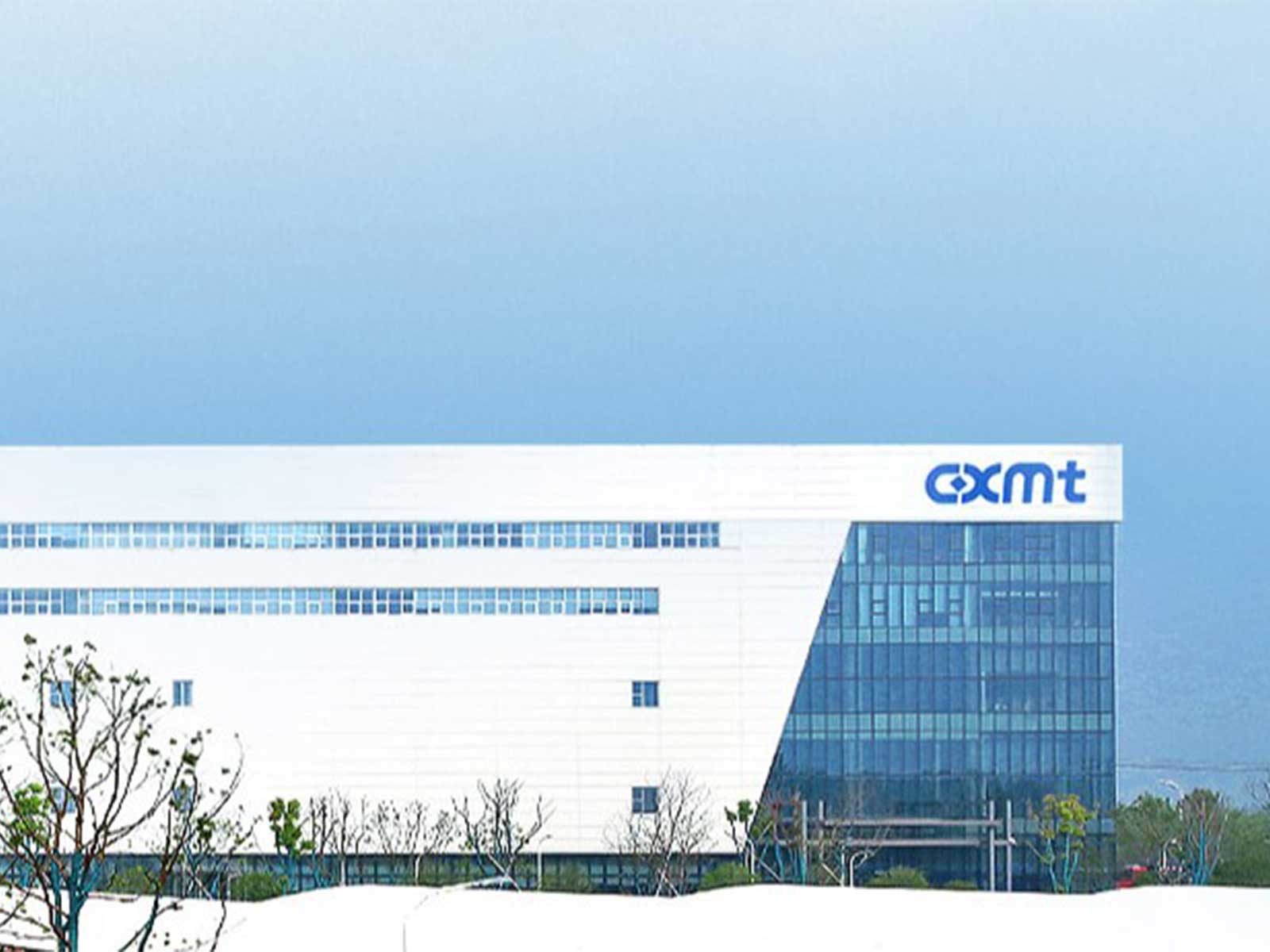
Seoul [South Korea], September 22 (ANI): China’s ChangXin Memory Technologies (CXMT) commenced commercial output on its fifth-generation platform, consolidating its market position against entrenched global competitors Samsung Electronics, SK hynix, and Micron, according to a news report by The Korea Herald.
The Chinese semiconductor firm also prepares an experimental research facility in Beijing to evaluate an expansion into NAND flash memory, according to a news report by The Korea Herald.
CXMT confirmed that its G5 architecture entered volume production alongside two 24-gigabit LPDDR5X components intended for portable hardware and smartphones. Dynamic random-access memory provides real-time workspace for processors, serving as an essential building block across personal computers, enterprise servers, and mobile devices.
The chipmaker reported that the new platform delivers at least 50 per cent more gross dies per wafer compared to its previous process on an 8-gigabit-equivalent standard. Gross die count reflects the aggregate quantity of potential chips extracted from a single wafer before defect screening, rather than an outright gain in production yields.
The manufacturing rollout follows CXMT’s rise to fourth place globally in the DRAM sector, capturing 9.5 per cent of second-quarter revenue, according to TrendForce data cited in the report. Market leader Samsung held 39.4 per cent, followed by SK hynix at 24.9 per cent and Micron at 23.3 per cent.
Through quadruple patterning techniques, CXMT narrowed the active-area half-pitch in its memory array to 11.95 nanometers, a metric specific to internal array layout that does not directly match node designations used by competitors.
Assessing the competitive landscape during an industry webinar in August, TechInsights Vice President and memory-chip analyst Choi Jung-dong noted the gap between CXMT and dominant fabricators.
“CXMT is about two generations behind the industry leaders,” the news report quoted Choi.
He added, “but it is steadily advancing its HBM roadmap toward higher-performance memory solutions.”
As market leaders allocate manufacturing capacity toward server memory and high-bandwidth memory for artificial intelligence acceleration, standard DRAM availability remains constrained, offering smaller producers openings to secure orders.
CXMT is now assessing the NAND segment, where stored information persists without continuous electric power, powering storage drives and mobile devices. Domestic rival Yangtze Memory Technologies leads China’s current NAND output.
Reuters reported that CXMT’s Beijing NAND research line remains in exploratory phases, with the company holding preliminary discussions with prospective buyers while commercial timelines remain undetermined. TrendForce figures place Samsung atop the second-quarter NAND sector with 29.3 per cent revenue share, ahead of SK hynix Group at 18.2 per cent.
Analyzing broader dynamics, an industry official highlighted the pressure building against dominant Korean manufacturers.
“Chinese memory makers still have a clear cost disadvantage to their Korean rivals, but tight supply has given them more room to win orders and expand production,” the news report quoted an industry official.
The official added, “If the current upcycle lasts, competition from both Chinese and US suppliers, backed by heavy government support, will become harder for the Korean companies to ignore.” (ANI)
Related reading