
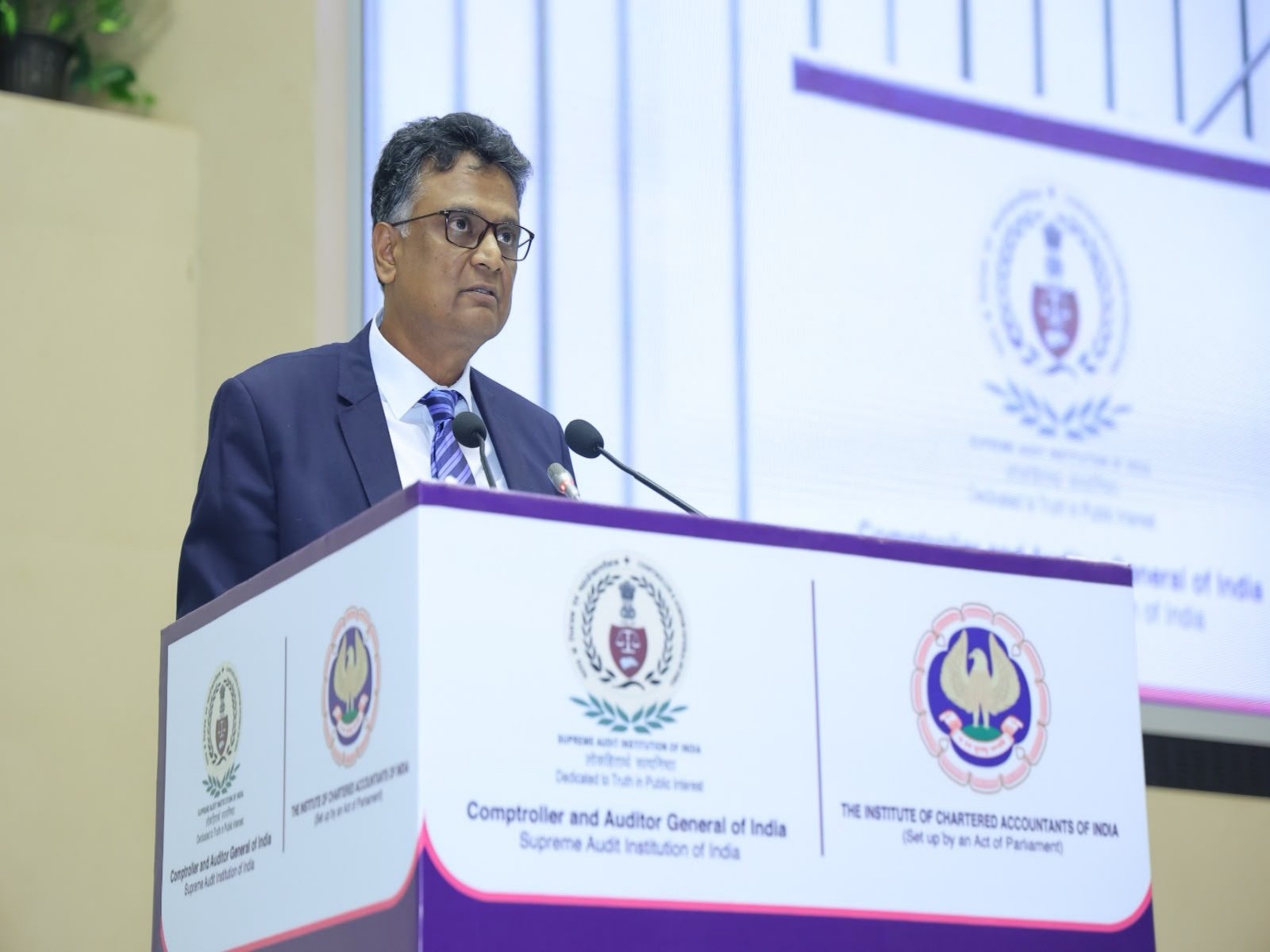
New Delhi [India], November 23 (ANI): A National Workshop on Strengthening Statutory Audit in PSUs was organised by ICAI under the aegis of the Comptroller and Auditor General of India here today. The workshop deliberated on evolving aspects relating to context of functioning of PSUs, quality of statutory audit and better financial statement quality and transparency in Public Sector Undertakings (PSUs).
In his inaugural address, CAG K Sanjay Murthy highlighted the importance of public sector companies in the vision of development of nation and the importance of their robust governance and financial management practices to contribute in country’s growth.
He focussed on the corresponding evolving role of the auditing and accounting profession in its contribution. He urged statutory auditors to examine how financial data is created, changed and transferred, to apply data analytics, and to assess cyber security risks relevant to financial reporting. He also called upon the management of PSUs to treat cyber and IT security and data governance as core business risks, take necessary risk mitigation measures and to adopt artificial intelligence with strong oversight.
CAG Murthy said that management prepares the accounts and is responsible for the systems and controls behind them. “The board oversees the integrity of financial reporting. The statutory auditor brings independent judgement about truth and fairness of that reporting, and the CAG, under its statutory mandate, oversees the accountability of these companies through supplementary audit and reporting to Parliament and the State Legislatures. Shareholders, lenders and legislatures rely on each of us to fulfil our part, so that every rupee entrusted to and earned by these undertakings creates value for the citizens of our nation.”
The CAG said that management of the undertakings tells the story of their working, and the audit opinion provides the foundation of trust to make the story credible. “A credible audit is therefore much more than a cost to the enterprise as it lowers the cost of the capital the enterprise raises.”
Addressing the statutory auditors directly today, the CAG asked them to focus on four things as contribution to development of our nation and to fulfil this important responsibility.
“First you must understand the business well enough to challenge the judgements that matter. Auditors should ask how the enterprise earns its revenue, where it is financially exposed and how its public obligations affect its accounts. It is important to give particular attention to estimates and assumptions that could materially change the picture presented to the stakeholders. Managements, in turn, can facilitate better audits by finalising quality accounts on time and providing early evidence for significant estimates. Together, these efforts can strengthen governance in a sector that touches every citizen.
Second to examine the systems that produce the numbers. When transactions flow through enterprise systems, the reliability of the accounts depends on who can enter or change data, how information passes between systems and whether the audit trail is complete.
Third is to sensitise the audit committee about what it needs to know while it still has time to act. It is important to raise significant issues as they emerge, and signal stress well in time before it becomes a crisis. Auditors should explain the financial implications and the control weakness or assumption behind them to the audit committee.
Fourth is to make your conclusions stand up to scrutiny. I would urge all of you to address the CAG’s Directions with the same rigour you bring to other significant audit matters. Above all, let the quality of your audit keep pace with the ambition of the undertakings you audit and stand comparison with the best anywhere in the world.”
Murthy emphasised that journey of quality begins much before the actual audit exercise does. Enterprises should come to the audit with complete and reliable information, and auditors with the expertise, tools and time that the assignment truly demands. Every audit should build on the last and bring incremental value on table. Each audit should begin with a clear understanding of what was found before, what has changed since and how incremental value be brought for stakeholders.
He said, an audit should also be measured by what it changes and improves. A report can meet every standard and still the efforts don’t tell stakeholders anything new. The audits that would matter the most would leave behind stronger controls, better quality and clearer accounts and which led to better decisions in the enterprises.
In his concluding address, Murthy said that a well-governed PSU transforms public investment into economic growth, social value and national prosperity, and a well-conducted audit strengthens the confidence on which that transformation depends.
Management, the statutory auditor and the CAG serve, in the end, the same client: the citizen.
Dy CAG, A M Bajaj emphasised the vital role of statutory auditors in ensuring transparency,accountability and reliability of PSU financial statements, highlighting their contribution to the C&AG’s supplementary audit and sound corporate governance. He stressed on three key expectations compliance with C&AG’s Directions, timely and clear audit reporting, and independence with professional scepticism. (ANI)
Related reading