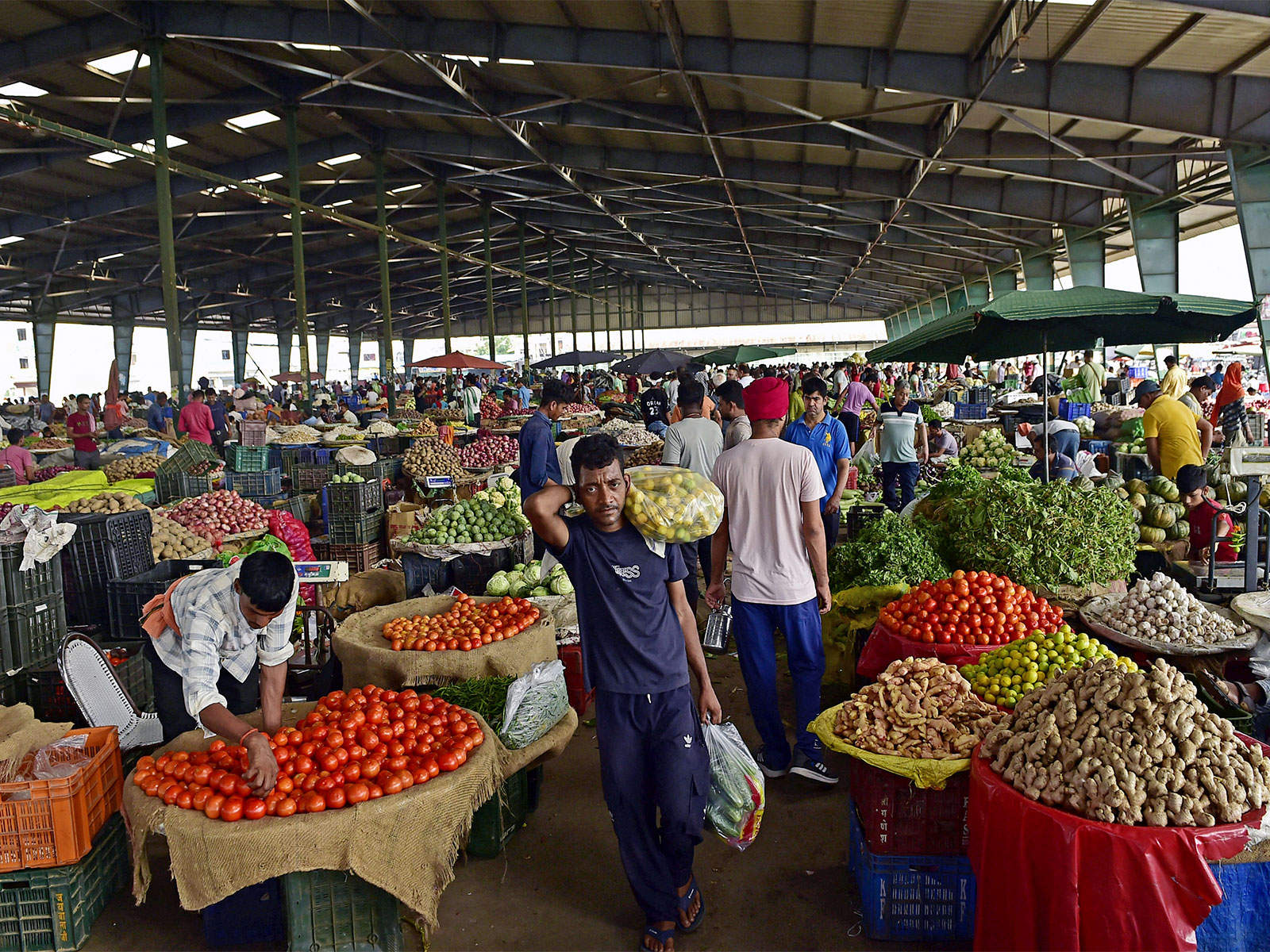
New Delhi [India], July 20 (ANI): Below-normal rainfall does not necessarily lead to higher food prices, as the impact on food inflation depends more on the spatial distribution of rainfall across months and states than on the overall rainfall deficit, according to a report by the State Bank of India (SBI).
The report said the impact of rainfall on food inflation is likely to remain contained, noting that historical data shows there is no direct relationship between deficient rainfall and a sharp rise in food prices.
It stated, “Low rains per se do not lead to higher food prices… it depends upon spatial distribution among months and states.”
According to the report, well-distributed rainfall can help support agricultural output even if overall rainfall remains below normal.
The report highlighted 2018 as an important example. It said that despite receiving below-average rainfall, the country did not witness any significant increase in food inflation because rainfall was better distributed across different regions.
The report said, “Year 2018 is worth mentioning. Even after below average rainfall, no impact on food inflation was seen as there was better spatial distribution.”
SBI also analysed historical rainfall and food inflation trends from 2000 to 2026. It noted that among El Nino years, only 2009 witnessed food inflation touching 13.1 per cent during the June-September period.
However, the report said the sharp rise in food inflation that year could not be attributed to rainfall alone.
It explained, “In only one El Nino year in 2009, food inflation touched 13.1 per cent.” The report added that 2009 witnessed a combination of higher MSP (40 per cent increase), implementation of pay commission recommendations (23.5 per cent hike) and a national loan waiver of around Rs 60,000 crore that pushed up prices and inflation became generalized.
The report suggested that these policy measures, along with the rainfall situation, contributed to the sharp increase in food inflation during that period.
According to the historical data presented in the report, several years with rainfall deficits recorded relatively moderate food inflation, while years with better rainfall also witnessed elevated food inflation, indicating that rainfall alone does not determine food price movements.
Based on this historical analysis, SBI said the impact of the current rainfall pattern on food inflation is likely to remain contained, with the distribution of rainfall across states and different months expected to play a more important role than the overall rainfall deficit in determining food prices. (ANI)
Related reading