VMPL
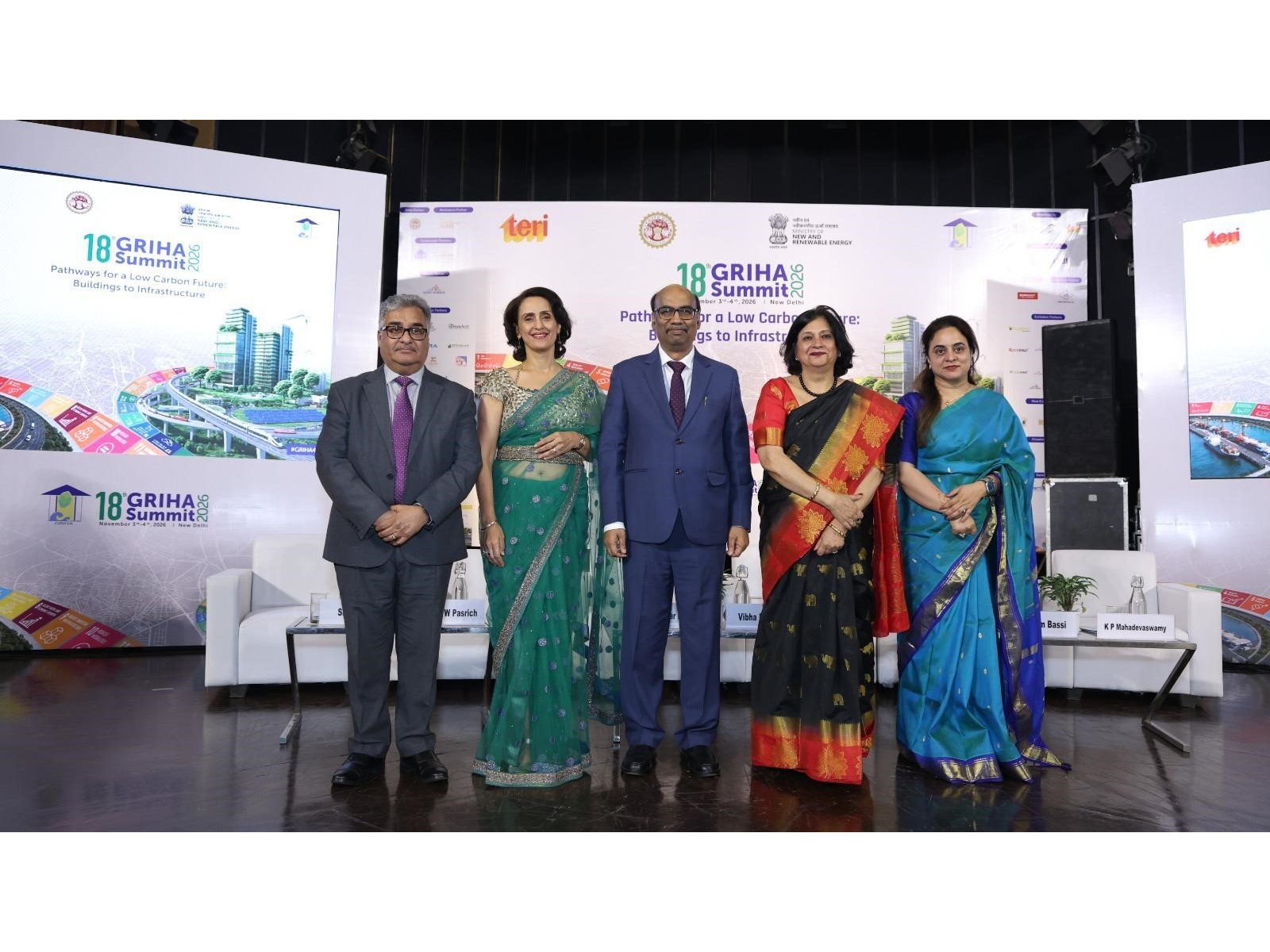
New Delhi [India], November 6: The two-day 18th GRIHA Summit, hosted by GRIHA Council, concluded successfully with the Valedictory Session and Award Evening, marking both an end and a new beginning to a series of inspiring discussions, collaborations and recognitions held under the theme ‘Pathways for a Low-Carbon Future: Buildings to Infrastructure.’
The Summit brought together thought leaders, policymakers, and sustainability practitioners from India and abroad to explore pathways to scale sustainability initiatives from buildings to infrastructure.
Sharing Special Remarks, Mr Ajit Kumar Panda, Chairman and Managing Director (CMD), Container Corporation of India Limited (CONCOR), noted, “Behind every building lies an extensive supply chain supported by rail networks, warehouses, terminals and logistics parks. Sustainability cannot be limited to the buildings we construct; it must extend to the infrastructure and logistics systems that support them. Making these interconnected systems more efficient and environmentally responsible is essential to shaping India’s low-carbon future. Leveraging our collaboration with GRIHA Council, we look forward to translating these priorities into measurable impact across logistics infrastructure.”
Ms Shivani Wazir Pasrich, Director, The Study School, CEO, SWP Productions and Founder, Commonwealth Cultural Forum, in her address shared, “Sustainability cannot remain something we merely discuss at conferences; it must become an integral part of how we think and live. It begins with understanding the importance of coexistence and cultivating respect for all forms of life. When we learn to respect nature and the living world around us, respect for one another follows naturally. Such values must be nurtured through experience, shaping how we interact with our environment and make choices in our everyday lives.”
Dr Vibha Dhawan, President, GRIHA Council and Director General, TERI shared, “Infrastructure is where energy, mobility, water and materials meet, and every decision made there sets a pattern for generations. As we close this Summit, our responsibility is to carry these ideas into investment decisions, project pipelines and public policy. The pathways we choose in this decade will define not just our emissions, but the quality of life of millions of people. Low-carbon development is no longer a choice between growth and responsibility. It is the most reliable route to lasting growth.”
In his address, Mr Sanjay Seth, Vice President & CEO, GRIHA Council and Executive Director- Strategy & Partnerships, TERI, stated, “The low-carbon future will not be decided by how well we design individual buildings, but by how intelligently we connect them. A large share of the buildings and infrastructure we will need by 2047 has not yet been built. That gives us the freedom to build the future we want. Moving from individual buildings to integrated infrastructure, backed by science, sound policy and shared purpose, will make India’s sustainable development journey enduring.”
The discussions also highlighted how cross-sector collaboration and public advocacy can turn climate awareness into impactful action, reinforcing the importance of shared responsibility in driving sustainability.
Ahead of COP31, the Summit examined India’s evolving climate action priorities and brought together perspectives that can shape the country’s input to the global climate agenda, as nations prepare to renew and strengthen their commitments. The Summit also offers diverse stakeholders a common platform to share knowledge, showcase emerging advances and impactful community initiatives, identify critical gaps, and drive collective action towards a resilient, resource-efficient and low-carbon built environment.
The valedictory session also featured the GRIHA Felicitation Ceremony, where GRIHA Special Mention Awards and Exemplary Awards were presented to industry partners and project teams for their contributions to sustainability, resource efficiency and environmental stewardship. GRIHA-NASA Trophy Awards and the ‘Indian Streets Reimagined’ Design Challenge Awards, organised in collaboration with the Council of Architecture (CoA), were also presented.
The Summit featured ‘AAROHAN’, an exhibition showcasing sustainable materials, technologies and innovations, alongside SPARSH 2.0, a life-size mock-up offering a tangible experience of a low-carbon built environment. The “Indian Streets Reimagined” competition also showcased shortlisted designs exploring inclusive, climate-responsive and future-ready approaches to Indian streets.
With two days of meaningful exchanges, innovative showcases, and recognition of excellence, the Summit reaffirmed the collective resolve to translate ideas into impactful actions to advance India’s journey toward a low-carbon, climate-resilient, and sustainable future.
ABOUT GRIHA COUNCIL:
GRIHA, recognized as India’s own rating system for sustainable habitats, was jointly developed by the Ministry of New and Renewable Energy (MNRE), Government of India and The Energy and Resources Institute (TERI).
GRIHA Council evaluates the environmental performance of a building holistically over its entire life cycle, thereby providing a definitive standard for green buildings and sustainable habitats. The Government of India has recognized ‘GRIHA’ as an indigenous tool to evaluate Greenhouse Gas (GHG) reduction from habitats under its obligations to mitigate climate change as contained in the Nationally Determined Contributions (NDCs) documentation submitted to the United Nations Framework Convention on Climate Change (UNFCCC). India, in its fourth biennial report submitted to the UNFCCC, has recognised GRIHA as India’s own national rating system for green buildings.
For more information on 18th GRIHA Summit, visit: https://www.grihaindia.org/grihasummit/
(ADVERTORIAL DISCLAIMER: The above press release has been provided by VMPL. ANI will not be responsible in any way for the content of the same.)
Related reading