
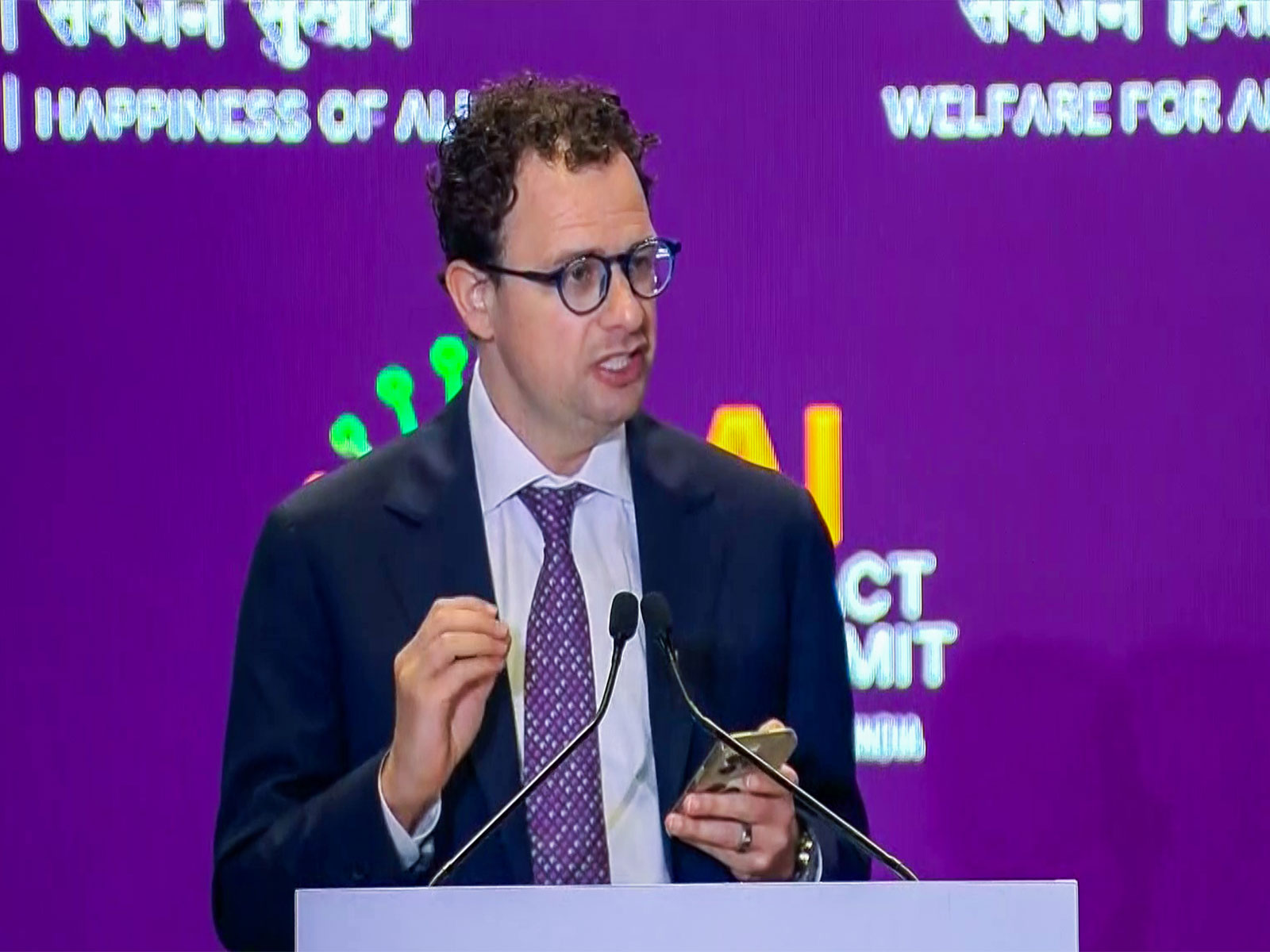
Washington DC [US], May 19 (ANI): CEO of the AI company Anthropic, Dario Amodei, warned that rapid advances in artificial intelligence (AI) could trigger a “serious employment crisis” by replacing large numbers of entry-level white-collar jobs across industries.
Speaking about the pace of AI development in a Fox News Interview, Amodei said the technology has advanced dramatically in just two years. “Two years ago, it was at the level of a smart high school student; now it’s probably at the level of a smart college student and reaching beyond that,” he said.
While highlighting AI’s potential benefits in areas such as medicine and energy, Amodei warned that the same capabilities could disrupt employment in sectors heavily dependent on analytical and administrative work.
“Things like summarizing a document, brainstorming, putting together a financial report, makes me worry a lot that entry-level jobs in areas like finance, consulting, tech, many, many other areas like that, entry-level white-collar work. I worry that those things are going to be first augmented, but before long replaced by AI systems. It’s hard to predict the future, but we may indeed have a serious employment crisis on our hands as the pipeline for this early-stage white-collar work starts to contract and dry up,” he said.
Amodei cautioned that the impact could emerge quickly, saying, “I would not be surprised if somewhere between one and five years, we started to see big effects here.”
The Anthropic CEO said many industry leaders privately share similar concerns, but that the public and lawmakers are not fully aware of the scale of the challenge.
“I’ve heard a number of people talk about this in private. AI CEOs talk about this in private, CEOs of other companies talk about this in private,” he said. “I really felt that the message that this is happening hasn’t been getting out to ordinary people, hasn’t been getting out to our legislators, our congresspeople either.”
Amodei argued that the growth of AI cannot realistically be halted because of intense global competition, particularly between American and Chinese companies.
“I don’t think we can stop the AI bus,” he said. “Even if all six companies stopped, then China would beat us.”
However, he stressed that governments and companies still have an opportunity to shape how AI affects workers and economies. “One of the first steps we’re taking is just measuring the effects,” he said, referring to Anthropic’s Economic Index initiative aimed at tracking AI’s impact on employment.
Discussing possible solutions, Amodei said worker adaptation and public policy would both play crucial roles. “I think one is just educating people in order to use AI,” he said, adding that governments may also need to consider measures “to level the economic playing field.”
In one of his most striking remarks, Amodei suggested that taxation of AI firms could eventually become necessary.”This may be a controversial proposal, but something like taxing AI companies like us– we may need to get to things like that eventually,” he said. (ANI)
Related reading