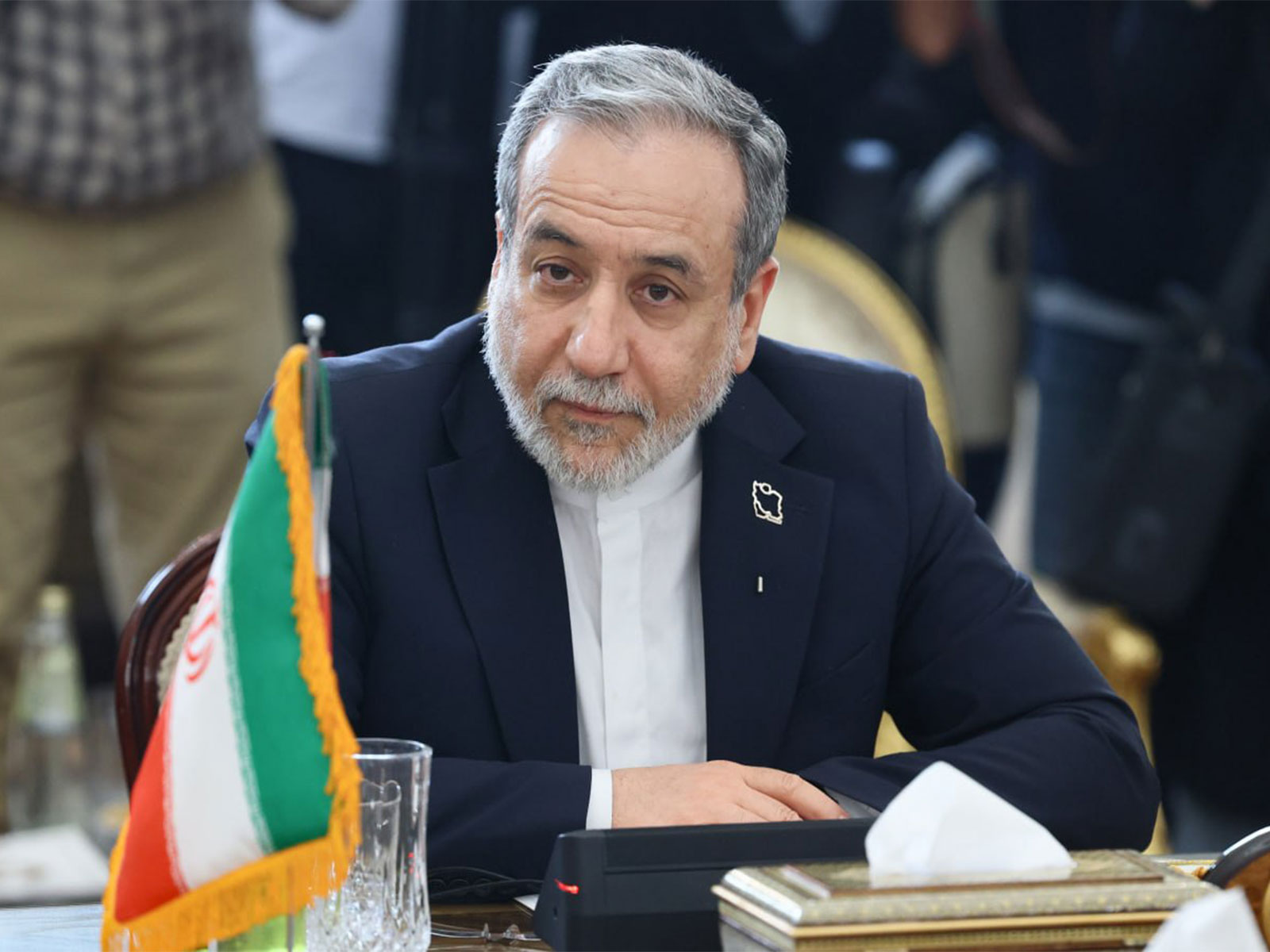
Tehran [Iran], November 1 (ANI): Iranian Foreign Minister Abbas Araghchi on Sunday said that the positive outcome in the Doha consultations depends on the United States’ response, state-run news agency IRNA reported.
Speaking on the sidelines of a meeting of the Parliament’s National Security and Foreign Policy Committee, Araghchi said that the Iranian delegation’s visit to Qatar is focused on reopening the Strait of Hormuz, and meeting with an American delegation is not on the cards.
He maintained that the consultations over a “two-day plan” on reopening Hormuz continue, but a result has not been reached yet.
According to IRNA, Araghchi also stressed Iranian Supreme Leader Mojtaba Khamenei’s order to confront all the threats “with an immediate, effective, and unrestricted geographical response.”
Earlier today, Araghchi said talks with Qatari mediators are ongoing on a proposal to reopen the Strait of Hormuz within two days if the United States implements Tehran’s conditions, Al Jazeera reported.
Araghchi said discussions with the Qatari side had resulted in a reduction in the proposed implementation period for reopening the strategic waterway, from five days to two days.
“The Qatari side proposed shortening the implementation period of the Iranian proposal to five days. We have reached a proposal at this stage that reduces the implementation period to two days,” Araghchi said, according to Al Jazeera.
Outlining Tehran’s demands, the Iranian Foreign Minister said they included lifting sanctions imposed after the Islamabad memorandum, reducing US military forces in the region, restoring oil waivers and releasing frozen Iranian funds.
“Our conditions include lifting the sanctions imposed following the Islamabad memorandum and reducing US forces in the region. We demand the restoration of oil waivers and the release of all our frozen funds, including those held in Qatar,” Araghchi said.
He further said Iran was seeking recognition of the shipping routes in the Strait of Hormuz that Tehran had discussed with Oman, along with the closure of other routes.
“Reopening the Strait of Hormuz in accordance with our conditions paves the way for the resumption of negotiations with Washington regarding outstanding issues,” he added, according to Al Jazeera.
Meanwhile, the United States has warned that Iran cannot be permitted to hold the regional and global economy “hostage”, stating that while Washington remains open to diplomatic dialogue, it is prepared to take an alternate course if maritime traffic in the vital Strait of Hormuz is not restored to normal, Al Jazeera reported.
Addressing the Manama Dialogue security forum in Bahrain on Sunday, US Assistant Secretary of State for Near Eastern Affairs Donald Blome asserted that diplomatic pathways remain available, but cautioned that American tolerance is not limitless.
“The hand of negotiation has been extended, and those channels have continued to be open and active. At the same time, we’ve also been prepared to go in another direction. We just can’t allow Iran to take this region and the global economy hostage,” Al Jazeera quoted Blome as saying.
This comes as renewed escalations are expected between the US and Iran. US President Donald Trump spoke with Israeli Prime Minister Benjamin Netanyahu on the telephone on Saturday as Washington evaluated potential renewed military action against Iran, according to The Wall Street Journal, citing sources familiar with the call.
Today, Trump asserted that American operations have already crippled the core of Iran’s nuclear programme and military assets, leaving only a couple of targets, including key underground facilities like “Pickaxe Mountain”, which the US military could eliminate at short notice.
“We’ve knocked out their nuclear. We still have to take care of, I would say, one or two sites, but we can do that in ten minutes,” Trump said.
According to the President, the US is not in an urgent rush to resume immediate strikes, as preceding air operations have successfully degraded Iran’s navy, air force, anti-aircraft networks and defence manufacturing infrastructure.
Iran has responded in strong-worded statements. Iranian Defence Minister Mehrdad Akhlaghi warned that any attack against Tehran would be met with a “proportionate, decisive, and impactful response,” cautioning that any renewed confrontation with the United States could spiral into an extended war that US President Donald Trump would not be able to end at will, Al Jazeera reported.
“Those who pose threats will not dictate the scope, timing, or consequences of Iran’s defensive response,” the Iranian Defence Minister said.
Iran’s Ministry of Foreign Affairs also designated the United Kingdom’s Royal Navy and Royal Air Force as “terrorist organisations” and classified its Secret Intelligence Service (MI6) as a “hostile group”, citing what it described as Britain’s hostile actions against Tehran.
In a statement issued on November 1, the Iranian Foreign Ministry said the measures had been adopted pursuant to a resolution of the country’s Supreme National Security Council and in response to Britain’s actions over the past year.
Explaining the decision, the statement cited Britain’s alleged involvement in the ongoing conflict through the provision of military and logistical bases and facilities located in territories under British jurisdiction.
It also referred to the British government’s decision on July 13 to place Iran’s Islamic Revolutionary Guard Corps (IRGC) under the State Threats Act 2026.
The renewed threats come in the backdrop of hostilities earlier this year, which began when the US and Israel struck Iran on February 28. While the heavy fighting gradually subsided by April, some exchanges have continued. (ANI)
Related reading