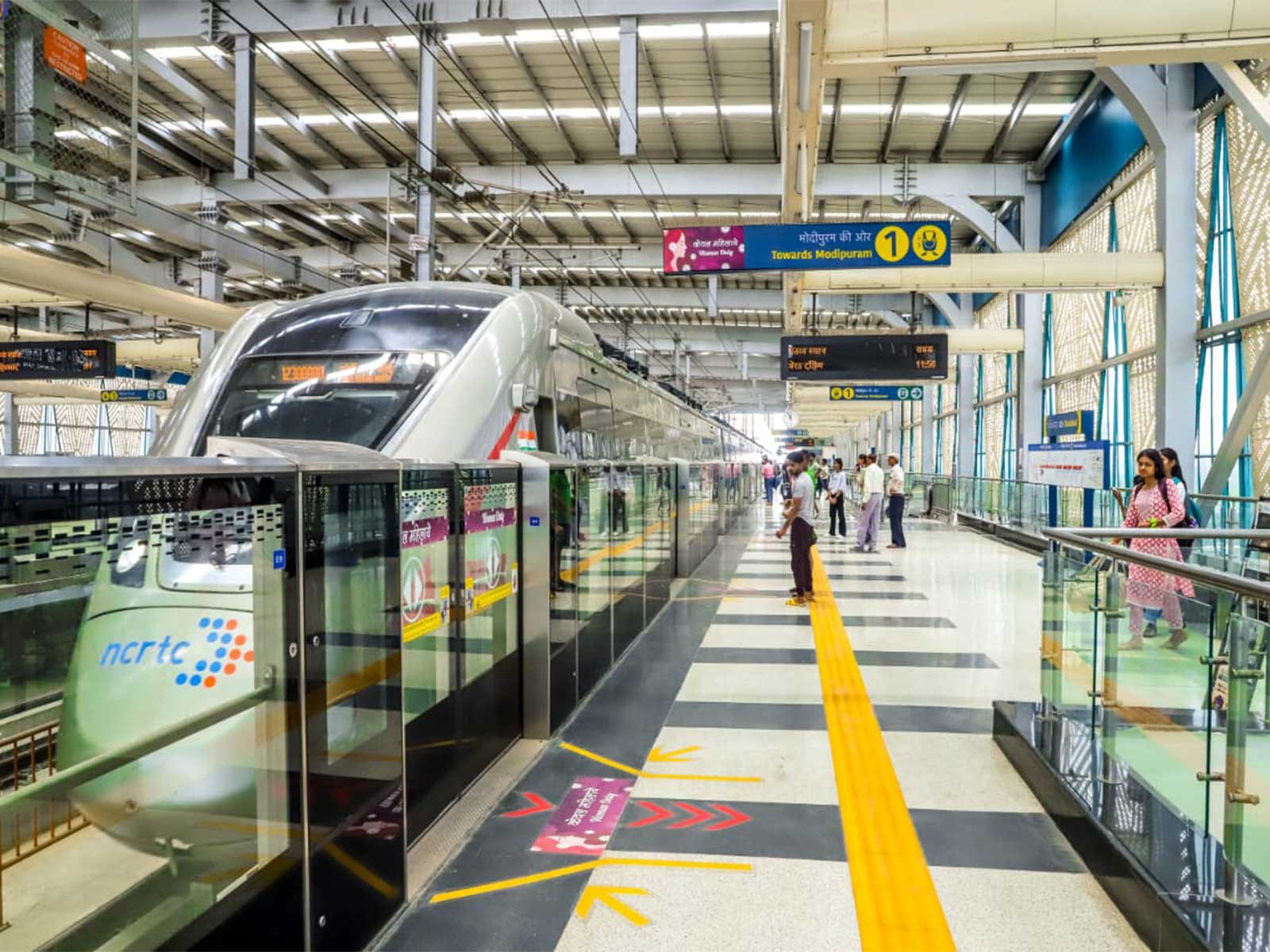
New Delhi [India], November 1 (ANI): The National Capital Region Transport Corporation (NCRTC) is evaluating the development of mixed-use, transit-oriented growth nodes along key regional corridors, including the operational Delhi-Ghaziabad-Meerut Namo Bharat corridor and the proposed Delhi-Gurugram-SNB-Alwar and Delhi-Panipat-Karnal corridors.
The initiative aims to leverage high-speed regional connectivity to create planned urban centres while attracting private investment in commercial, residential and institutional development.
The feasibility and policy requirements for these developments were discussed at a consultative workshop organised by NCRTC in collaboration with the National Capital Region Planning Board (NCRPB). The workshop brought together senior government officials, real estate developers, consultants and industry representatives to deliberate on the planning, regulatory and financial frameworks required to make Transit Oriented Development (TOD) viable and implementable across the National Capital Region (NCR).
D Thara, Secretary, Department of Capital Development, Ministry of Housing and Urban Affairs (MoHUA), Gulzar Natrajan, Member Secretary, NCRPB, and N. Saravana Kumar, Vice-Chairman, Delhi Development Authority (DDA), attended the workshop and explained in detail the Government’s initiatives taken in this respect and the way forward for such developments. NCRTC Managing Director Shalabh Goel, along with the corporation’s directors and senior officials, welcomed the dignitaries, according to the release.
A key focus of the deliberations was the policy and institutional support required to encourage private developers to invest in TOD zones. Developers highlighted the need for measures such as flexibility in deciding the mix of use of such developments to be market-driven, higher Floor Area Ratio (FAR), increased ground coverage, flexible development and delivery models, greater tenure security, streamlined land assembly and single-window clearances. Discussions also covered land pooling, government land monetisation and public-private partnership frameworks that distribute risks equitably over long concession periods.
Sarai Kale Khan re-development project emerged as a key location in the discussions, given its connectivity between Namo Bharat, Delhi Metro, Indian Railways and the Inter-State Bus Terminus (ISBT). Its multimodal integration offers potential for developing an employment-led commercial, retail and institutional hub, positioning the area as a significant regional destination beyond its role as a transport interchange, the release said.
The proposed TOD framework seeks to integrate transport infrastructure with land-use planning, bringing residential, commercial and institutional developments closer to transit stations. The approach envisages compact, high-density urban centres supported by walkable streets, safe pedestrian infrastructure, feeder services and accessible public spaces, with everyday destinations ideally located within a five-to-ten-minute walk of stations. The discussions also drew attention to emerging urban centres along the Namo Bharat network, including Meerut, where regional connectivity is expected to support more organised development. Areas like Ghaziabad and Duhai along the operational Delhi–Meerut Namo Bharat corridor also offer significant potential for TOD.
During the workshop, Thara also unveiled NCRTC’s publication, ‘Position Your Brand at the Gateway of Tomorrow ‘, highlighting commercial development opportunities along the Delhi–Ghaziabad–Meerut Namo Bharat corridor.
The workshop brought together senior representatives from across the transport, healthcare, research and diplomatic sectors, including Managing Director, Chennai Metro, Ashish Chatterjee; Additional Director, AIIMS, Anshul Mishra; Director, Centre for Economic Growth, National Council of Applied Economic Research (NCAER), Rana Hassan; and representatives from the Embassy of Japan. Leading advisory firms, including JLL, Knight Frank and ANAROCK, also shared their insights and recommendations.
The consultations are expected to transform the subsequent policy design and implementation approach for TOD in the NCR, with NCRTC and NCRPB exploring development models that link regional transport infrastructure with planned urbanisation and long-term economic growth, leading to urban transformation in the NCR. (ANI)
Related reading