New Delhi [India], November 1 (ANI): A fierce political confrontation erupted across the national capital on Sunday, November 1, as the opposition INDIA Bloc’s ‘Chalo Delhi’ march to Ramlila Maidan clashed with the ruling Bharatiya Janata Party’s (BJP) nationwide ‘Loktantra Bachao, Arajakta Hatao’ (Save Democracy, Remove Anarchy) counter-campaign.
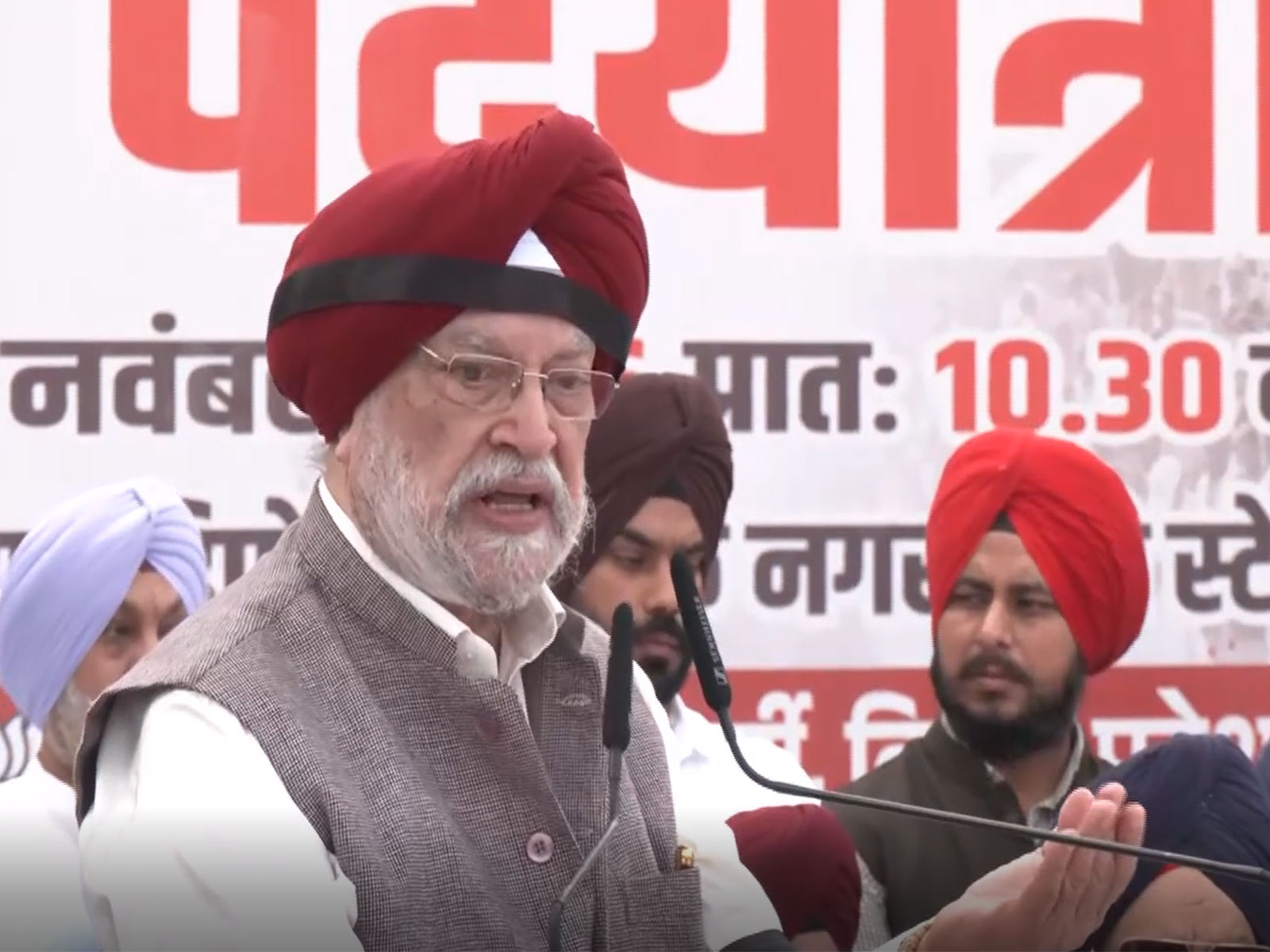
Leading a high-profile memorial protest march from Hari Nagar Bus Depot to Tilak Nagar Metro Station in West Delhi, a Sikh-majority pocket, Union Minister Hardeep Singh Puri accused the Congress of deeply hurting Sikh sentiments by staging a political demonstration on the anniversary of the 1984 anti-Sikh violence.
Rejecting the term “riots,” Puri classified the 1984 tragedy as an organised “genocide” and a “crime against humanity,” citing official figures of 2,733 deaths in Delhi and 3,325 nationwide.
Union Minister Hardeep Singh Puri questioned the official narrative that the 1984 anti-Sikh killings were a spontaneous outbreak of anger following former Prime Minister Indira Gandhi’s assassination.
“Regarding what happened in Delhi 42 years ago, there is quite a lot of information available. But I feel that, ‘the mind plays tricks,’ great efforts have been made to claim that what happened, the violence that occurred in Delhi, was spontaneous, driven by public anger. This statement is simply not true.”
Puri recalled that the first target of the targeted violence on late October/early November 1, 1984, was India’s 7th President, Giani Zail Singh, whose car was attacked near AIIMS as he returned from an official tour of Africa.
Posted in Geneva at the time, Puri recounted how his parents living in a Delhi DDA colony were protected from targeted mobs by Hindu neighbours and friends.
Puri alleged that the mobs orchestrating the violence carried specialised, pre-prepared hit lists rather than ordinary electoral rolls.
“When mobs were arriving at the houses of our Sikh brothers in Delhi, they were not carrying ordinary voter lists. Because on a voter list, a name might say Harnam Singh and Harnam Singh could be from Madhya Pradesh, or Haryana, could be a Jat, a Rajput, or wearing a safa [turban]… no! The preparations were made for it.”
He highlighted an instance at Sardar Manmohan Singh’s house in Ashok Vihar where a mob overruled his Hindu son-in-law’s claims, insisting their targeted list designated the property as belonging to a Sikh family.
Citing Delhi High Court observations and official records, Puri demanded an end to calling the massacre “riots”.
“Even now, a term is often used referring to it as ‘riots’ or ‘a riot.’ These were not riots. Riots are when two groups fight each other. Here, one group… 2,733 people were killed in cold blood in Delhi. Narsanhar [massacre/carnage] is the right word. In English, narsanhar means ‘genocide.’ And as far as I recall, the Delhi High Court specifically used the term: ‘This is a crime against humanity.’ Genocide and a crime against humanity.”
Questioning the choice of November 1 as the date for the opposition rally, he said the wounds of 1984 are yet to heal.
“Even today, I believe our community and our nation have not fully accepted or forgiven what happened in 1984. Nor did they ever apologise for it properly. Did they really have to choose this very day?” he said.
“It is our duty, both individually and collectively, never to forget it. Why? Because what I consider most important is that such violence should never, ever happen again in India, or anywhere else in the world,” he added.
The anti-Sikh violence occurred following the assassination of Prime Minister Indira Gandhi on October 31, 1984, with systematic massacres taking place from November 1 to November 4, 1984.
Official statistics compiled by the Ahuja Committee (1987) confirmed 2,733 deaths in Delhi. Nationwide official estimates stand at approximately 3,325 deaths, though independent rights groups estimate higher numbers.
In December 2018, while convicting key accused Sajjan Kumar, the Delhi High Court explicitly characterised the 1984 anti-Sikh violence as a “crime against humanity” and a “mass carnage” engineered by political actors.
Notably, led by Leader of the Opposition Rahul Gandhi and coalition leaders, INDIA Bloc MPs marched from Minto Road to Ramlila Maidan, protesting against Election Commission of India (ECI) revisions and Chief Election Commissioner (CEC) Gyanesh Kumar.
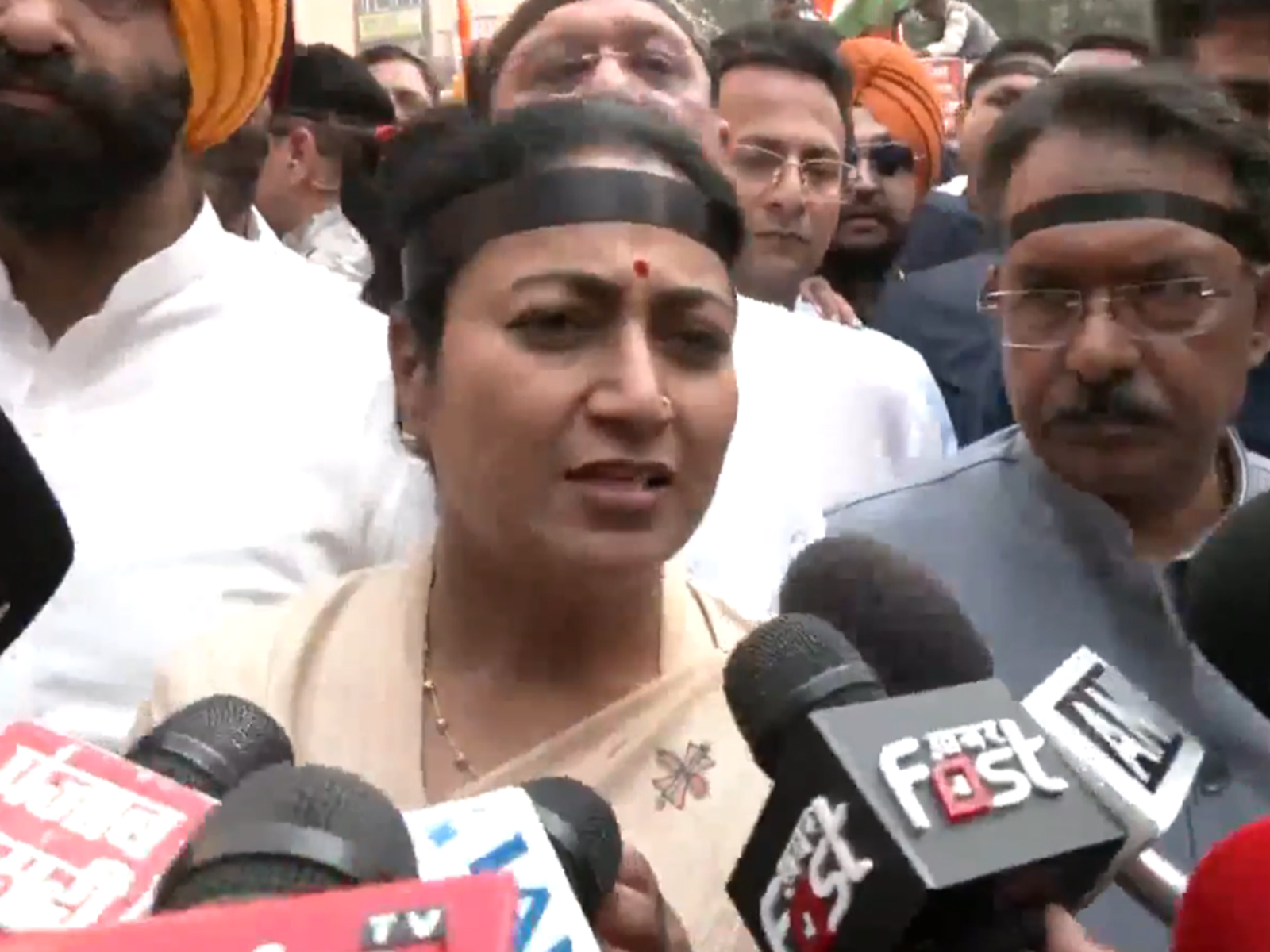
Union Minister Hardeep Singh Puri, alongside Manjinder Singh Sirsa, Delhi CM Rekha Gupta, MoS Harsh Malhotra, and MP Bansuri Swaraj, led thousands of Sikh community members and BJP workers through West Delhi.
National President Nitin Nabin spearheaded a parallel ‘Loktantra Bachao, Arajakta Hatao’ rally in Rohtak, Haryana, slamming the opposition’s street agitations. (ANI)
Related reading