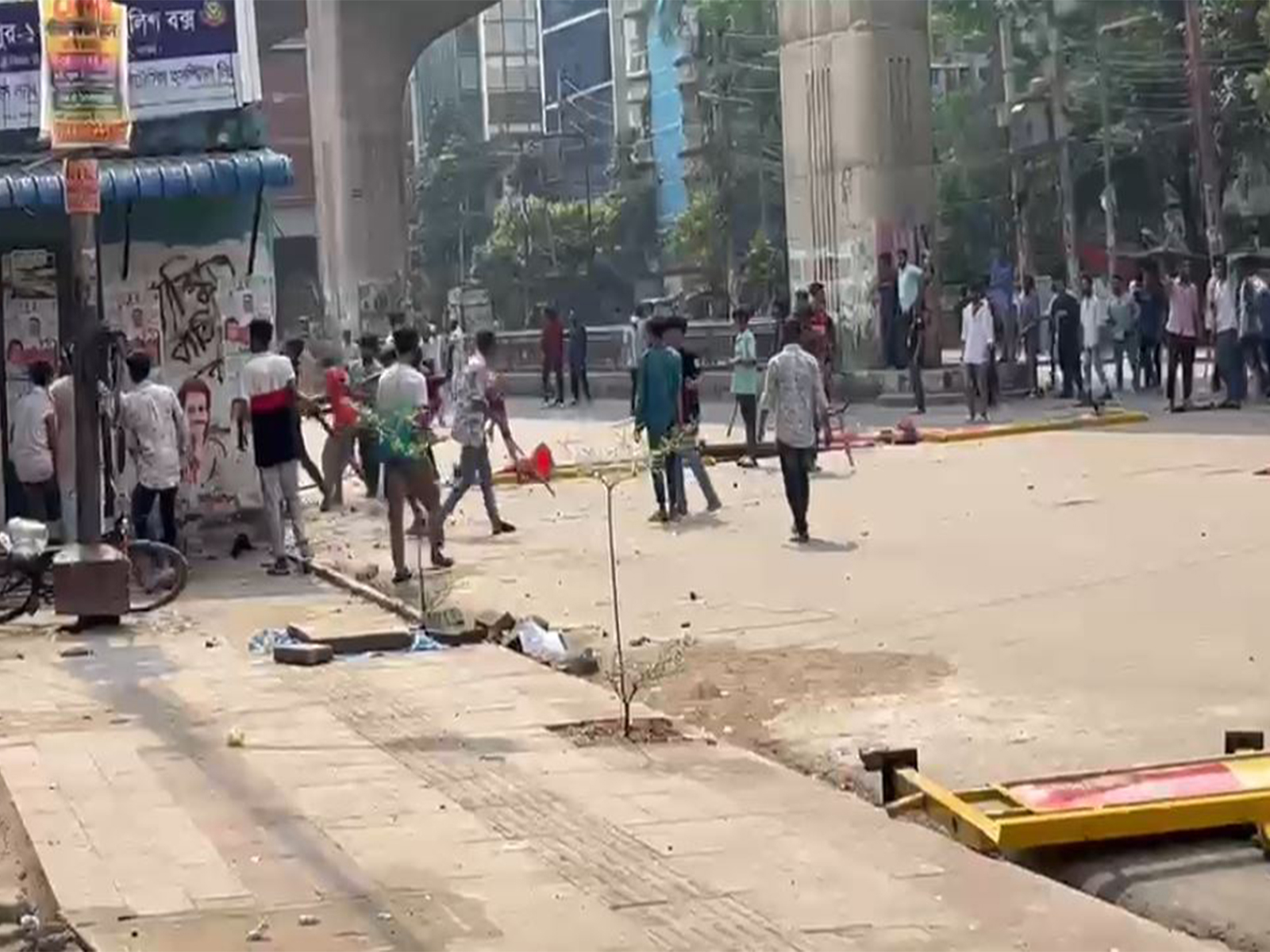
Dhaka [Bangladesh], November 1 (ANI): Bangladeshi garment workers have launched violent protests over wages, with vandalism and clashes reported in Dhaka and Gazipur. Authorities have deployed police and Border Guard Bangladesh. Protesters reportedly vandalised police outposts and set police vehicles on fire.
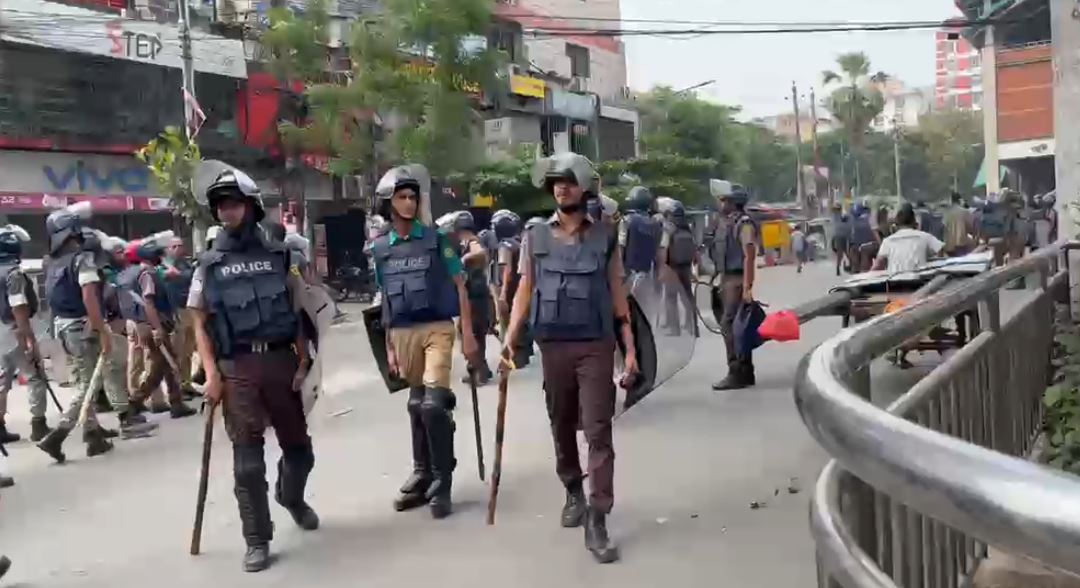
Factories were vandalised, police outposts were attacked with stones, and major roads were blocked by barricades. Police used tear gas and, at times, sound grenades to disperse the crowds. The unrest, which started yesterday, escalated today in areas like Mirpur, Dhaka, and Konabari, Gazipur. Alongside the police, the government has deployed Border Guard Bangladesh units to restore order in the industrial areas.
Currently, the minimum wage for garment workers in Bangladesh is 12,500 taka per month, but the workers are demanding a monthly minimum wage of 30,000 taka. Meanwhile, the Bangladesh government has recently announced a new pay scale for government employees, roughly doubling their salaries and benefits.
In response, garment workers are now demanding that their wages also be increased. They are insisting that the minimum wage be set at 30,000 taka per month. However, garment factory owners say that orders have decreased and prices have not risen, while raw material import costs are high. They say meeting such a demand is difficult.
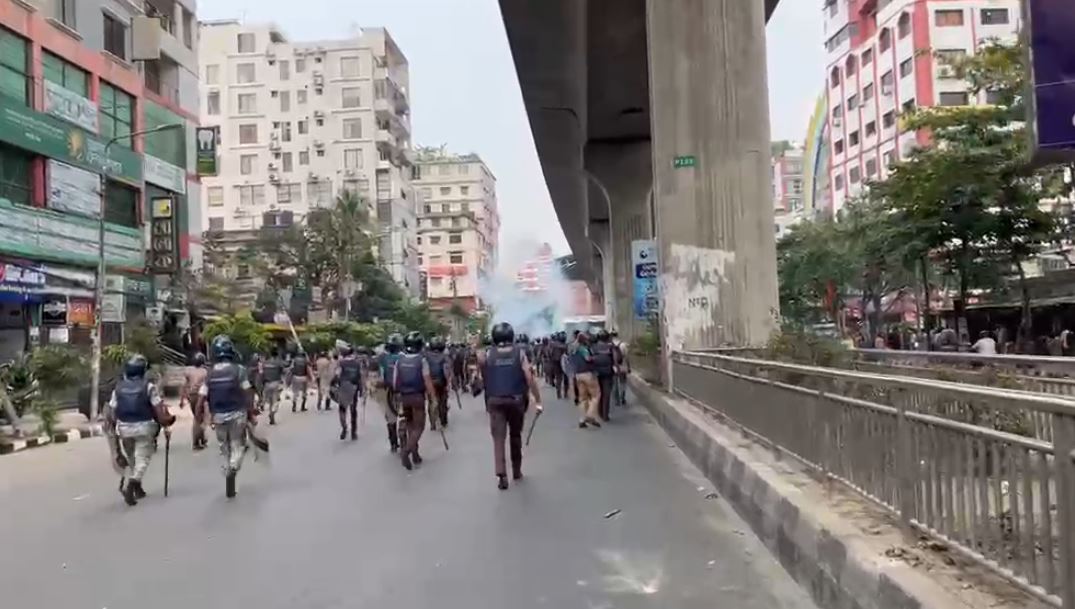
In this situation, the government has formed a wage board to set new wages for garment workers. Even though the wage board has been formed, garment workers are still on the streets taking part in protests.
The Ready-Made Garments (RMG) industry in Bangladesh began its journey in the late 1970s and early 1980s, rapidly transforming from a modest export sector into the powerhouse of the national economy. Today, Bangladesh stands as the world’s one of the largest garment exporter, accounting for over 80% of the country’s total export earnings. The sector directly employs around 4 million workers, with women making up roughly 60% to 70% of the workforce, which has driven massive social empowerment across the nation. (ANI)
Related reading